 Follow Us on Google News
 Follow Us on Google Discover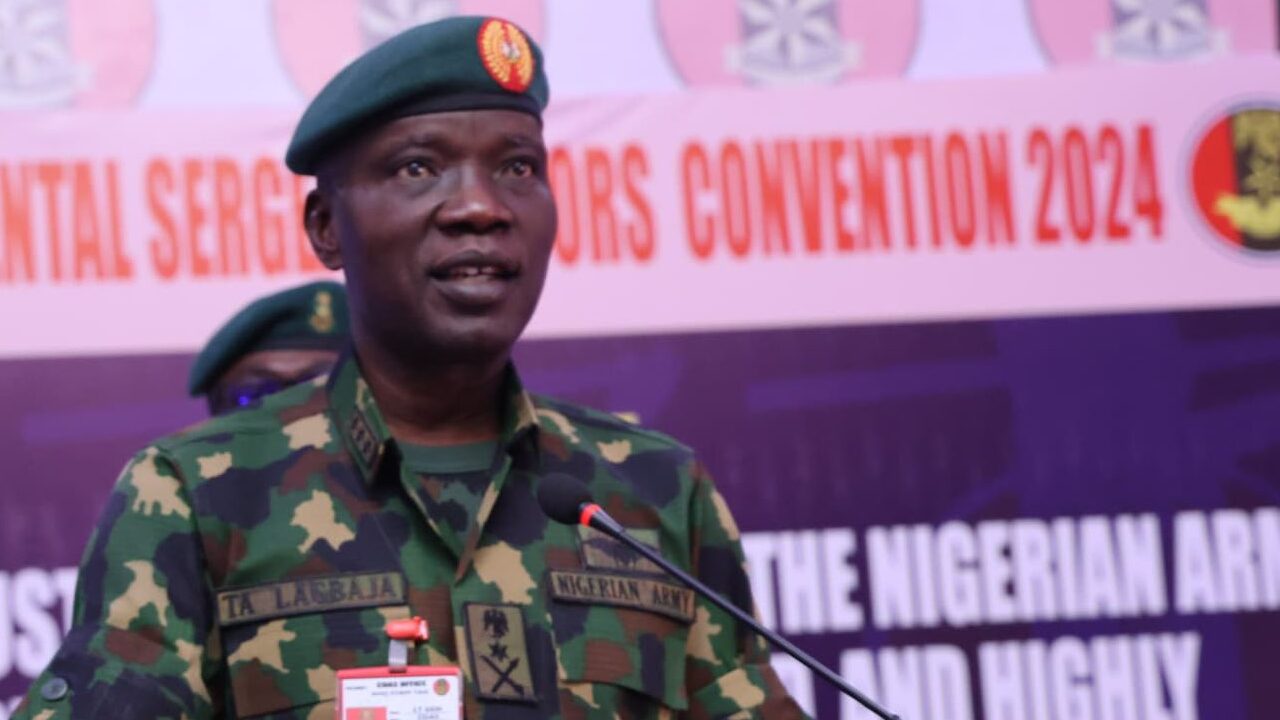
Chief of Army Staff (COAS), Lieutenant General Taoreed Lagbaja, has disclosed that funding, manpower, and a viable industrial base form the major bane of the Nigerian Army’s optimal performance in combating the nation’s security issues.
[ad]
Speaking at the 2024 Distinguished Personality Lecture titled “The Roles and Contributions of the Nigerian Army to National Development,” jointly staged by the Centre for Peace and Strategic Studies, University of Ilorin, and the Martin Luther Agwai International Leadership and Peacekeeping Centre, Jaji, to mark the United Nations International Day of Peace, yesterday in Ilorin, the COAS regretted that Nigerians have a poor understanding of security.
Represented by the Chief of Training (Army), Major General Sanni Gambo Mohammed, the COAS stated that inadequate funding is affecting the level of equipment held by the Armed Forces of Nigeria (AFN), thus having a direct impact on performance.
He said: “The pursuit of national development, which goes alongside national security, is a costly endeavour as defense policy is capital-intensive.
[ad]
“The entire AFN had a budget of about $2.8 billion in 2023, with an additional supplementary [budget] of about one billion dollars. However, not all the budgetary provisions were eventually released.
“Although funding for the AFN as a whole has been improving yearly since 2017, unfortunately, the downturn in the economic performance of the country has eroded the value of what is actually released.
“The inadequacy in funding is affecting the level of equipment holding of the AFN, which has a direct impact on performance,” he disclosed.
Lagbaja, who said the federal government was committed to recruiting more personnel for the force, stressed that the Nigerian Army, along with other security agencies, is under-resourced.
[ad]
“In a country with over 200 million people, it is unrealistic for security agencies totalling around two million, including an army of just over 100,000 active personnel without a reserve force, to secure the entire population.
“The significant gap in resources is being exploited by criminal elements. To address this issue, it is crucial to invest in expanding and strengthening security forces, ensuring they have adequate personnel and resources.”
He also lamented the poor understanding of what security entails by many Nigerians, explaining that security requires all citizens to be part of the security architecture in order to enhance vigilance, build trust, and ensure local knowledge as well as community engagement.
READ ALSO: Former Chief of Army Staff, Major General Chris Alli is dead
“This is to develop a more resilient citizenry who are better prepared to respond to national emergencies,” he stressed.
[ad]
Lt. Gen. Lagbaja’s lecture, which also focused on the roles and contributions of the Nigerian Army to national development, identified some of the contributions of the Nigerian Army to national development, such as internal security, combating external threats, peace support operations, unification of Nigerians, as well as socio-economic development and policy provisions.
Though some of the military hardware is now produced in the country, Lagbaja said over 90 per cent of military requirements are imported due to the lack of an industrial base.
Also speaking, the Vice-Chancellor of the University of Ilorin, Prof. Wahab Egbewole, advocated continuous maintenance of peace and security for development.
[ad]
The Director of the Centre for Peace and Strategic Studies, University of Ilorin, Prof. Ibrahim Jawondo, noted that the Centre offers short-term capacity-building training for professionals.
According to him, a number of officers from the Nigerian Armed Forces, other security agencies, and officers from other nations have benefitted from the programs, graduated, and are doing well in their callings.
“This is in furtherance of the overall vision of making the University of Ilorin number one in universities’ rankings in Nigeria, number 10 in Africa, and number 500 in the world,” he pointed out.
[ad]

