 Follow Us on Google News
 Follow Us on Google Discover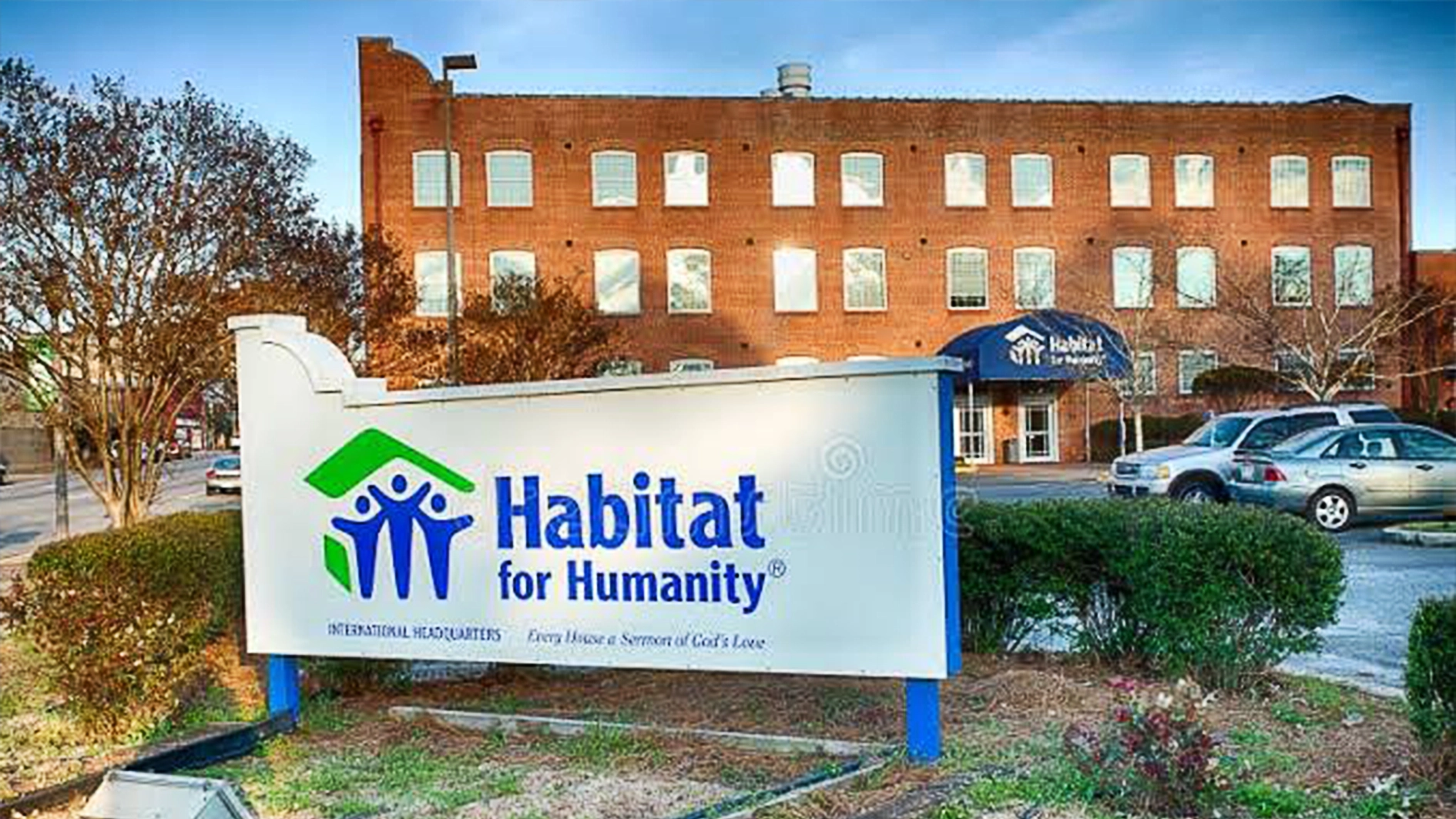
There is a new report from Habitat for Humanity International that reveals that rising housing costs are compelling and pushing many people into deep abject poverty worldwide. The trend is making most families reduce spending on basic necessities, like medical bills,school fees and sometimes, embarking on a journey or trip. In Nigeria, the situation is blown and escalated.
To a large extent, high house rents can drive households into deficiency not simply because housing is expensive, but because rent, in most cases, takes money away from everything else a household would need to live and remain economically productive, or comfortably. How does the poverty cycle work? In the country, house or property rent rises faster than people’s income.
An example, when annual rent increases substantially while wages remain relatively stagnant, individuals or households have little choice but to devote a larger share of their income to keeping a roof over their heads. A 2026 Nigerian legislative research paper reports that rents in major urban centres, including the FCT, can rise by 50% or more within a year in some cases.
It is observed that rent crowds out food, healthcare and education, entertainment or business trips. Once housing consumes too much income, such families will be forced to compensate by cutting other essential expenditures. Research on Abuja’s housing affordability specifically identifies increases in spending on transportation as a result of housing-cost pressure.
It creates a critical challenge for all categories of people. A household can be above the poverty line on paper but become effectively impoverished by its housing costs. Today many families borrow to pay rent, school fees and other utility bills. Large advance-rent requirements can force tenants to borrow, use savings or seek assistance from relatives.
However, that converts a housing problem into a debt problem, and as such people are living from hands to mount. Sometimes, the situation is like, ‘the survival of the fittest. Unfortunately, the burden becomes particularly severe when rent is paid annually,or upfront, while income arrives monthly. These days a lot of people move farther from employment.

When centrally located housing becomes unaffordable, workers may plan relocating to cheaper peripheral areas or territories. It was gathered that a 2025 FCT study revealed that high rents and additional charges were pushing lower-income residents toward distant satellite communities, with longer commutes and associated financial and productivity costs.
So the people are now saving on house or property rent but spend more on meals outside the home, transportation because the country’s current economy is not pocket friendly. That’s not all; housing quality deteriorates. Some households respond by accepting smaller, overcrowded or poorly serviced accommodation. Therefore, slums become an option.
An Abuja rental study shows 84.1 percent of surveyed household heads experienced rental affordability burden, while only 15.9 percent of them were classified as living in affordable rental housing. High rent can reduce the ability to build personal wealth as money spent servicing expensive and excessive rent cannot simultaneously be saved for business investment or retirement.
This creates a particularly important Nigerian housing paradox that high rent prevents most people from saving enough to escape high rent. It breeds poverty. This can also be illustrated: low income leads to high rent burden, and to less money for food/health/education, while borrowing and depleted savings give rise to poorer housing/ location.
To a large extent, higher transport and living costs have a broader lower ability to save and to continue vulnerability to poverty. The problem is especially significant in Nigeria because poverty is already widespread and workers’ incomes remain under pressure. The World Bank’s current Nigeria assessment says peoples’ incomes have not fully recovered and poverty remains high.
“Why are rents high?” Nigerian worker’s income is being consumed by rent,and poverty is being created by the rent burden. What percentage of monthly income does the average worker spend on rent? We are told many families spend 30 percent, 40 percent, 50 percent or more of income on housing. That’s not what people borrow to pay annual rent in our country.
Many are moving to satellite towns and villages because they cannot afford housing near workplaces. Renters are unable to save for homeownership because of rent and it leads to many households becoming homeless after a rent increase.in our cities, people and workers are actually becoming incapacitated to afford adequate housing without falling into financial distress.
Nigeria’s latest General Household Survey contains household-level data on whether households own or rent, how much they pay in rent, and housing characteristics, making it possible to build a much stronger rent-to-income burden analysis rather than relying only on anecdotal rent increases. This is how high housing rents are really pushing Nigerians deeper into poverty.
Housing really eats deeper into our paycheque. Of course, we know Nigeria’s housing crisis is painting or creating an avenue for paucity of funds for many people to embark on construction of their homes. This equally can be developed into a strong housing-and-poverty. Investigation shows that rent serves as a financial shock on workers rather than simply a property-market issue.
When rent consumes an increasing share of a worker’s income, what is left for food, healthcare, education, transportation, savings and emergencies will be insignificant. Another chain could be illustrated, thus, low wages plus rising rents equal to excessive rent burden. It leads to deeper financial insecurity. The question that comes to mind is, how much does rent consume?
Looking into annual rent in Abuja, Lagos, Kano, Port Harcourt and other major cities, many workers spend more than 30 percent to even 60 percent of their income on housing. They sacrificed food consumption, electricity and other utilities to pay their landlord monthly, quarterly or annually as the case may be. Is annual rent creating household debt? Yes.
Is expensive housing pushing workers away from their jobs? Can we compare rent in employment centres with rent in peripheral communities? Worker may appear to escape expensive housing by moving farther away from satellite areas, but he spends several additional hours and a substantial portion of income commuting. House rent can prevent homeownership.
There are so many questions begging for answers here. Can a worker save for a house when most disposable income is already consumed by rent? That could reveal households that are above the conventional poverty threshold but effectively financially trapped by housing costs.
To compare residual income with the resources required for a minimally adequate standard of living is something else. Abuja case study shows as follows: monthly income, annual rent, monthly rent equivalent to low paid worker, civil servant, teacher, nurse,journalist and private sector worker. To be sincere, Nigeria’s housing crisis is becoming a poverty multiplier.
The Habitat for Humanity Report, housing costs force people to cut their spending. It highlights the dangerous nature of many households’ financial situations. Nearly half of the people admitted to accepting unsafe housing conditions because safer options are financially out of reach.
However, it also shows that over 90 percent of Americans are concerned about the rising costs of food and housing. The report maintains that the affordability crisis of home is driven by factors such as inflation, interest rate hikes, and the financialization of housing globally.
The report further emphasizes that affordable, reliable housing is crucial for financial and health stability.
Experts warn that Nigerians should brace for rent reviews by landlords because the cost of repairs and remodeling will spike. Think about what that means in the real life of the citizens. It can be a strong housing-and-poverty, creating home rent as a financial shock on workers rather than simply a property-market issue. Housing crisis makes home ownership even more difficult for average Nigerians.
Today, young Nigerians face a combination of low purchasing power, high house prices, expensive credit and insecure employment. The problem is not simply that youths do not earn enough; the housing market is poorly aligned with what most young workers can actually afford.
For ordinary citizens, and even developers that are targeting low-income buyers, the cost of the apartments is so high. Beyond 14.9 million housing deficit data declared by the former Minister of Housing and Urban Development, Arc, Ahmed Dangiwa, constructing and delivering a standard estate still remains crucial, if not impossible for developers.
Affordable housing will offer several benefits, not only to Nigerians but also to the nation’s economy. We are meant to have access to decent shelter as it improves the general welfare and the productivity of the people. Those who live in a stable and comfortable environment can testify about this and they are more focused and motivated in carrying out their responsibilities at the workplace.
Housing projects can create gainful employment for artisans, engineers, sand suppliers, media men and women including other professionals in the construction sector. To ensure sustainability, the government must do everything within its power in strengthening all existing housing policies, schemes, and programmes that support low income earners’ mortgages.
There should be proper monitoring of housing projects, especially, the allocation processes. It is the crux of the matter. Partnership with the private sector, housing cooperative and financial institutions should be encouraged to step up and expand access to affordable homes in Nigeria.
Housing must not be viewed as a luxury but a basic human necessity of life. A country that values its citizens. Nigeria can make homeownership a reality for more citizens, leading to improving the quality of life for millions of families.

