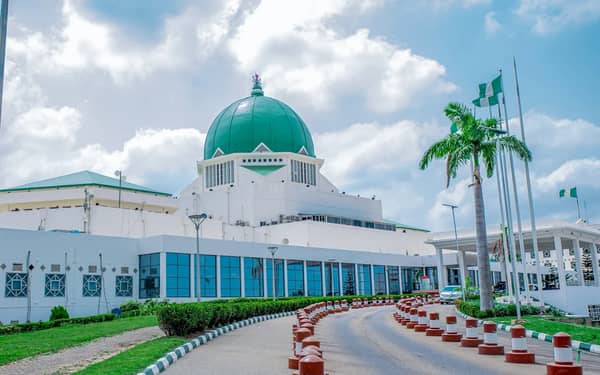
Nigeria is on the verge of one of the most consequential constitutional amendments in its democratic history as the Reserved Seats for Women Bill moves through the National Assembly, proposing the creation of 182 new legislative seats exclusively for women across federal and state parliaments.
The bill, emanating from the House of Representatives, is sponsored by the Deputy Speaker, Benjamin Kalu, and 12 others, including the late Oriyomi Onanuga, Jafaru Leko, Francis Waive, Blessing Onuh, Joshua Gana, Kama Nkemkanma, Chinwe Nnabuife, Amobi Godwin, Khadija Ibrahim, Jonathan Gbefwi, Tolani Shagaya and Mohammed Hassan.
The proposed legislation is titled, “A bill for an act to alter the provisions of the Constitution of the Federal Republic of Nigeria, 1999, to provide for seat reservation for women in the National and State Houses of Assembly; and for related matters”.
The bill, among the over 40 constitution amendment bills to be voted on by lawmakers, aims to correct what its proponents described as the country’s abysmal, structurally imposed gender imbalance in politics, with women currently occupying less than five per cent of elected offices nationwide.
If passed, the amendment would alter seven sections of the 1999 Constitution, expand the Senate, House of Representatives, and all 36 state assemblies, and mandate the Independent National Electoral Commission (INEC) to delineate special women-only constituencies for four election cycles (16 years) before review.
But while the House of Representatives supports the creation of 182 new seats, a counterproposal from the Senate would drastically slash the number of women-only seats in the upper chamber from 37 to just 6. That is one per geopolitical zone.
The bill sighted by The Guardian on Saturday proposed that the Senate would gain 37 additional seats. It replaces Section 48 of the Constitution to provide one additional female senator for the 36 states and the FCT. This immediately creates 37 new seats dedicated to women. The bill mandates a review after 16 years.
The House of Representatives would also add 37 new female-only seats. A new Section 49 expands the lower chamber to 360 general seats and one women-only seat for each state and the FCT. This will bring the House’s composition to 397 members.
Section 71(2) compels INEC to create new senatorial districts for women-only seats and constitute each state as a federal constituency for the female seats in the House.
According to the proposed legislation, state assemblies would add a total of 108 seats. Under a substituted Section 91, each state assembly must create three additional women-only seats, one per senatorial district. This adds 108 new seats, bringing the nationwide total to 182.
The proposed legislation adds new subsections in Sections 77 and 117 to define “special constituency” as women-only districts.
But despite the bill’s design, the Senate is said to be resisting the scale of expansion.
Speaking at a capacity-building workshop for the House of Representatives Press Corps in Abuja, Dr. Chidozie Ajah, Special Adviser (Legislative) to the Deputy Speaker, revealed that senators are advancing a counter-proposal.
He said the Senate is proposing that only six additional seats, one per geopolitical zone, should be created for now, against the 37 provided in the bill.
Ajah emphasised that the conversation remains fluid, noting that the debate is ongoing and could shift as lawmakers work toward a consensus.
Ajah stressed that the reserved seats proposal is not a reaction to women’s inability to compete but a corrective measure to address deep-rooted obstacles that have historically shut women out of political leadership.
He insisted the bill is not a charity gesture or an attempt to shield women from competition.
He said the proposed bill is designed to dismantle the mountain of structural, cultural, and systemic barriers that have kept women out of leadership for decades.
Ajah also disclosed that to prevent legal battles, lawmakers are considering an additional amendment to Section 42, Nigeria’s anti-discrimination clause, to expressly allow affirmative action frameworks.
Nigeria’s female representation remains one of the lowest in the world. Three women currently sit in the 109-member Senate.
17 women sit in the 360-member House. Nationally, women occupy 4.7 per cent of elective offices, ranking Nigeria 184th globally.
Ajah argued that even with the full addition of 74 women in the Senate and House, Nigeria would only reach 13.6 per cent representation, still far below the African average.
The proposal draws heavily from African countries that have implemented gender quotas. At the training session, Executive Director of the Gender Strategy Advancement International (GSAI), Adaora Sydney-Jack, said Nigeria’s media remains part of the structural challenge.
She accused newsrooms of sidelining stories involving women:
“Women hardly make headline stories, not because their issues lack importance, but because editorial decisions push them aside.”
She urged journalists to rethink how women-focused policy debates are framed.
The Reserved Seats Bill must scale constitutional amendment hurdles to become law . That is, Two-thirds of the Senate, Two-thirds of the House of Representatives and approval by 24 of 36 state assemblies before it is sent to the President for assent.