 Follow Us on Google News


 Follow Us on Google Discover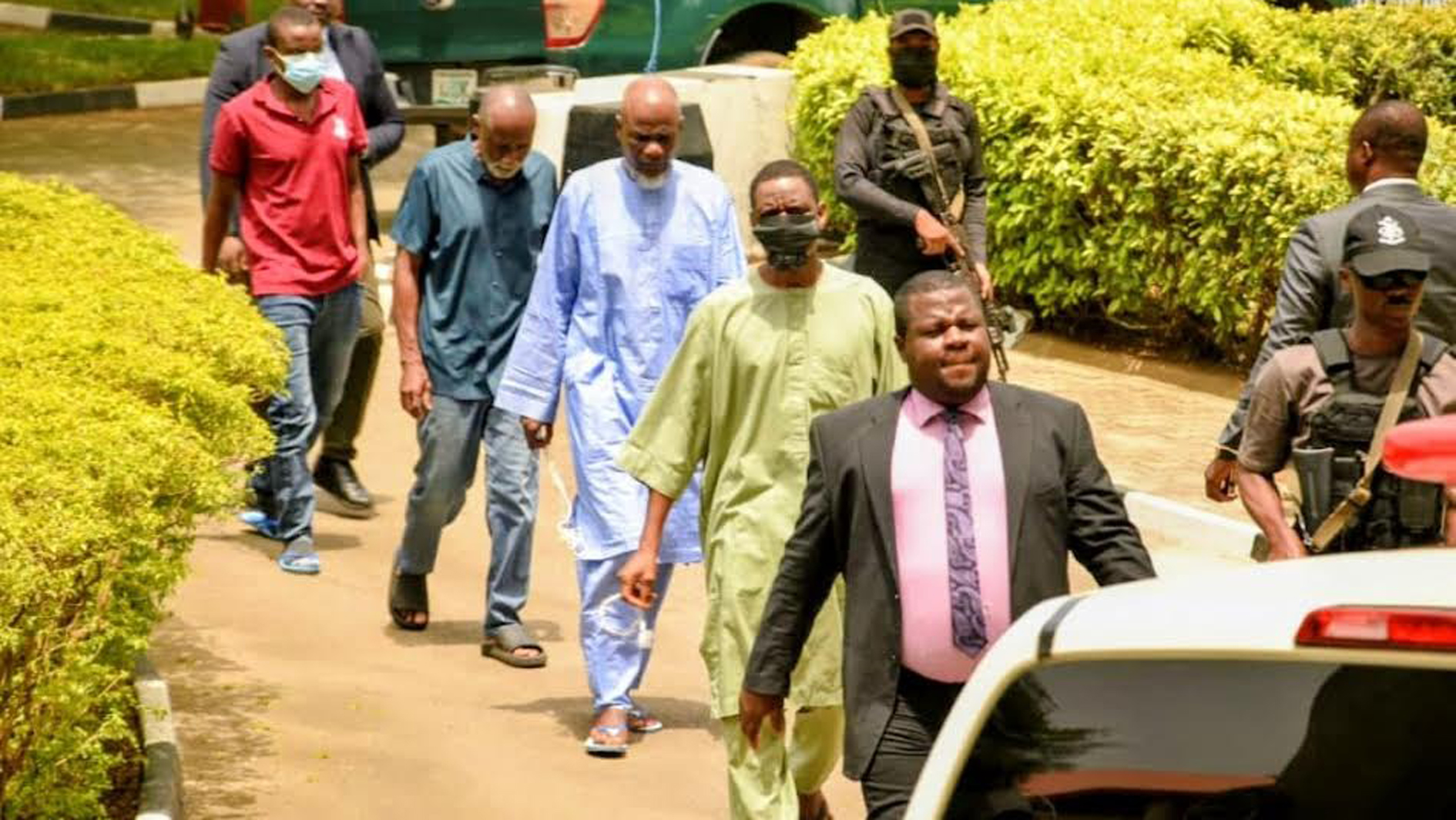
The Federal High Court in Abuja, yesterday, granted an application by the Federal Government to shield a prosecution witness in the ongoing trial of six persons accused of plotting a coup against President Bola Tinubu.
The prosecution, on the same day, opened its case by calling four witnesses in the accelerated trial of six suspects.
Justice Joyce Abdulmalik granted the order after hearing arguments from the prosecution and defence lawyers in the case involving a 13-count charge marked FHC/ABJ/CR/206/2026. The judge approved the request for protective measures after the prosecution argued that the witness, described as a serving officer, faced security risks if exposed during proceedings.
The ruling came as the trial of the defendants commenced, following their arraignment on April 22 on 13 counts bordering on treason, terrorism, failure to disclose information and money laundering.
All six accused had pleaded not guilty to the charges.
At the resumed hearing yesterday, prosecution counsel, Rotimi Oyedepo, informed the court that four witnesses were in attendance and that the government was ready to open its case.

Three of the witnesses, officials of Jaiz Bank, SunTrust Bank and Providus Bank, testified and tendered documents they said were obtained from the Economic and Financial Crimes Commission (EFCC).
The documents, admitted in evidence by the court, were subsequently subjected to cross-examination by defence counsel.
Trouble, however, started when the fourth witness was called. Oyedepo applied for the witness to testify under protective conditions, urging the court to shield the officer from public view and conceal his identity to prevent “unnecessary attack.”
He anchored his application on Section 232 of the Administration of Criminal Justice Act (ACJA), which empowers courts to adopt protective measures in cases involving security concerns, particularly terrorism-related offences.
Although the defendants’ counsel did not oppose the application in principle, they raised concerns over the scope of the protection being sought.
They argued that while shielding the witness from public view was acceptable, full anonymity from the defence team would hamper their ability to test the witness’ credibility and ensure a fair trial. They urged the court to balance security considerations against the defendants’ constitutional rights.
Justice Abdulmalik sided with the prosecution. She held that the terrorism-related nature of one of the counts justified the protective order and that the law permits the non-disclosure of a witness’ name, address and contact details where genuine security concerns exist.
She directed that the witness’ identity must not appear in any court records or proceedings accessible to the parties or the public, and adjourned briefly to allow a protective screen to be set up before the witness took the stand.
In response, Oyedepo insisted that the witness required comprehensive protection, stressing that exposure could endanger the officer’s life. He told the court that the law permits the use of initials or other non-identifying methods in appropriate cases.
Delivering her ruling, Justice Abdulmalik held that the prosecution had sufficiently justified the request, particularly in light of the terrorism-related count in the charge.
One of the witnesses, a soldier from the Nigerian Army Corps of Military Police (NACMP), gave details of how the alleged coup plot was uncovered and what investigators later found out.
Led in evidence by the Director of Public Prosecution of the Federation (DPPF), Rotimi Oyedepo (SAN), the witness confirmed knowing the six defendants. He said he knew the defendants, who he said were arrested in connection with the coup plot involving Col. Ma’aji, some other serving military officers, and civilians.
Oyedepo later took the witness through the account statement of Purple Wave, in which he identified how funds were allegedly disbursed for the purpose of the alleged coup.
The witness said the alleged plotters drew a plan for the execution of the coup and identified key officers in the government, and also identified the officers who would assassinate them. He said the alleged coup plotters also identified key targets to be attacked, including the Niger Barracks where senior military officers live, adding that there were also plans to take over some key roads and streets when the coup was being executed.
The witness added: “The plotters also shared appointments among themselves, including agencies to be set up and those to be merged after the coup.
“The plotters did extensive consultation and divination, in which some of the defendants took part, knowing that a coup was ongoing. They received money for these purposes. They also bought vehicles, which were recovered from shops where they were being retrofitted for kinetic purposes.”
He said in the course of the investigation, they sighted the hotels and the rooms and spaces where the meetings were held, adding, “We also recovered receipts used for payment for hotel reservations.”
At that point, Oyedepo tendered a letter from BrookVille Hotel and attached documents, including the payment receipts.
Lawyers to the defendants objected to the admissibility of the documents but said they would provide reasons at the final address stage, following which Justice Joyce Abdulmalik admitted the documents in evidence.
She subsequently adjourned the case to May 4 and 5, 2026, for the fourth prosecution witness to continue his testimony.

