 Follow Us on Google News
 Follow Us on Google Discover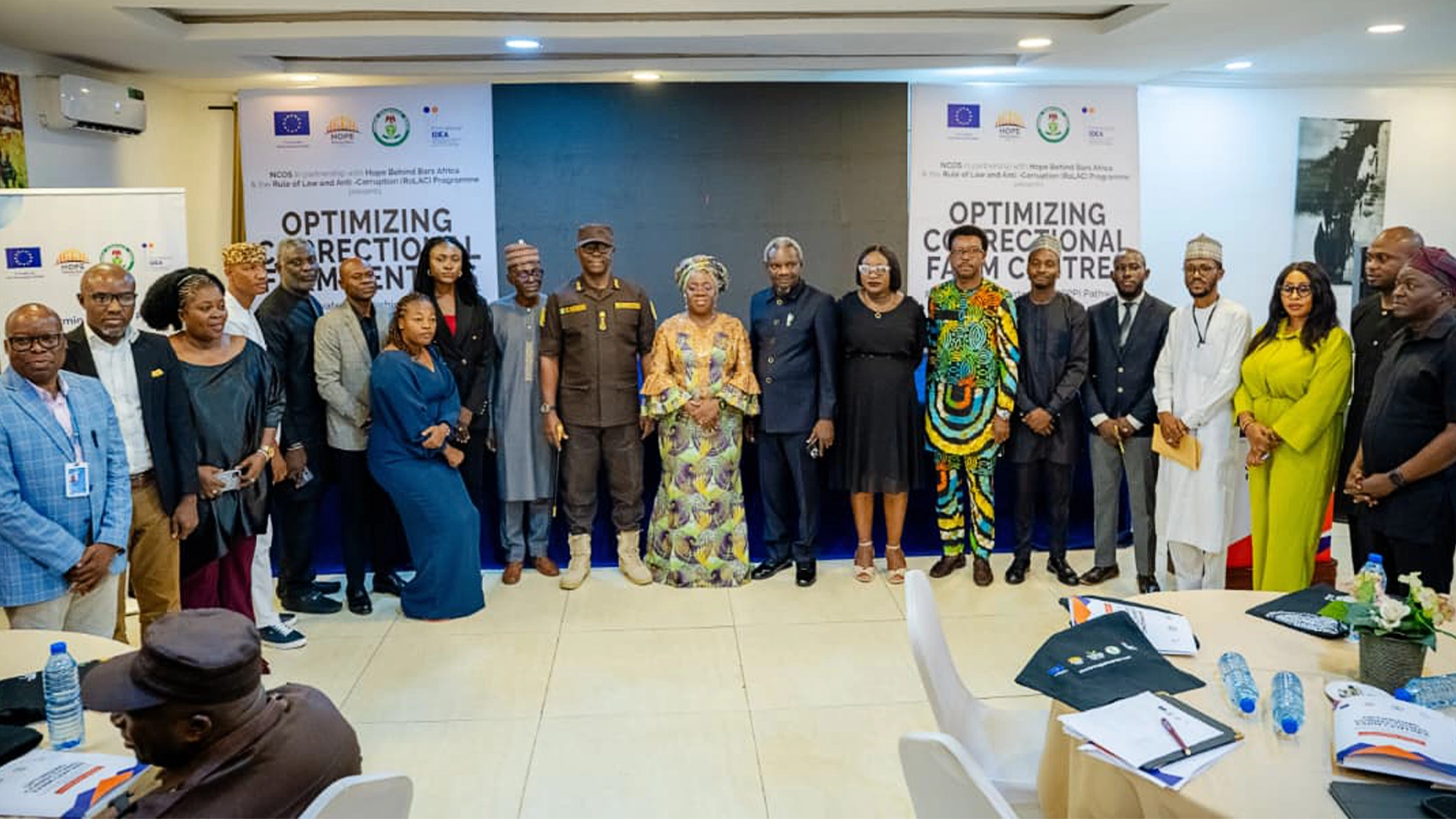
A civil society organisation, Hope Behind Bars Africa, has backed the Federal Government’s ongoing reforms in the correctional system, calling for a comprehensive overhaul of correctional farm centres to strengthen inmate rehabilitation and reduce recidivism.
Executive Director of the organisation, Funke Adeoye, said recent steps by the Federal Government, including improved inmate feeding allocation, demonstrate a willingness to reform the system but stressed the need for more sustainable solutions.
She noted that correctional farm centres remain largely underutilised despite their potential to drive food production, skills acquisition, and economic empowerment for inmates.
Adeoye explained that the call for reform aligns with the mandate of the Nigerian Correctional Service under the Nigerian Correctional Service Act 2019, which provides for rehabilitation, reformation, and reintegration of inmates, as well as collaboration with non-state actors.
According to her, “the conversation must move beyond increasing feeding budgets to building systems that enable custodial centres to produce food, equip inmates with practical skills, and prepare them for life after incarceration.”
She disclosed that the organisation’s Farming Justice Project was conceived to address these gaps by integrating agriculture into correctional rehabilitation programmes.

The initiative, she said, is currently being implemented in custodial centres across Abuja, Lagos, and Edo States, including Kuje, Dukpa, Kirikiri Female, and Oko, where inmates are engaged in structured training in behavioural change, financial literacy, and agricultural production.
Adeoye added that participants are cultivating crops such as pepper, okra, watermelon, and maize, alongside fish farming, with some of the produce already supplying nearby communities.
She said the programme has recorded significant impact, reaching hundreds of inmates and correctional officers, while also creating economic opportunities through emerging micro-enterprises linked to agricultural activities.
“Beyond improving inmate welfare, this initiative addresses two critical national challenges — food insecurity and recidivism. When individuals are equipped with skills and supported through structured programmes, they are less likely to return to crime,” she said.
The organisation called for stronger collaboration between government, private sector players, and civil society to scale up correctional agriculture nationwide.
Adeoye stressed that optimising correctional farm centres could transform them into productive hubs that contribute to national food security, economic inclusion, and safer communities.

