 Follow Us on Google News


 Follow Us on Google Discover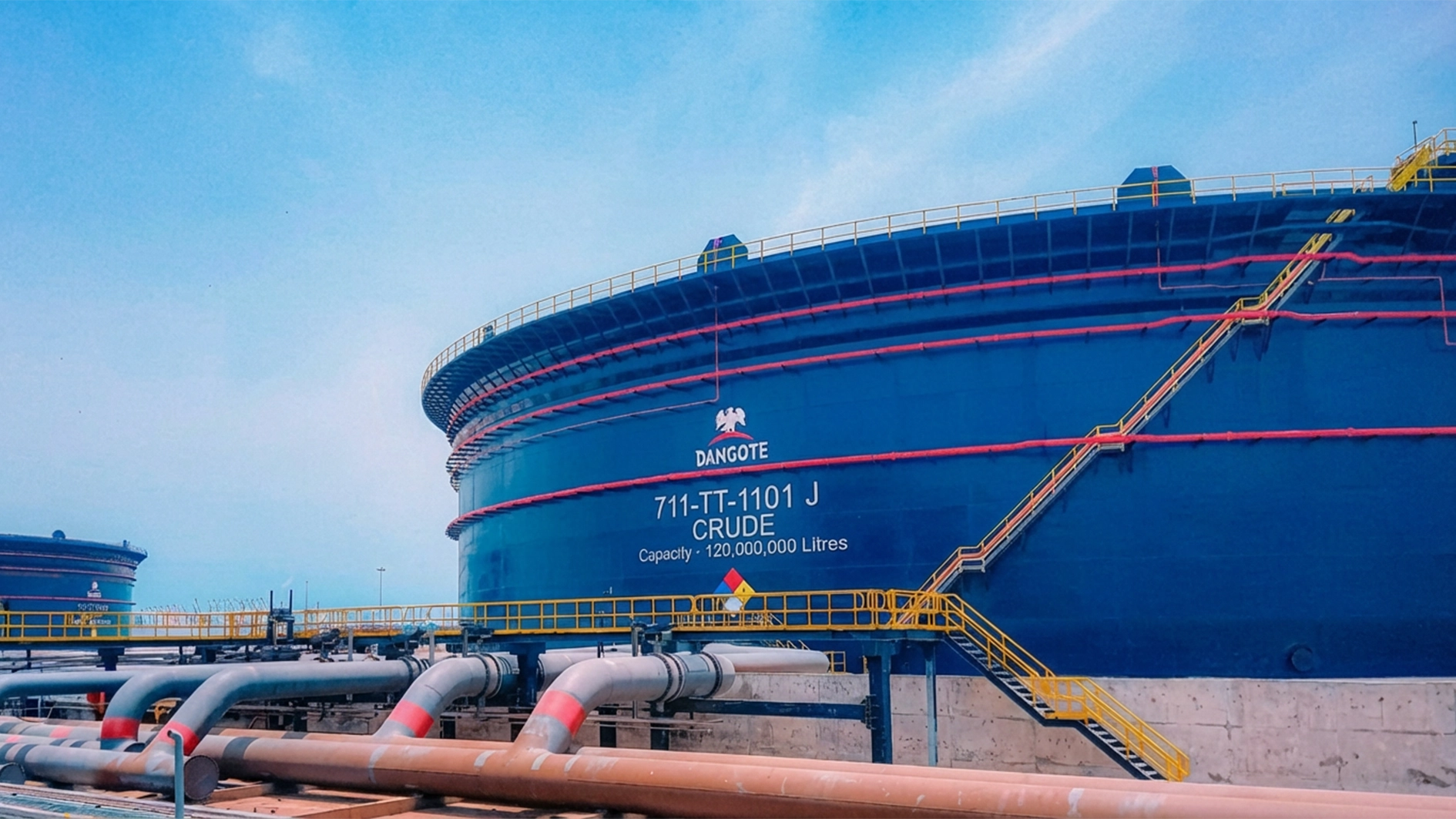
While the escalating crisis in the Middle East continues to reverberate across global energy markets, disrupting refinery operations, tightening fuel supply chains and pushing up crude oil and freight costs, Dangote Petroleum Refinery and Petrochemicals yesterday reassured Nigerians that it is prioritising the local market to cushion the country from the unfolding shocks.
According to the company, the Middle East conflict has already forced the shutdown of some refineries and reduced global refining output, tightening the availability of petroleum products in the international market.
“This is leading to a global scarcity of petroleum products. China has banned the export of gasoline and diesel, but the Dangote Refinery will ensure that Nigeria is insulated from these supply shocks by prioritising supply to the domestic market. This is one of the many benefits of domestic refining,” the refinery stated.
The refinery noted that the intensifying crisis has sharply increased the cost of crude oil and maritime freight, developments that are already feeding into global fuel prices. It explained that benchmark prices for Brent crude have surged significantly since the conflict escalated, reflecting mounting supply fears in the international energy market.
“The conflict has driven global crude and freight prices sharply higher, with benchmark Brent prices rising by about 26 per cent within a short period to above $84.0 per barrel. In response, the refinery implemented a measured adjustment of N100 per litre in its ex-depot price of Premium Motor Spirit, representing an increase of about 12 per cent. The refinery has absorbed 20 per cent of the cost escalation, for now, to cushion the domestic market,” it added.
The refinery mentioned that this is despite continuing to source crude at prevailing international market prices, whether purchased locally or from foreign suppliers. The refinery further disclosed that the cost of sourcing crude for refining operations remains significantly above the international benchmark, further adding to operational pressure.

It, however, disclosed that the refinery is receiving only five crude oil cargoes per month from the Nigerian National Petroleum Company (NNPCL), less than half of the 13 it needs to sustain full domestic supply, a shortfall that is forcing Africa’s largest oil refinery to scramble for expensive imports on international markets even as the ongoing geopolitical crisis drives global energy prices sharply higher.
The gap between what state-owned NNPC supplies and what the refinery requires is exposing structural fault lines in Nigeria’s energy policy at the worst possible moment.
China, the world’s largest crude importer, has compounded the squeeze by banning exports of gasoline and diesel. To bridge the gap, the Lekki-based refinery has been forced to procure additional cargoes from local and international traders at open-market foreign exchange rates, a significantly more costly route that has put pressure on its operating margins. The cargoes it receives from NNPC are paid for in naira but are priced at international market rates plus a premium.
“Nigerian crude oil is more expensive than the Brent benchmark price by $3 to $6 per barrel. After adding freight of $3.50 per barrel, crude oil lands in our tanks at between $88 and $91 per barrel,” it said.
This starkly compares with the $68-per-barrel landing cost, when the refinery’s ex-depot price for Premium Motor Spirit stood at N774 per litre. Since then, surging crude and freight costs have forced it to raise prices by N100 per litre, a 12 per cent increase, even as it voluntarily absorbed 20 per cent of the total cost escalation to cushion Nigerian consumers from the full force of the global shock.
Nigeria’s upstream producers are also falling short of separate crude supply obligations under the Petroleum Industry Act (PIA), the landmark 2021 legislation that was meant to, among other things, incentivise domestic refining.
The refinery said that non-compliance by upstream operators has left it with no choice but to source a substantial portion of its crude feedstock from international traders, who charge additional premiums on top of already elevated spot-market prices.
Despite the pressure, Dangote insists it will continue to prioritise the Nigerian domestic market over exports, framing local refining as a strategic buffer against external shocks roiling global energy supply chains. The refinery said it was positioning itself as an “energy lifeline” for West Africa’s most populous nation, helping moderate foreign exchange demand by reducing the need to import refined products.
AS the Gulf crisis enters its seventh day, Iran has assured that Nigerian citizens living in the country are safe, in spite of the escalating tensions in the Middle East following the current U.S.-Israel-Iran military standoff. Mahdavi Raja, Iran’s Ambassador to Nigeria, gave the assurance at a news conference on Thursday in Abuja following the recent developments in the country.
He noted that, since the outbreak of hostilities, there have been no reports of harm to Nigerians residing in Iran’s cities, such as the capital, Tehran and Qom. He emphasised that Iran’s response has been defensive measures aimed solely at protecting its sovereign territory and population, in accordance with international law.
“The safety of foreign residents, including Nigerians, is a priority for the Islamic Republic of Iran. Our defensive actions are targeted strictly at military installations and do not threaten civilians or foreign nationals,” he said.
Raja said Iran remained committed to maintaining diplomatic relations and continuing dialogue, even as it defended its sovereignty. He noted that the country’s response to the conflict was guided by international law, particularly the principles of self-defence under Article 51 of the United Nations Charter.
The ambassador noted that the escalation occurred during a period of heightened cultural and religious significance in Iran, including the holy month of Ramadan and the Iranian New Year, Nowruz. He highlighted the bombing of a girls’ school in Minab, which resulted in the deaths of 167 schoolgirls. He said that, despite the challenging circumstances, the security and well-being of foreign residents remained unaffected.
Raja also highlighted the long-standing diplomatic and economic ties between Iran and Nigeria, noting that cooperation would continue across sectors such as energy, agriculture, education, and trade. He urged Nigerians abroad to remain calm and follow official guidance, stressing that there was no immediate threat to their safety.
The envoy also called on the international community to condemn what he described as deliberate military aggression by the United States and Israel, while reiterating Iran’s right to defend its sovereignty and territorial integrity. The ambassador’s assurance comes as the Nigerian government says it is monitoring developments closely, having issued travel advisories for citizens in Iran and neighbouring Gulf countries.
Regarding succession after the assassination of Iran’s Supreme Leader, Mahdavi Raja noted that no final decision has been made, stating, “We have many options. We are thinking about it.”
But the U.S. President, Donald Trump, has said he needs to be involved in the selection of the next Iranian leader. He said this to Axios, an American publication, on Thursday, five days after the country’s supreme leader, Ali Khamenei, was killed in a joint strike by the US and Israel on his home in Tehran.
According to Trump, Iran was only “wasting its time” if it tried to appoint a successor without U.S. involvement. He also declared that Mojtaba Khamenei, the son of the assassinated Khamenei and a likely successor, was an unacceptable choice to him.
He described the late Khamenei’s son as a “lightweight,” while saying his “son is unacceptable to me. We want someone that will bring harmony and peace to Iran. I have to be involved in the appointment, like with Delcy (Rodriguez) in Venezuela,” he stated.
Trump also stated that he would reject any new Iranian leader who would continue the policies of the previous leadership. He said such a leader would risk another conflict with the U.S. “in five years.”
President Trump had earlier said the worst outcome of the ongoing war would be for a leader who is equally as hard-line as the late Mr Khamenei to take over power. “I guess the worst case would be, we do this, and then somebody takes over who’s as bad as the previous person, right? That could happen. We don’t want that to happen. So, we’d like to see somebody in there that’s going to bring it back for the people,” he said.
He also stated that Iranian officials whom the U.S. had killed preferred the options of new leaders. “Most of the people we had in mind are dead,” Trump said.
Trump’s statement comes amidst the ongoing war between his country and Israel and Iran. Over 1,000 Iranians have been killed in the war. At least six American soldiers have been killed while Israel has confirmed 11 deaths from Iranian attacks.

