 Follow Us on Google News
 Follow Us on Google Discover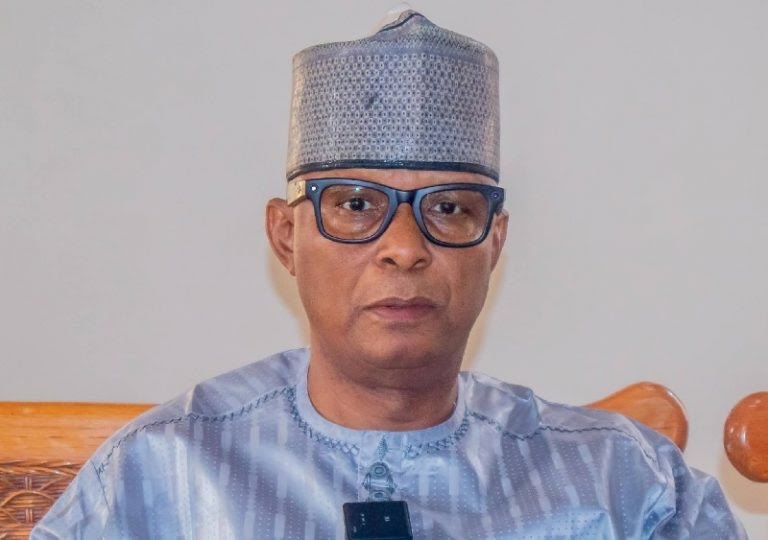
Newly inaugurated Minister of Housing and Urban Development,Mr. Muttaqha Rabe Darma, has set an ambitious tone for his tenure, pledging to deploy innovation and strategic thinking to tackle Nigeria’s massive housing shortfall.
Speaking to Correspondents shortly after taking the oath of office administered by President Bola Tinubu at the State House, Abuja, Friday, Darma framed his appointment as a test of responsibility and accountability, saying his performance would be judged by multiple constituencies, including himself, the public, and ultimately, God.
“I feel that I have been given a responsibility. And I know that if you are given responsibility, there are three classes of people who will judge you on that responsibility.
I won’t satisfy all those classes. For example, I must satisfy myself that the work I’m given, I’m doing it well. Then the people around me, people close to me, will be satisfied that what I’m doing, I’m doing it well. And then the general public will become satisfied that what I’m doing, I’m doing it well.
At the end of it all, God Almighty will also judge me… and I tell you that I am going to deliver to the best of my ability, and you will see changes in no time,” he said.
The minister acknowledged the scale of the crisis before him, noting that Nigeria requires an estimated 20 million housing units to meet current demand, a gap affecting over 100 million people.

“That is a tremendous challenge. Even if you say you’re going to build 15 million houses in the next 10 years, it’s going to be difficult, and it’s going to consume a lot of money. We know all of that,” he stated.
Despite the daunting figures, Darma signalled a reform-driven approach anchored on innovation and forward planning.
“But we are strategic. We are focused. We are forward-looking. We are people who actually think much faster than the time we are in. And I am telling you, we will bring a lot of innovation and creativity to ensure that we do well, and that so many people who are unhoused will be housed, inshallah.”
On the critical issue of funding, long seen as a major bottleneck in the sector, the minister admitted he is yet to fully assess the ministry’s internal constraints but assured that solutions would follow a proper understanding of the terrain.
“Let me tell you one thing: I have not gone to the ministry to fully understand the many challenges it is facing. If I know the challenges, I will definitely find ways to solve them,” he said.
Darma, however, raised concerns over what he described as systemic inefficiencies in government-led housing delivery, contrasting it with the relative success of private developers.
“In this country today, some of the richest people we have, even here in Abuja, are estate owners. They are property developers; they are doing property business.
“Now, why is it that they are building houses, selling them, and yet government-owned houses are being abandoned? Nobody is coming close to government houses. There must be something wrong,” he said.
He added that the profitability and social prestige attached to private real estate ventures underscore deeper issues within public housing frameworks.
“If you start a property business today, by tomorrow you become rich. In your village, they will even begin to give you titles. And that is the truth.
So there must be some concern, something we are not seeing or not addressing, that is causing these challenges in the housing sector.”
With these remarks, the minister signalled an early intent to interrogate existing delivery models, improve efficiency, and potentially harness private sector capacity in bridging Nigeria’s widening housing deficit.

