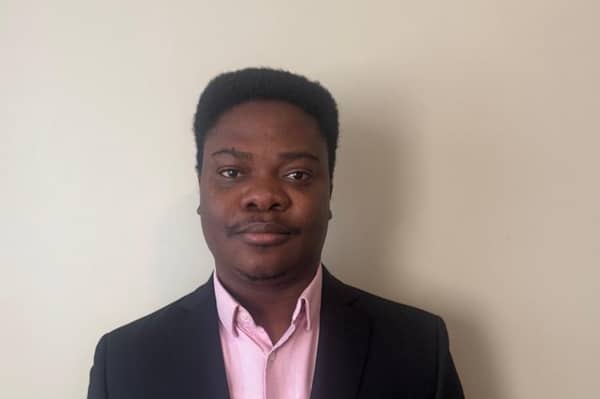
In a groundbreaking advance for Nigeria’s public health sector, Mr Oyedotun Anthony Oyedeji, FRSPH, has earned international recognition for his pioneering role in transforming how HIV risks are identified and addressed within urban slums.
A Fellow of the Royal Society for Public Health (UK) and one of Nigeria’s leading digital epidemiologists, Oyedeji led the Risk Landscape Mapping for Targeted HIV Interventions project, a data-driven initiative that is reshaping Lagos State’s HIV prevention strategy.
Carried out in partnership with the Voice of Women and Self-Empowerment Initiative (VOWSEI) and supported by UNAIDS West Africa and the Abidjan-Lagos Corridor Organization, the project combined peer-led enumeration, behavioural risk clustering, and geospatial data to reveal previously undetected HIV transmission hotspots in some of Lagos’s most underserved districts.
“This project isn’t just about mapping — it’s about making the invisible visible,” Oyedeji told The Guardian, explaining how the data, gathered over 12 months, enabled the Lagos State AIDS Control Agency (LSACA) to reallocate HIV service points across five densely populated local government areas.
Senior Technical Advisor at UNAIDS Nigeria, Dr Aisha Bello, praised the effort: “This work represents a major leap in strategic HIV prevention. Mr Oyedeji’s leadership helped fill a data vacuum that had long hampered targeted interventions. The model is now referenced in our national planning toolkit.”
The project has not only shifted how HIV interventions are delivered in Nigeria, but it is also attracting global attention. Both PEPFAR and the Global Fund are considering adapting the framework for urban deployments in Ghana, Côte d’Ivoire and Sierra Leone.
A graduate of Anglia Ruskin University in the United Kingdom, Oyedeji brings over a decade of public health experience. He currently serves as a strategic advisor to several regional initiatives and has authored peer-reviewed work cited more than 100 times. In 2023, he was admitted as a Fellow of the Royal Society for Public Health in recognition of his contributions to public health research and leadership.
His project integrates digital epidemiology, community-based data gathering, and behavioural science to guide HIV responses for vulnerable populations, including people who inject drugs, homeless adolescents, and sex workers.
With Oyedeji’s model already influencing national and international policy frameworks, it represents a rare success story of innovation meeting impact — and signals a promising shift in how African cities address complex epidemics through evidence-based planning.