 Follow Us on Google News
 Follow Us on Google Discover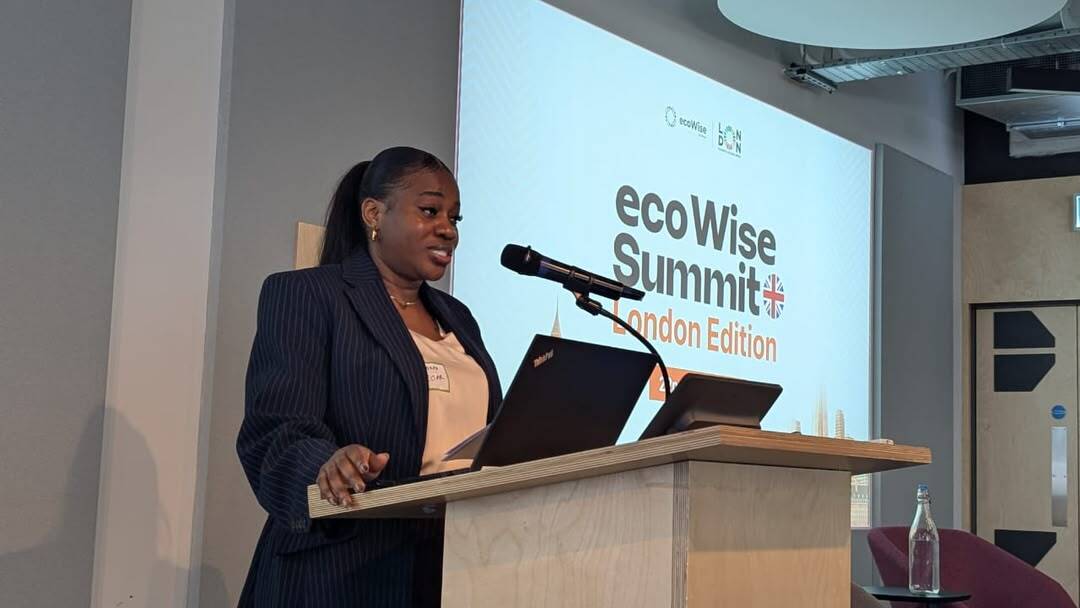
Founder of Vectar Energy, Deborah Fadeyi, has called for increased investment in distributed solar energy, describing it as a critical pathway to unlocking climate finance, expanding energy access, and accelerating sustainable development across Africa, particularly in Nigeria.
The call was contained in a signed statement made available to the media by its Communications Specialist Adeola Abu-Alimi.
According to the statement, Fadeyi made the call while delivering a keynote address at the ecoWise Summit London Edition held at Imperial College London, where senior leaders from government, development finance institutions, carbon markets, standards bodies, and the private sector gathered to examine how distributed solar projects can become credible, financeable, and procurement-ready climate infrastructure.
The statement explained that the summit, organised by Vectar Energy, focused on three key pillars including Scale, Trust and Capital and explored how carbon finance can support the deployment of distributed solar solutions in emerging markets, particularly across Sub-Saharan Africa.
According to Fadeyi, distributed solar sits at the intersection of some of the most pressing climate and development challenges, including energy access, diesel displacement, industrialisation, healthcare, education, and economic resilience.
“Distributed solar sits at the intersection of some of the most urgent issues in climate and development. The deployment needs are enormous. The mitigation potential is real. The development impact is visible. But the financing gap remains structural. Carbon finance can help close part of that gap—not as a silver bullet, but as part of the capital stack,” she said.

She noted that despite growing recognition of distributed solar’s environmental and socio-economic benefits, many projects continue to face barriers to accessing climate finance due to fragmented portfolios, inadequate project preparation infrastructure, and high verification costs.
Discussions at the summit highlighted the need for stronger aggregation mechanisms, improved methodologies, and digital monitoring systems to make carbon markets more accessible to distributed solar developers.
Senior Director of the Universal Energy Facility at Sustainable Energy for All (SEforALL), Anita Otubu, stressed the importance of reforming carbon markets to accommodate smaller renewable energy projects.
“Carbon markets must evolve to better serve distributed solar projects. That means simplifying methodologies and lowering monitoring and verification costs so smaller developers can participate without prohibitive barriers,” she said.
Also speaking, Principal for Catalytic Finance in Emerging Markets at RMI, Benjamin Bartle, said achieving scale would require building the right financial architecture capable of transforming local demand, credible data, and prepared projects into investment-ready portfolios.
“The path from pipeline to bankability is not a straight line. It is an architecture. If we want distributed solar to scale in emerging markets, we need to build the machinery that turns local demand, prepared projects, credible data and appropriate risk allocation into portfolios that capital can hold,” Bartle said.
A major highlight of the summit was the demonstration of ecoWise, Vectar Energy’s digital Monitoring, Reporting and Verification (dMRV) platform designed to support the aggregation, verification, and issuance of carbon credits from distributed solar projects.
Fadeyi described the platform as a critical infrastructure layer capable of bridging the gap between distributed solar’s climate impact potential and the growing demand for high-integrity carbon credits.
She disclosed that Vectar Energy is already engaging corporate buyers interested in securing forward purchase agreements for carbon credits generated by solar projects in Nigeria.
The summit also featured remarks by Senior Special Assistant to the President on Climate Finance, Ibrahim Abdullahi Shelleng, who outlined Nigeria’s efforts to build a credible climate finance ecosystem capable of attracting international capital.
“We are building the infrastructure that will allow climate finance to flow at scale,” Shelleng said, noting that Nigeria is positioning itself as an active participant in the global carbon market.
Participants further examined the role of catalytic finance, forward procurement commitments, governance frameworks, and digital verification systems in strengthening investor confidence and improving access to capital for renewable energy projects.
The summit concluded with a call for stronger collaboration among governments, financiers, standards bodies, developers, and carbon market actors to unlock climate finance opportunities for Africa’s energy transition.
Vectar Energy also announced plans to develop a Distributed Solar Conditions Register, a framework aimed at identifying the operational, financing, regulatory, and integrity requirements needed for distributed solar carbon credits in emerging markets to become credible procurement infrastructure.
Fadeyi maintained that unlocking climate finance for distributed solar would require coordinated action across the ecosystem, stressing that integrity, transparency, and collaboration remain essential to scaling renewable energy investments across Africa.

