 Follow Us on Google News
 Follow Us on Google Discover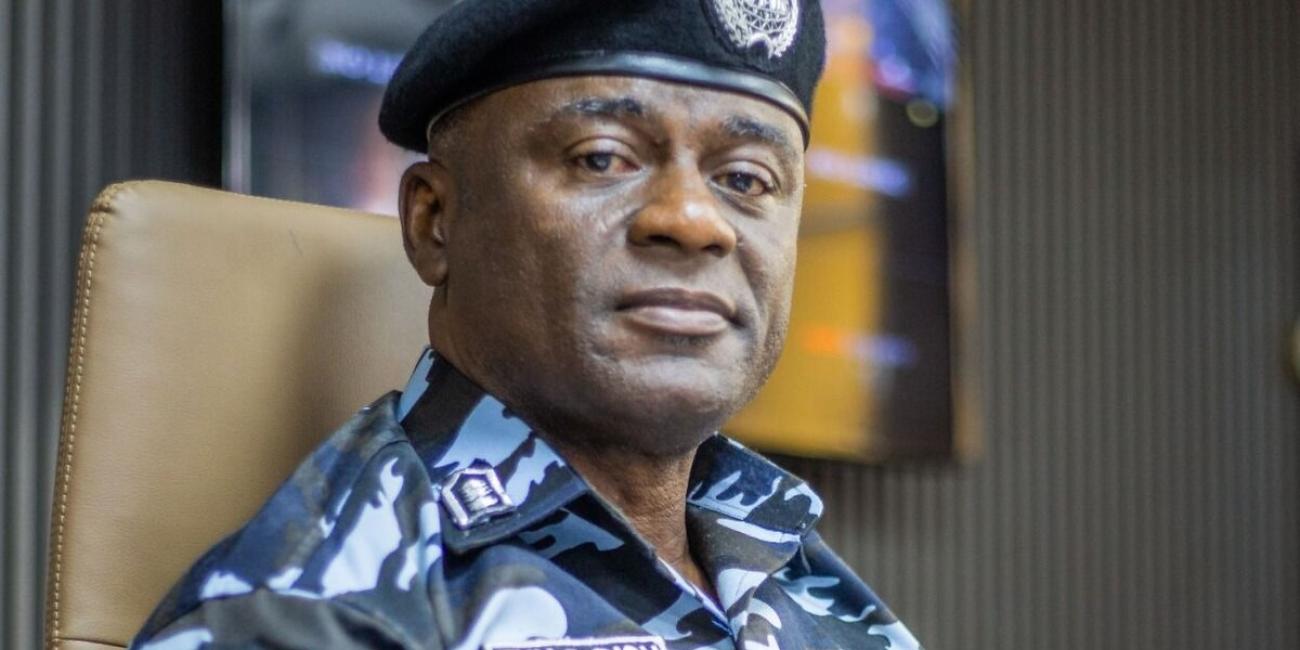
• Presidency: Egbetokun’s resignation was voluntary
• Group raises service rule caveat with two months to Disu’s statutory exit
• 29 DIGs, AIGs on path of compulsory retirement
• PSC begins recruitment of 50,000 constables March 9
Notwithstanding the unexpected change of guards yesterday at the Nigeria Police Force (NPF) headquarters following the resignation from office of the Inspector General of Police, IGP Kayode Egbetokun, controversies over tenure elongation, which dogged Egbetokun’s over 30 months stint in office, resurfaced again shortly after his replacement, Tunji Disu, an Assistant Inspector-General of Police, was announced as Acting Inspector-General of Police with immediate effect.
Egbetokun resigned yesterday, with the Presidency confirming that the decision was voluntary and not a dismissal, ending the controversy that trailed his extension in office upon his attainment of 60 years of age on September 24, 2024. Presidential spokesman, Bayo Onanuga, disclosed on Tuesday that Egbetokun submitted his resignation letter, citing pressing family considerations.
Appointed in June 2023, Egbetokun was serving a four-year term scheduled to conclude in June 2027, in line with the amended provisions of the Police Act. His tenure had earlier been extended by one year in 2025.
The Civil Service Rule, which had been incorporated into the Police Act, stipulates that the retirement age of every police officer be 60 years old or 35 years of service, whichever comes first. However, the Attorney General of the Federation and Minister of Justice, Lateef Fagbemi, had then defended the legality of the continued stay in office of Egbetokun, noting that the Police Act was amended to allow the occupant of the office to remain and complete the original four-year term granted under Section 7(6) of the Act, even though he has attained the age of 60.
Approving Disu’s appointment, the President said AIG Disu’s experience, operational depth and demonstrated leadership capacity would provide steady and focused direction for the Police Force at a critical time, given the prevailing security challenges across the country.
In compliance with the Police Act 2020, the President will shortly convene a meeting of the Nigeria Police Council to formally consider Disu’s appointment as substantive Inspector-General of Police. His name will subsequently be transmitted to the Senate for confirmation.
BUT a civil society organisation, Visionary Leaders Consensus (VLC), has immediately cautioned against the reported plan to appoint Disu as the next IGP, warning that such a move could trigger institutional instability within the NPF.
In a statement issued in Abuja by its National Chairman, Dr Ibrahim Bature, VLC said while leadership transition is a routine administrative process, the timing and implications of the proposed appointment raise serious structural concerns. The group noted that AIG Disu, born on April 13, 1966, is expected to attain the mandatory retirement age of 60 in April 2026. If appointed now, VLC argued, he would have barely two months in office before retirement.
“This effectively means Nigeria could face another leadership change in the police force within weeks, creating instability at the top echelons of law enforcement,” the statement read.
VLC said such a scenario would mirror the controversy that surrounded Egbetokun’s tenure. It recalled that the former IGP, appointed at the age of 58, had his tenure extended beyond the statutory retirement age following an amendment to the Police Act by the National Assembly to allow a fixed four-year term regardless of age.
According to the group, failing to apply a similar extension to Disu could result in one of the shortest tenures in the history of the force. However, it warned that extending the tenure again so soon after the last amendment could further erode public confidence in the integrity of the police leadership selection process.
Beyond the tenure issue, VLC highlighted what it described as a potential domino effect within the police hierarchy. It explained that under Police Service Commission regulations and established conventions, the appointment of a new IGP often necessitates the retirement of senior officers who are either senior in rank or date of enlistment.
According to the group, at least 29 senior officers — comprising 16 Assistant Inspectors-General of Police (AIGs) and nine Deputy Inspectors-General of Police (DIGs) — may be compelled to exit the service if the reported appointment proceeds. “This represents a significant portion of the force’s top command structure,” the group stated.
VLC warned that such a sweeping change could create a leadership vacuum, disrupt ongoing security operations, and erode institutional memory at a critical time.
“The planned removal of these senior officers is believed to be aimed at realigning the police hierarchy under the incoming leadership. However, such a sweeping change in such a short time could paralyse decision-making processes and weaken operational effectiveness,” the statement added.
The group advised the Federal Government to prioritise a transition framework that ensures stability, continuity, and preservation of institutional memory within the Nigeria Police Force.
EGBETOKUN’S exit was met with mixed reactions at the Force Headquarters yesterday, as it is expected to trigger the compulsory retirement of at least eight DIGs. Consequently, a major reshuffle at the top echelons of the NPF is anticipated.
Police insiders explained that top-level restructuring is customary whenever a new IGP is appointed, particularly affecting officers senior in rank to the appointed IGP or those nearing statutory retirement. But it remains unclear whether DIG Fayoade Adegoke, DIG Funsho Adegboye, and DIG Mohammed Adamu Dankwara, who were recently promoted, will also be required to retire.
An internal list circulating within the Force indicated that DIGs heading key departments may be affected, including DIG Yahaya Abubakar (Finance and Administration), DIG Adebola Hamzat (Logistics and Supply), DIG Adebowale Williams (Information and Communication Technology), DIG Sadiq Idris Abubakar (Force Criminal Investigation Department), DIG Ben Nebolisa Okolo (Force Intelligence Department), DIG Basil Idegwu (Research and Planning), and DIG Training.
A serving AIG, who spoke on condition of anonymity, confirmed that the exit of several DIGs is a routine consequence of a junior officer’s elevation to IGP.
He said, “The NPF has a strict hierarchy. When a junior officer is appointed IGP, it is common for senior officers above him in rank to retire, voluntarily or otherwise. This prevents conflicts in the chain of command and allows the new leadership to implement its strategic agenda without obstruction. Besides, three of the recently promoted DIGs may retire between June and July due to age and years of service.”
He added that most of the affected DIGs have reached or are near statutory retirement age, noting that the shake-up provides an opportunity for the new IGP to place trusted officers in key positions, strengthen operational efficiency, and implement reform policies.
Reiterating that the compulsory retirements are procedural and not punitive, the AIG said the unfolding changes “signal a generational shift within the Force’s top command, with potential implications for internal stability, operational direction, and institutional reform.”
THE new police boss, Disu, is a veteran of the NPF, having joined the service on May 18, 1992, with more than three decades of experience in policing and leadership. Disu holds a bachelor’s degree in English Education from Lagos State University and two master’s degrees — one in Public Administration and another in Criminology, Security, and Legal Psychology.
He has held several key roles, including: Commander of the Rapid Response Squad (RRS) in Lagos, known for proactive crime-fighting and community engagement; head of the Intelligence Response Team (IRT), succeeding the previous commander, Abba Kyari in 2021; Commissioner of Police in Rivers State and in the Federal Capital Territory (FCT), Abuja and lately Assistant Inspector-General of Police in charge of the Force Criminal Investigation Department (FCID) annex, Alagbon, Lagos where he was transferred to three weeks ago.
His appointment as Acting Inspector-General of Police comes at a time of heightened focus on security reforms. He is seen as a leader who combines operational experience with a commitment to professionalism, accountability, and modern policing strategies.
IN another development, the Police Service Commission (PSC) has announced that it will commence screening for the recruitment of 50,000 police constables on March 9, 2026.

The commission, in a statement by its spokesperson, Torty Njoku Kalu, said the screening will be a continuation of the ongoing recruitment of Constables into the NPF, stressing that the exercise would be for candidates who completed the online recruitment registration.
He said the exercise will be done physically, including credential screening covering March 9 and April 18, 2026, across the federation.
The application portal for the recruitment exercise, which opened on December 15, 2025, was initially scheduled to close on January 25, 2026, but was extended to February 8, 2026.
The PSC, in a statement in January, expressed concern over the low turnout of applicants from Lagos and several other states, prompting the commission to extend the recruitment exercise by two weeks. In contrast, states such as Adamawa, Benue, and Kaduna recorded high numbers of applications.

