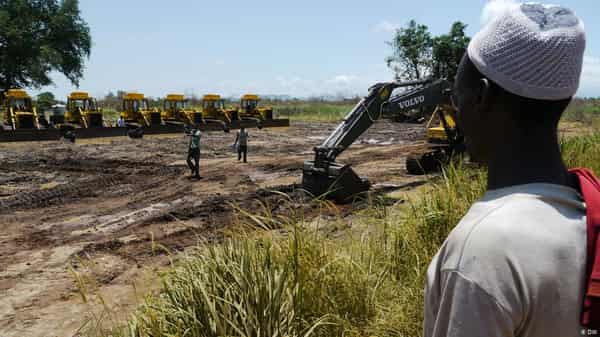

Corruption in the implementation of agricultural development programmes, land-grabbing and consequent loss of access to farmlands by farmers are directly responsible for the rising poverty in the North.
At a roundtable on the book, The Face of Poverty in Nigeria, supported by Rosa Luxemburg Foundation West Africa, in Abuja, Associate Professor in the Department of Political Science, Nigerian Defence Academy (NDA), Kaduna,Dr. Ekpo David, noted desertification and climate change as other major drivers of poverty in the region.
Ekpo queried the relevance of 17 research institutes, as Nigeria continually battles food shortages, saying: “We have 17 research institutes mandated to study different crops, but all the money allocated to them is pilfered, thus promoting rural poverty.”
He alleged that wealthy individuals appropriated land for themselves to the detriment of rural people, who make a living from it.
“Multinationals are as well involved in land-grabbing in Nigeria, particularly in Zamfara, as well as Kano and Jigawa states. For instance, in Jigawa, the government allocated 12,000 hectares to a Chinese firm for sugarcane plantation. There are cases in Muri Mada and Chulloi, all in Song Local Council of Adamawa. Another is the case of Lugga Demsa in Adamawa,” he stated.
He observed that despite the introduction of several poverty alleviation programmes by successive governments in Nigeria, over 33 million Nigerians live in poverty with at least three million sliding into extreme poverty between November 2018 and February 2019.
On her part, Dr. Olajumoke Jenyo, also of NDA, insisted that women were disadvantaged in the economic empowerment space.
She submitted: “Nigeria had a 23.1 per cent unemployment rate in 2018, while underemployment stood at 20.1 per cent; of these, males had 20.3 per cent unemployment rate and 15.4 per cent underemployment rate, while females had 26.6 per cent unemployment and 25.9 per cent underemployment.
“To further show that women are double disadvantaged, women, traditionally, in most parts of Nigeria, have no right to land inheritance; thus, land inheritance is an exclusive preserve of the males in the family.”
She stressed the need to improve the income of rural populace through the provision of affordable or subsidised farm inputs, enforcement of penalties against land-grabbers, planting more trees to address challenges of climate change, proper implementation of ecological funds, decentralisation of local council institutions, improvement on the nutrition of rural people, fight against corruption and insecurity, and establishment of a fair political system that empowers every citizen to achieve inclusive poverty alleviation in the country.