 Follow Us on Google News


 Follow Us on Google Discover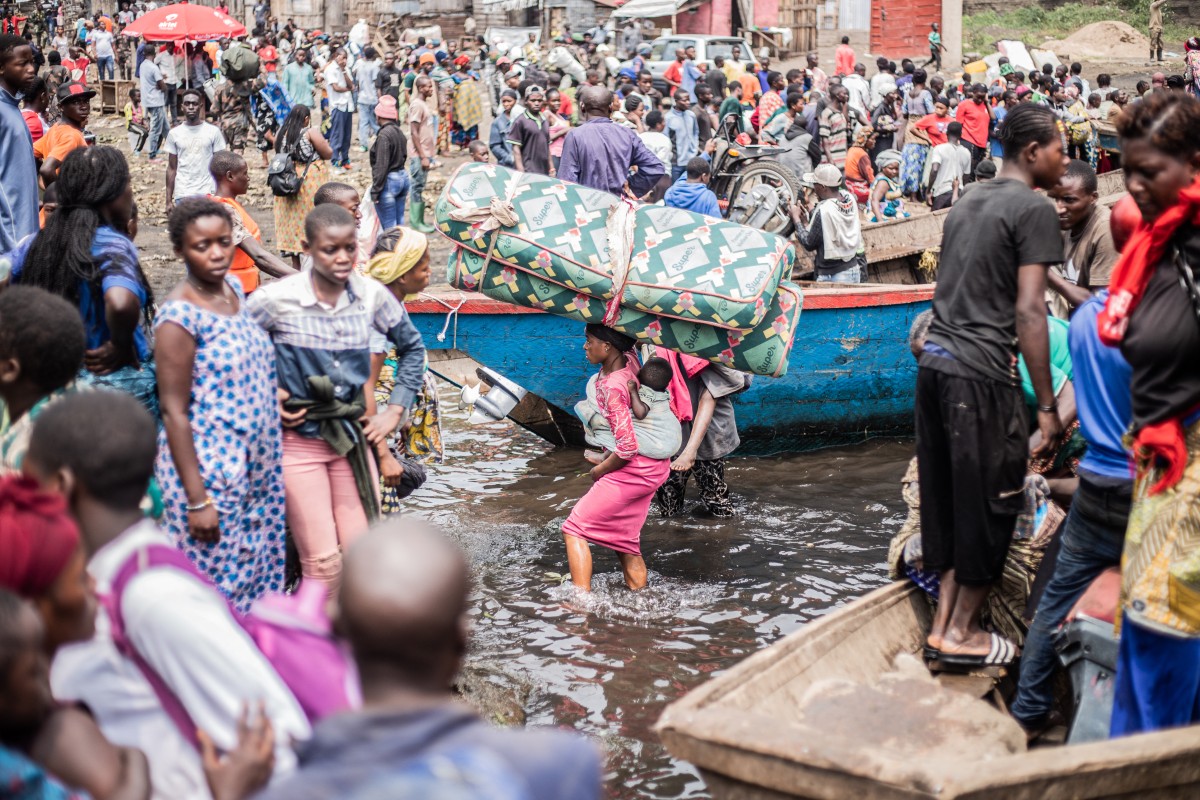

Civilians in eastern DR Congo face “increasing risks” as Rwandan-backed group M23 closes in on the key city of Goma, Human Rights Watch said on Saturday.
Friday saw intense clashes barely 20 kilometres (12 miles) from the provincial capital of North Kivu, which has a million inhabitants and at least as many displaced people.
“Civilians in eastern Democratic Republic of Congo are at increasing risk as the abusive M23 armed group, supported by the Rwanda Defence Force (RDF), as the group nears Goma,” HRW said in a statement which warned of looming “catastrophic consequences” for people in the region.
“The situation facing Goma’s civilians is becoming increasingly perilous and the humanitarian needs are enormous,” said Clementine de Montjoye, HRW’s senior Africa researcher.
“The horrific abuses by the M23, Wazalendo (pro-Kinshasa militia) and the Rwandan and Congolese armies should serve as a stark warning to concerned governments that they need to press the warring parties to protect civilians,” de Montjoye added.
“Currently around 30 to 40 percent of injured people seeking medical care in Goma are civilians,” one humanitarian source told HRW.

The rights group noted that on Friday, the International Committee of the Red Cross said the hospital it runs in Goma was “saturated” after an influx of patients, largely women and children.
The group also accused the M23 of “forced labor, forced recruitment, and other abusive practices.”
It added that “Rwandan forces and the M23 and the Congolese military and its allies have a legacy of atrocities including murder, rape, and looting.”
The conflict between the M23, supported by some 3,000 to 4,000 Rwandan troops according to the UN, and Congolese forces has gone on for more than three years, deepening a chronic humanitarian crisis in the region.
Many civilians have been forced from their homes on countless occasions.
The UN estimates around 400,000 people have been displaced by fighting since the start of this year.
UN Secretary General Antonio Guterres expressed alarm Thursday about a resurgence of violence which he warned could spark a regional war.
Guterres has convened an emergency meeting of the Security Council on Monday.
DR Congo accuses Rwanda of wanting to take control of mineral-rich eastern Congo, which Kigali denies.

