 Follow Us on Google News


 Follow Us on Google Discover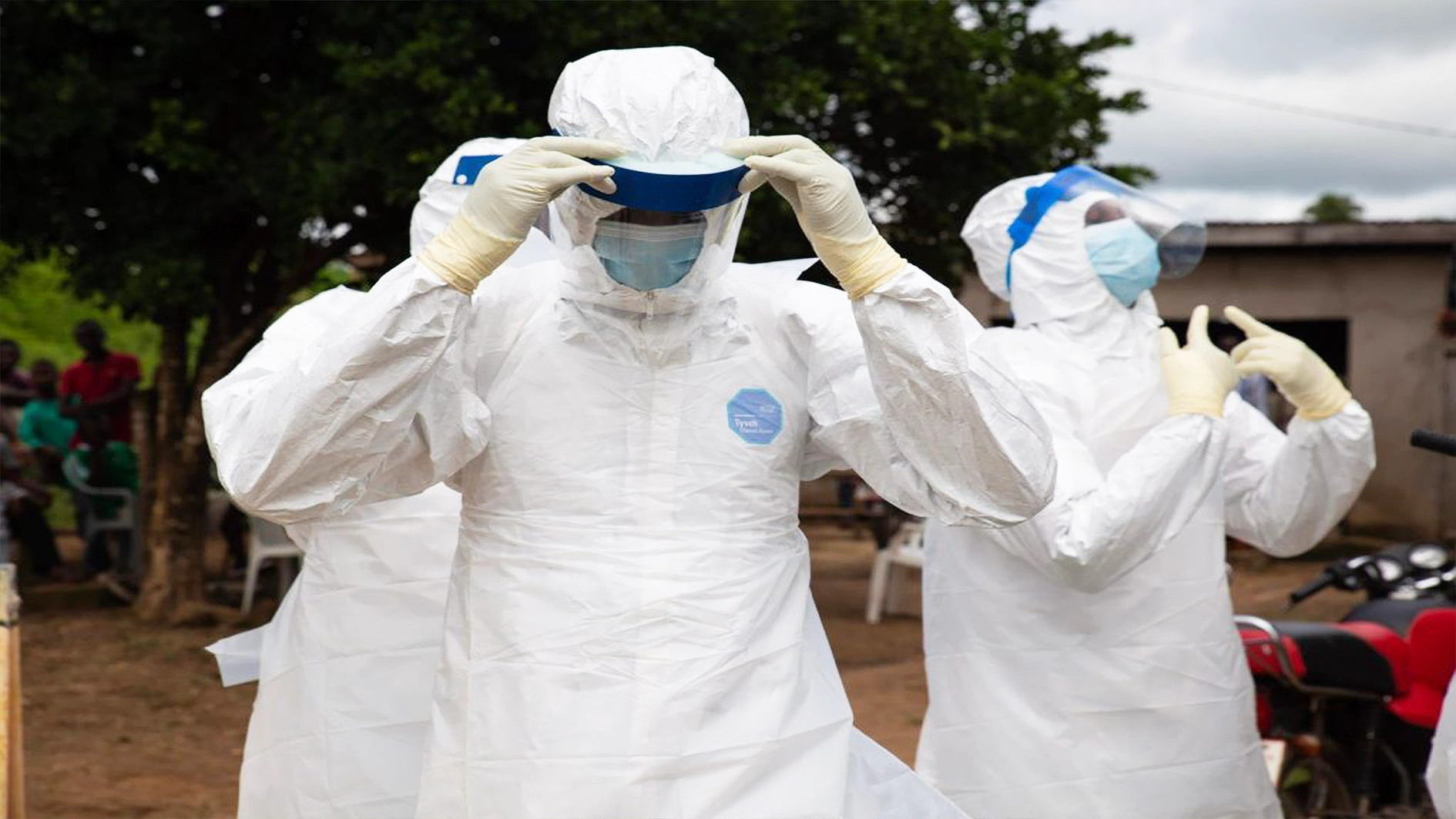
At least 100 deaths have been reported in an Ebola outbreak in the Democratic Republic of Congo, with more than 390 cases suspected, the head of the Africa Centres for Disease Control and Prevention has told the BBC.
The World Health Organisation (WHO) has declared the outbreak an international emergency. The current strain of Ebola is caused by the Bundibugyo virus, for which there are no approved drugs or vaccines.
There are also two confirmed cases and one death in Uganda, according to the U.S. Centres for Disease Control and Prevention (CDC).
At least six Americans have been exposed to the Ebola virus during the outbreak in the DR Congo. One American is believed to have symptoms, with three others said to have faced a high-risk contact or exposure. It is unclear whether any have been infected.
The CDC said it was supporting the “safe withdrawal of a small number of Americans who are directly affected”, but did not confirm how many.
The United States (U.S.) Government is reportedly looking to arrange transport for the small group of Americans in DR Congo to a safe quarantine location, a source told health news site STAT.

In an update yesterday, the public health agency said the risk to the U.S. was relatively low but would introduce a range of measures to prevent the disease from entering the country.
MEANWHILE, the Academy of Medical Sciences, Nigeria, yesterday, raised concerns over the recent outbreak of Ebola Virus Disease in the Democratic Republic of Congo and Uganda, warning of the risk of cross-border transmission into Nigeria.
In a statement signed by the Chairman of its Rapid Response Committee, Prof. Obinna Onwujekwe, and the Academy President, Emeritus Prof. Osato Giwa-Osagie, the academy called for intensified national surveillance and preparedness.
The statement noted that as of May 16, 2026, the outbreak had recorded eight laboratory-confirmed cases, 246 suspected cases, and 80 suspected deaths in the DRC, as well as two confirmed cases, including one death, in Uganda.
Describing Ebola as a severe and often fatal viral haemorrhagic disease, the Academy said past outbreaks had recorded case fatality rates ranging from 25 to 90 per cent, depending on the strain and response capacity.
“The recurrence of Ebola outbreaks within the African continent underscores the continued vulnerability of all nations to transboundary infectious diseases,” the statement read.
It added that Ebola is transmitted through direct contact with blood, secretions, organs, or other bodily fluids of infected persons, contaminated materials, infected animals, and the bodies of deceased victims during burial rites.
The Academy stressed that Nigeria’s successful containment of the 2014 Ebola outbreak demonstrated the effectiveness of a coordinated public health response, but warned against complacency.
It urged the Federal Government, through the Federal Ministry of Health, Port Health Services, and the Nigeria Centre for Disease Control (NCDC), to strengthen border surveillance, particularly at international airports, seaports, and land crossings.
Among its recommendations were enhanced screening of travellers from affected countries, risk-based movement control measures, and improved diagnostic capacity to detect and confirm suspected cases early.

