 Follow Us on Google News
 Follow Us on Google Discover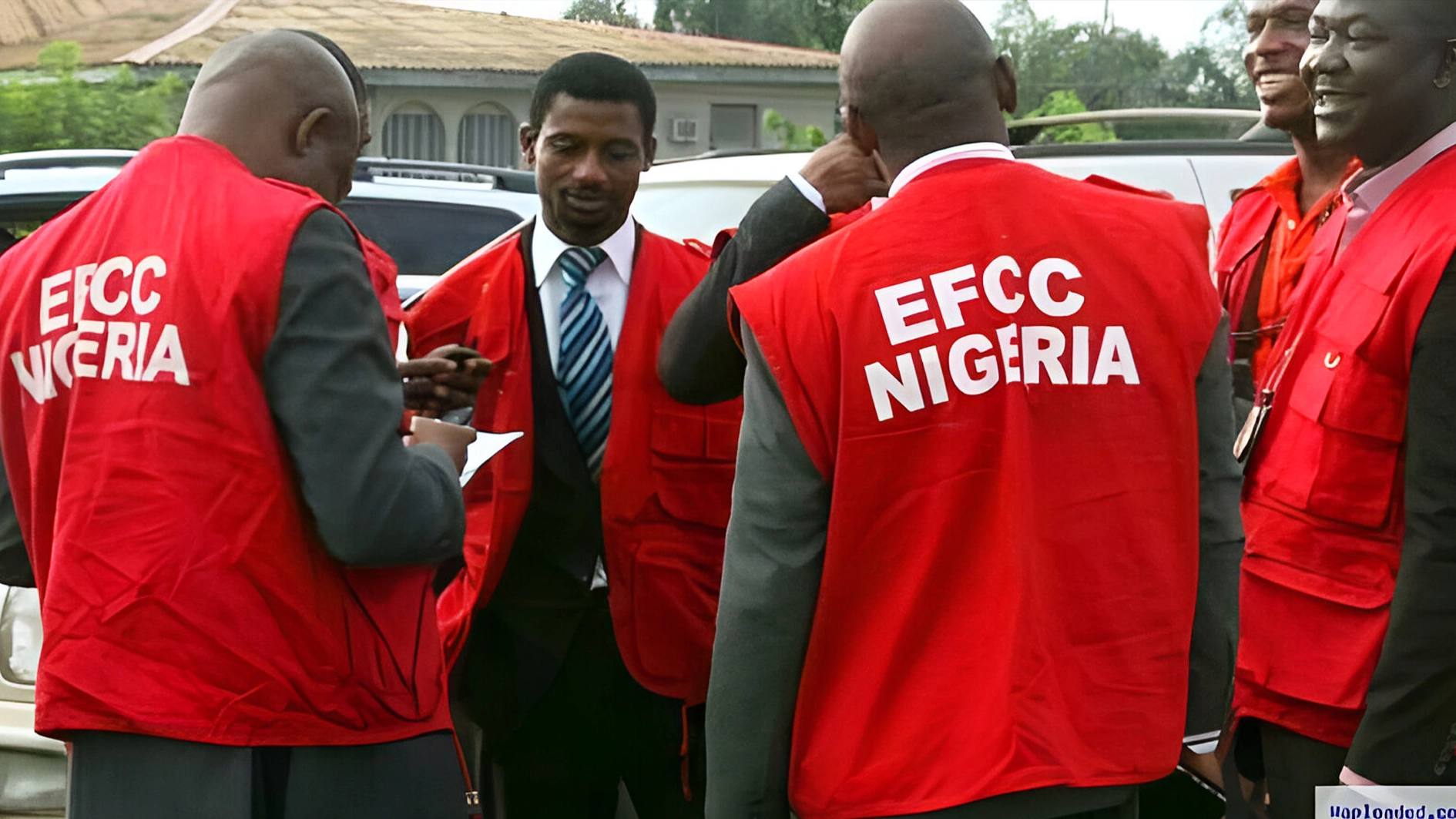
• Dismisses over 40 staff, busts 234 illegal BDCs, secures 73 convictions
• Don hails commission’s boss over anti-graft performance
The Economic and Financial Crimes Commission (EFCC) has recovered assets and cash valued at about N1.233 trillion and secured 10,872 convictions in 34 months, while dismissing more than 40 of its personnel for corruption and financial malpractice.
Following its performance, a Nigerian-American forensic psychologist and criminal justice expert, Prof John Oshodi, described the Chairman of EFCC, Ola Olukoyede, as a “man of integrity” who is building the anti-graft agency beyond his personality.
Olukoyede, while presenting his stewardship report from October 2023 to July 2026, yesterday, in Abuja, also disclosed that about N288.1 billion in federal and state tax revenue was recovered through enforcement of existing obligations and strengthening its contribution to government revenue mobilisation.
According to him, the recoveries comprised about N173.2 billion in federal tax revenue and N114.9 billion attributed to states’ internal revenue services, a mount, stressing that the amount represented revenue recovered through enforcement of existing obligations, rather than new taxes imposed on businesses and individuals.
Olukoyede said the recovery of tax obligations demonstrated how anti-graft enforcement could reinforce the revenue capacity of governments at both federal and state levels.

In addition, he disclosed that approximately N257.2 billion in recovery was recorded for federal Ministries, Departments and Agencies (MDAs).
The EFCC chairman also highlighted the commission’s enforcement in the foreign exchange market, particularly its crackdown on unlicensed bureaux de change (BDCs), saying 234 BDC cases were recorded, with 73 convictions secured within the three years.
He said the enforcement was aimed at supporting the regulatory reforms of the Central Bank of Nigeria (CBN) and creating a more formal, transparent and compliant retail foreign exchange market.
“The overarching objective is to support a more formal, transparent and compliant retail foreign-exchange market and close channels vulnerable to illicit finance, speculation and round tripping,” he said.
EFCC’s work in the sector, Olukoyede added, contributed to improved macroeconomic stability, with long-term benefits for citizens.
Beyond tax and foreign exchange enforcement, the EFCC recovered N1.233 trillion between October 2023 and June 2026, alongside $684.48 million, £373,905.78 and €9.34 million, as well as recoveries in other currencies.
Of the naira recoveries, about N397.26 billion (33 per cent) was recovered directly for the Federal Government, while N836.34 billion (67 per cent) was recovered on behalf of MDAs, state revenue services, companies, individuals and foreign victims.
The commission said the funds recovered for beneficiaries demonstrated that its activities extended beyond direct government revenue to restoring funds and assets to institutions, businesses and individuals affected by economic and financial crimes.
Olukoyede disclosed that N661.32 billion and $492.37 million had been released to beneficiaries during the period. The naira releases included N325.35 billion paid directly to individuals and corporate bodies, while N335.97 billion went to MDAs, the Nigerian Revenue Service (NRS), state internal revenue services and other public institutions, companies and individuals.
He said the commission also secured the forfeiture of 10,053 tangible assets under interim and final court orders between October 2023 and July 2026. The assets included real estate, automobiles, land, schools, factories, hotels, shops, oil rigs, barges, machinery and aircraft.
Proceeds from the disposal of assets under final forfeiture orders amounted to about N12.07 billion and were paid to the Federal Government, while 102 tonnes of solid minerals were also forfeited.
The anti-graft czar said the commission would continue to focus on faster restitution, stronger prevention and greater use of investigative technology, stressing that enforcement must translate into measurable value for the public.
Noting the convictions in several high-profile cases, he insisted that political office and social status would not shield anyone from investigation or prosecution.
Oshodi said yesterday that Olukoyede was strengthening professional systems within the EFCC, developing young officers, recovering public assets, promoting preventive measures and building public confidence in lawful anti-corruption enforcement.
The EFCC chairman’s leadership, he asserted, was particularly significant because he appeared focused not merely on his personal visibility but on strengthening the institution he heads.
“Olukoyede is building more than cases. He is building professional capacity, young officers, preventive systems and public awareness. He is also building confidence in lawful anti-corruption enforcement,” Oshodi said.
The don said the EFCC chairman’s approach represented a departure from personality-driven leadership, arguing that Nigeria needed strong, professional, transparent and enduring institutions rather than public officials whose personal influence overshadowed the institutions they headed.
According to him, the true measure of Olukoyede’s leadership would not be how frequently his image appeared in the media, but whether the EFCC became “more capable, professional, impartial, transparent, and resilient” because of his tenure.

