 Follow Us on Google News


 Follow Us on Google Discover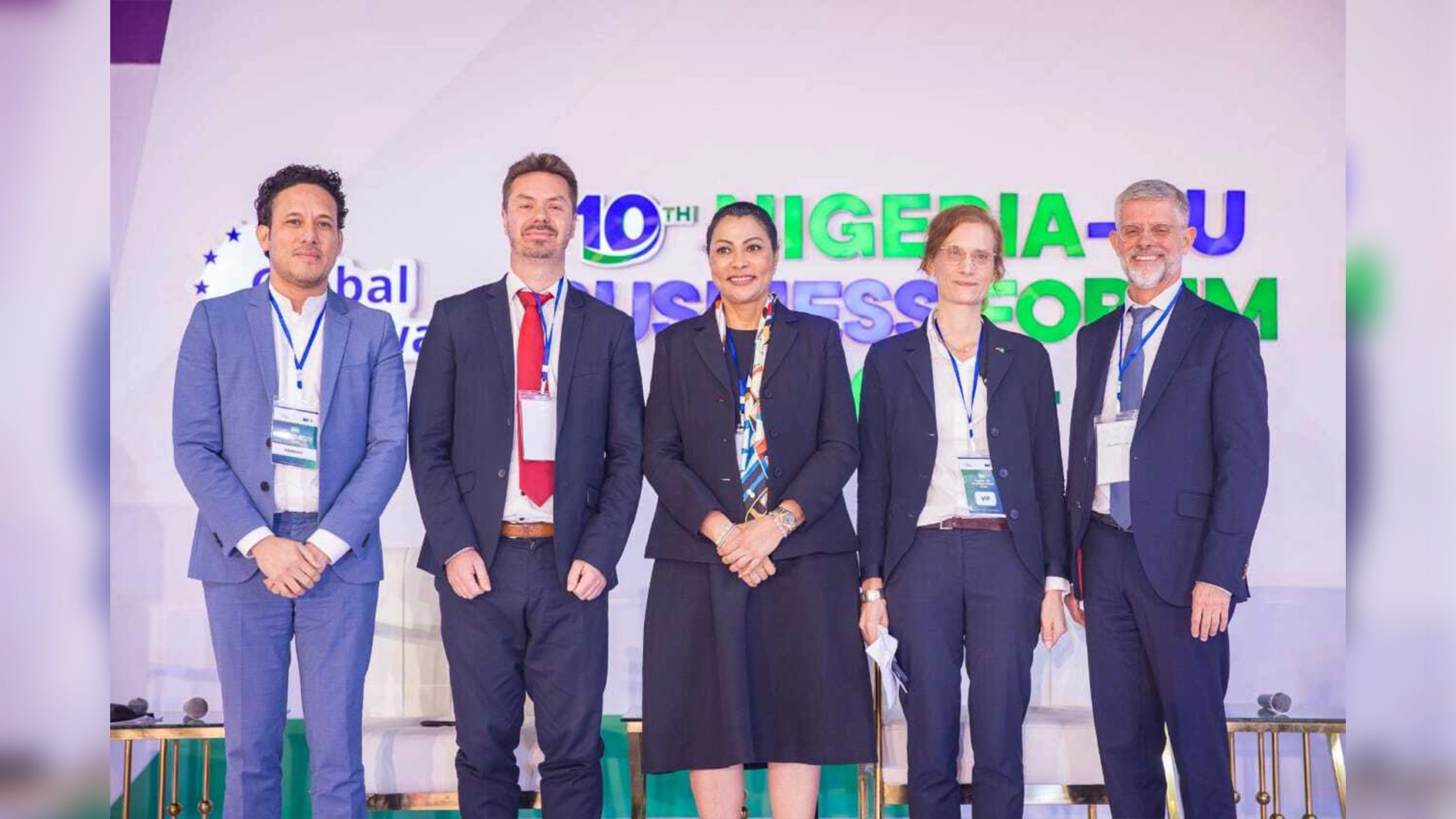
European development finance institutions have committed more than €500 million to Nigeria over the past year, with additional financing expected in the coming months, in a strong vote of confidence in the country’s ongoing economic reforms.
The funding commitment was announced at the 10th Nigeria-European Union Business Forum, where the European Investment Bank (EIB) revealed that it had significantly expanded its investment portfolio in Nigeria across both the public and private sectors, targeting critical areas of the economy.
Senior Investment Officer in the Corporate Division of the European Investment Bank, Loic Le Ruyet, said the Bank signed over €500 million in financing last year and is preparing to scale up its investments further.
“We have signed last year over €500 million of financing in the country, in the public sector and in the financial sector mostly. There is more coming this year,” Le Ruyet said.
According to him, the investments span sustainable transportation, healthcare manufacturing, agriculture, renewable energy, digital infrastructure and financing for small and medium-sized enterprises (SMEs), sectors considered vital to Nigeria’s long-term economic growth.
He disclosed that some of the projects already supported include financing for Lagos waterways transportation, funding for the Development Bank of Nigeria to expand lending to priority sectors, healthcare manufacturing through the Bank of Industry, as well as agricultural value-chain projects in cocoa and dairy production.

Speaking during the financing session of the forum, the Minister of State for Budget and Economic Planning, Dr. Doris Uzoka-Anite, said the growing investment pipeline reflects increasing international confidence in the Federal Government’s economic reform agenda.
She noted that recent reforms, including the removal of fuel subsidies, the unification of the foreign exchange market, tax reforms and improvements in public financial management, had strengthened investor confidence and positioned Nigeria as an attractive destination for long-term capital.
According to the minister, the new financing facilities are fully aligned with the Renewed Hope National Development Plan 2026–2030 and are expected to boost digital transformation, healthcare value chains, infrastructure development and access to finance for businesses.
“The facilities being announced today take on their strategic significance. They are not isolated initiatives. These are integral to the Renewed Hope National Development Plan 2026 to 2030,” Uzoka-Anite said, adding that the investments would enhance productivity, competitiveness and economic resilience.
The forum also witnessed the launch of a €20 million Nigeria Country Window, jointly implemented by FMO, the Dutch entrepreneurial development bank, and the European Development Finance Institutions Management Company (EDFI MC) under the European Union’s Agrifi and Electrifi blended finance programmes.
Speaking on the initiative, Edilberto Jose Baquero of FMO said combining agriculture and energy financing would address two of Nigeria’s most pressing development challenges by supporting agribusinesses while expanding access to electricity in underserved rural communities.
William Barrault of EDFI MC added that the programme is designed to provide direct financing to small and medium-sized enterprises in agribusiness and rural electrification while attracting additional investments from other European development finance institutions.
The investment announcements underscore a broader shift in the Nigeria-European Union partnership from traditional development assistance towards investment-led economic growth, with European financiers increasingly leveraging public finance, blended finance and strategic partnerships to mobilise private capital into sectors critical to Nigeria’s economic transformation.

