 Follow Us on Google News


 Follow Us on Google Discover
• Death toll rises to 247 in DRC, Uganda
President Bola Tinubu has called for increased vigilance and preparedness at both state and national levels against biological threats such as Ebola Virus Disease (EVD) and Lassa fever.
The followed the identification of Lagos, Abuja, Rivers, Kano, Enugu, Borno, Akwa Ibom, Cross River, Taraba and Adamawa by Nigeria Centre for Disease Control and Prevention (NCDC) as states with high risk of Ebola importation due to the ongoing outbreak in the democratic Republic of Congo (DRC) and Uganda, international travel and population movement as well as the uncertainty regarding the full magnitude of the outbreak.
The President made the remark during a brief interaction with Lagos State Commissioner for Health, Prof. Akin Abayomi, and other government officials at the airport before departing Lagos for Abuja after participating in the APC presidential primaries in the state.
According to Abayomi, the President emphasised the importance of strengthening measures to prevent and respond to infectious disease outbreaks, particularly in light of growing concerns about biological shocks in the region.
The commissioner, who disclosed this on his X account yesterday, said the President’s warning highlighted the urgent need for sustained disease surveillance, emergency preparedness and coordinated public health response mechanisms across the country.
Lagos State has continued to maintain a high level of preparedness against Ebola and other infectious diseases, given its status as Nigeria’s commercial hub and one of Africa’s busiest international travel destinations.
The state has strengthened surveillance systems across health facilities and points of entry, and improved rapid-response mechanisms to detect and contain suspected outbreaks promptly. Its health authorities are collaborating with federal agencies and public health institutions to build on lessons from Nigeria’s successful containment of the Ebola outbreak in 2014.
Public health experts have continued to warn that increased regional mobility, weak health systems, and emerging health threats across parts of Africa could heighten the risk of cross-border outbreaks if surveillance and preparedness measures are not sustained.
NCDC also placed Ogun, Nasarawa, Kaduna, Plateau, Kogi, Niger, Jigawa, Katsina, Bauchi, Ebonyi, Abia, and Bayelsa states on moderate risk.
According to the Centre, the high-risk states are known trade or travel routes with international airports, seaports, porous borders and ground crossings, stressing that while all states and the Federal Capital Territory (FCT) must maintain Ebola preparedness, the pace of readiness should reflect each state’s importation and transmission risk.
Director-General of NCDC, Dr Jide Idris, who disclosed this in a public health advisory yesterday in Abuja, noted that 1,077 suspected cases and 247 deaths had been reported in the DRC and Uganda, adding that case fatality is as high as 24.6 per cent, while the age group mostly affected is 14 to 45 years.
Regional and national risk remain high. Idris stated that suspected cases had been reported in India, while Canada had announced a “temporary pause” on travel applications by residents of DRC, Uganda, and South Sudan due to the outbreak. Very recently, Uganda also announced border closure measures.
He noted that there were no approved vaccines or specific treatments available for Bundibugyo EVD, as control of the outbreak depends largely on rapid public health measures.
EVD, Lassa fever: Tinubu calls for increased vigilance as NCDC lists high-risk states
Date: 29 May 2026 4:15am WAT
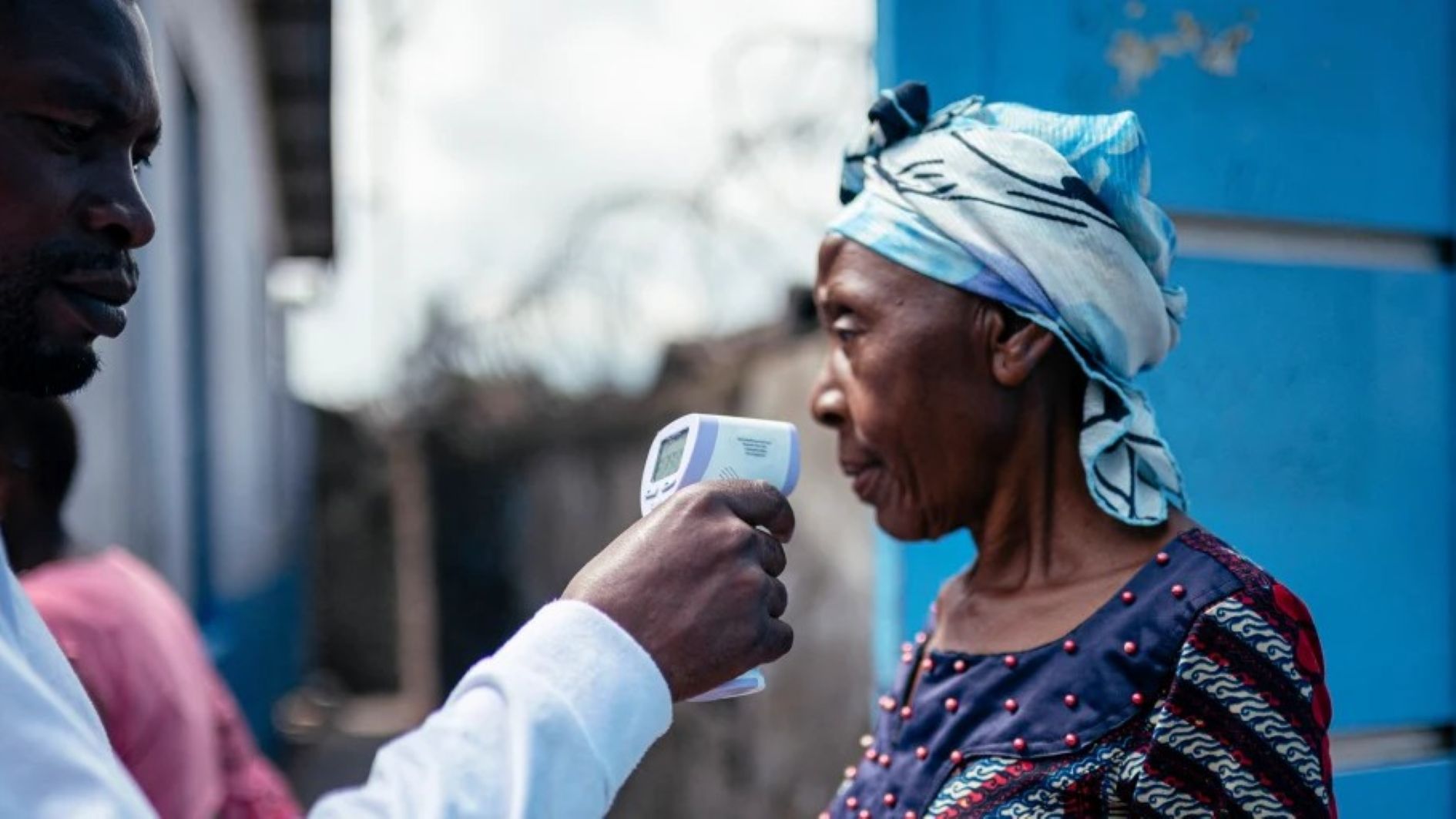
A man scans a woman in the aftermath of the Ebola outbreak
A man scans a woman in the aftermath of the Ebola outbreak

