 Follow Us on Google News


 Follow Us on Google Discover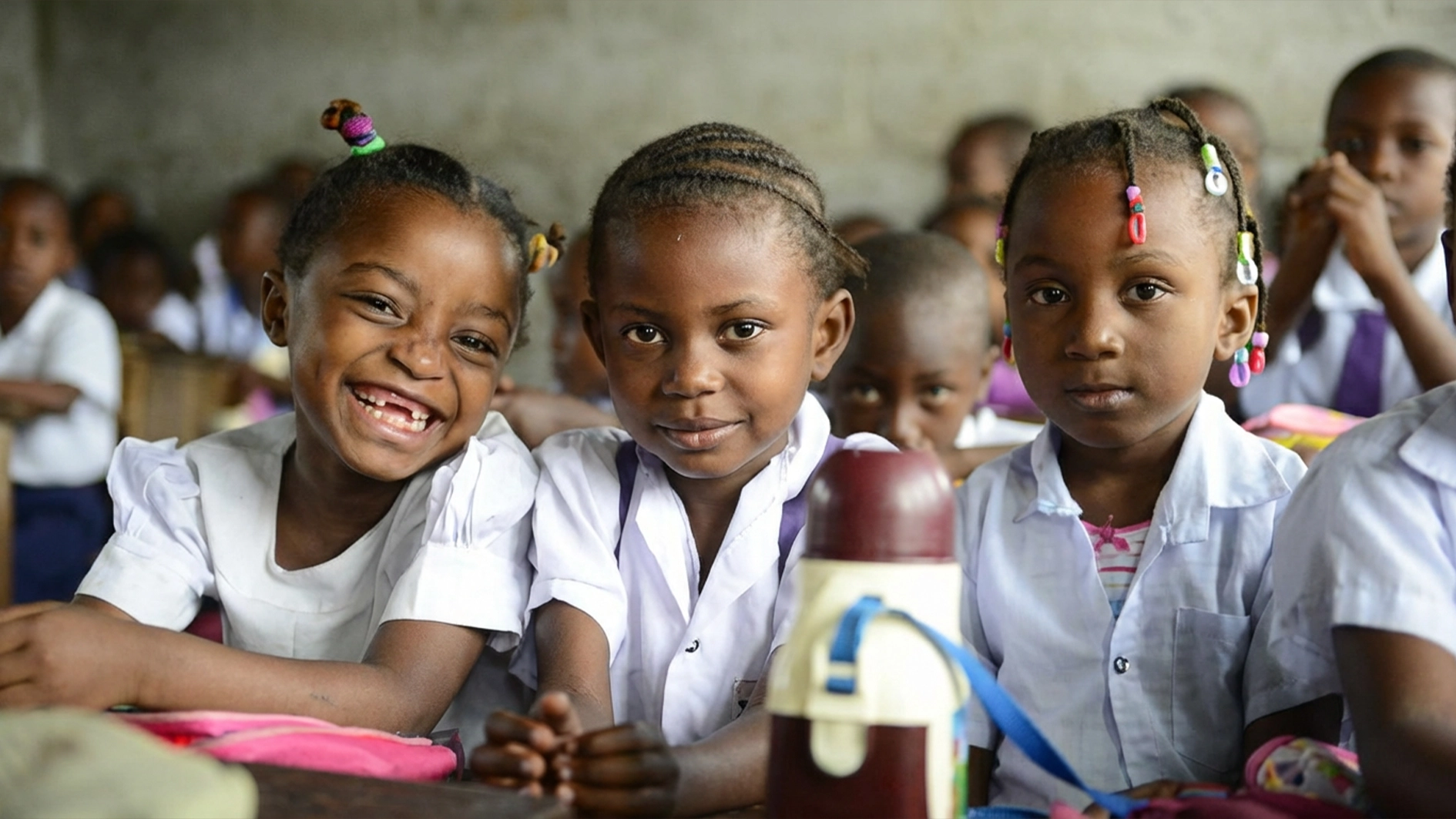
Former President of Liberia, Ellen Johnson Sirleaf, and the European Union (EU), have raised concerns over Nigeria’s deepening girl-child educationcrisis, warning that millions of girls out of school threaten the country’s future.
They raised the concern in Abuja at a high-level forum organised by the Rochas Foundation under the theme “Give to Gain: Women, Education and Impact – The Ripple Effect.”
Addressing the gathering, Sirleaf, a Nobel Peace Prize laureate, said Nigeria must move beyond merely providing access to education and create pathways for girls to assume leadership and economic roles.
She recalled her 2017 visit to the Rochas Foundation College in Imo State, where she witnessed students from across Africa learning and collaborating.
She described the foundation’s efforts as a rare model of inclusive education and emphasised that nearly half of its beneficiaries are girls which said is a strategic investment in Africa’s future.
Sirleaf stressed that education must translate into empowerment, participation, and long-term societal impact.

She said: “If we educate girls but fail to create opportunities for them to lead, then we have only done half the work.
“When you educate a girl, you do not just change her life; you change the trajectory of entire generations,” she said.
She stressed the need for deliberate policies to ensure women’s inclusion in governance and decision-making, noting that progress does not happen by chance.
“Every classroom that opens to a girl today is a parliament, a court, and a community that changes tomorrow,” she added.
The EU Ambassador to Nigeria, Gautier Mignot, described girls’ education as a powerful lever for national growth.
Drawing on personal experience, he recounted visiting an internally displaced persons (IDP) camp where an 18-year-old girl, who had never attended school, expressed a simple dream: to go to school.
Mignot stressed that gender equality is not merely a matter of fairness but a prerequisite for sustainable development.
“That moment was deeply moving,” he said. “Just hours later, we visited another school where children especially girls were eager and happy to learn. The contrast was striking.”
He also highlighted systemic barriers — including poverty, gender-based violence, and the lack of basic facilities such as sanitary products and safe restrooms that continue to keep girls out of classrooms.
Speaking, Director-General of the Rochas Foundation, Uchechi Rochas, called on stakeholders to treat the situation as a collective responsibility.
She noted that the foundation has impacted over 41,000 young people across Africa over nearly three decades, adding that when compared with the estimated 7.8 million girls out of school in Nigeria, the challenge is far greater.
“If we place 41,000 beside 7.8 million, you will agree the problem is bigger than us,” the speaker said. “This is not a welcome it is a recruitment. It takes all of us to fix this”, she said.
Rochas also drew attention to northern Nigeria, where cultural practices and early marriage continue to force girls out of school.
“Education is not just literacy. It is empowerment. It is permission not to get married at 16,” she said.
The forum showcased real-life success stories, including Zainab, a former beneficiary of the foundation, who has grown into an educator and community leader.
“Zainab was once like the girls we speak of today. But because she was given an opportunity, she is now shaping lives.If we fail the girl today, we fail the woman tomorrow.”
“It takes our voices, not our silence,” Rochas said. “We must create spaces for girls — not just seats at the table, but the table itself”, she added.

