 Follow Us on Google News


 Follow Us on Google Discover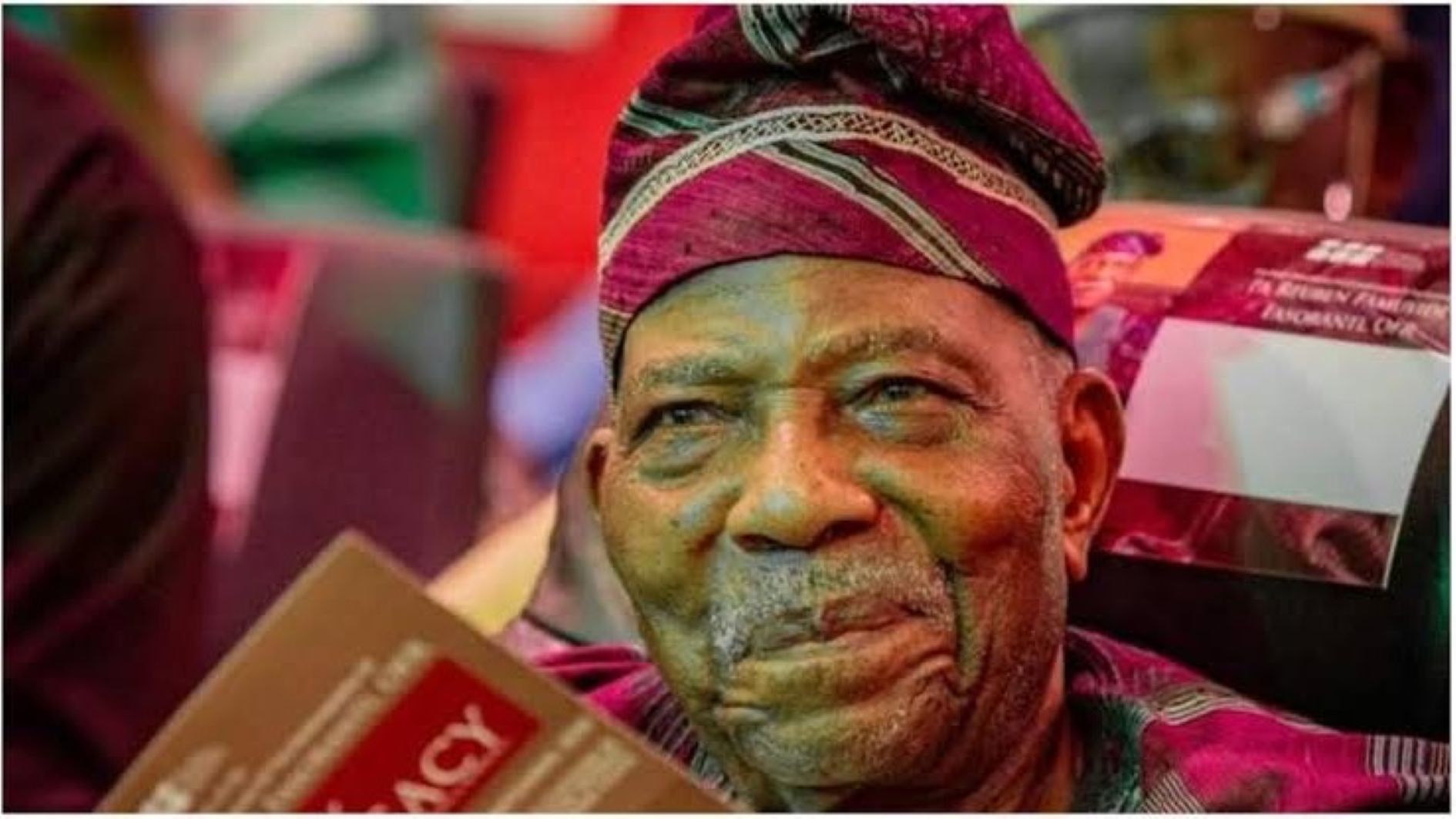
Former interim national chairman of the All Progressives Congress (APC), Chief Bisi Akande, has warned that growing political and ideological divisions among Yoruba leaders pose a serious threat to the cohesion and strategic future of the Yoruba nation.
Akande made the remarks in a reflective tribute to elder statesman and Afenifere leader, Pa Reuben Fasoranti, as the Yoruba leader marks his 100th birthday on May 11, 2026 (Monday).
Describing Fasoranti as a symbol of discipline, moral clarity and steadfast commitment to Yoruba ideals, Akande said the centenary celebration should serve not only as a moment of honour, but also as an opportunity for sober reflection on the state of Yoruba unity and leadership.
According to him, Fasoranti’s life represents “a living archive of struggle, sacrifice and steadfast adherence to principle,” adding that the veteran nationalist’s enduring example offers critical lessons at a time of mounting political fragmentation in the South-West.
Akande traced the recurring challenge of disunity among Yoruba political actors from the collapse of the old Oyo Empire through the crises of the First Republic, the June 12 struggle and the political realignments of the Fourth Republic.
He recalled that divisions among Yoruba leaders had repeatedly weakened the region’s collective influence at critical moments in history.

Reflecting on the political crisis between Chief Obafemi Awolowo and Chief Samuel Ladoke Akintola in the First Republic, Akande noted that internal fractures within the Western Region contributed significantly to the instability that preceded military intervention and the Nigerian civil war.
He also pointed to the failure of the Yoruba political elite to rally behind Awolowo’s presidential ambition during the Second Republic, as well as differing responses among Yoruba leaders following the annulment of the June 12, 1993 presidential election won by Chief Moshood Abiola.
According to him, the emergence of Yoruba leaders at the national level has historically not translated into internal cohesion within the region.
“The experience of 1999, and even more significantly the political realignments of 2003, demonstrated that the emergence of a Yoruba leader at the helm of the Nigerian state does not automatically guarantee the alignment of Yoruba interests or the preservation of Yoruba political structures,” he said.
Akande warned that contemporary threats to Yoruba unity have become more subtle but increasingly pervasive, citing deepening partisan rivalries, personal ambitions and widening ideological disagreements over Nigeria’s future.
He said tensions generated by calls for Yoruba self-determination and secession had further complicated internal relations within the region.
“Political divisions have deepened, with partisan loyalties and personal ambitions often overshadowing shared identity and collective interests,” he stated.
The elder statesman also lamented what he described as the erosion of traditional Yoruba values such as discipline, restraint, communal responsibility and mutual respect, warning that the weakening of these shared values had contributed to growing mistrust and generational divides.
Akande noted that even revered traditional institutions had not been spared from public tensions, citing strains involving prominent Yoruba monarchs, including the Ooni of Ife and the Alaafin of Oyo.
He, however, said the current political dispensation under President Bola Tinubu presents a rare opportunity for the Yoruba nation to align its internal dynamics with its influence at the centre.
According to him, Tinubu’s emergence was distinct from previous moments of Yoruba representation at the federal level because it evolved through the realities of Yoruba political evolution and coalition-building.
“For the first time in many years, there exists a realistic possibility that influence at the centre can be matched by coherence within the region,” Akande said.
He stressed, however, that such an opportunity would only materialise if Yoruba political leaders abandoned zero-sum rivalries and embraced coordinated engagement in pursuit of collective interests.
“That will require restraint in moments of competition, maturity in disagreement and a willingness to subordinate immediate personal gains to longer-term collective interests,” he added.
Akande described Fasoranti’s leadership style, particularly during the post-June 12 struggle within Afenifere, as an enduring model of principled leadership anchored on discipline, moral clarity and commitment to the collective good.
He said unity must move beyond rhetoric and be institutionalised through stronger political, economic and cultural cooperation across the South-West.
The former Osun State governor commended initiatives such as the Development Agenda for Western Nigeria (DAWN) Commission as examples of frameworks capable of strengthening regional cohesion if properly sustained.
Calling on Yoruba leaders and citizens alike to embrace greater responsibility, Akande warned that history would judge the region not by the opportunities before it, but by the choices made in response to them.
“The Yoruba nation has never lacked leadership, intellect or vision. Yet repeatedly, the full weight of that potential has been diminished by an inability to sustain alignment at decisive moments,” he said.
He added that the present era could either mark a turning point towards deliberate regional alignment or become “another chapter in a familiar story of missed opportunities.”

