 Follow Us on Google News


 Follow Us on Google Discover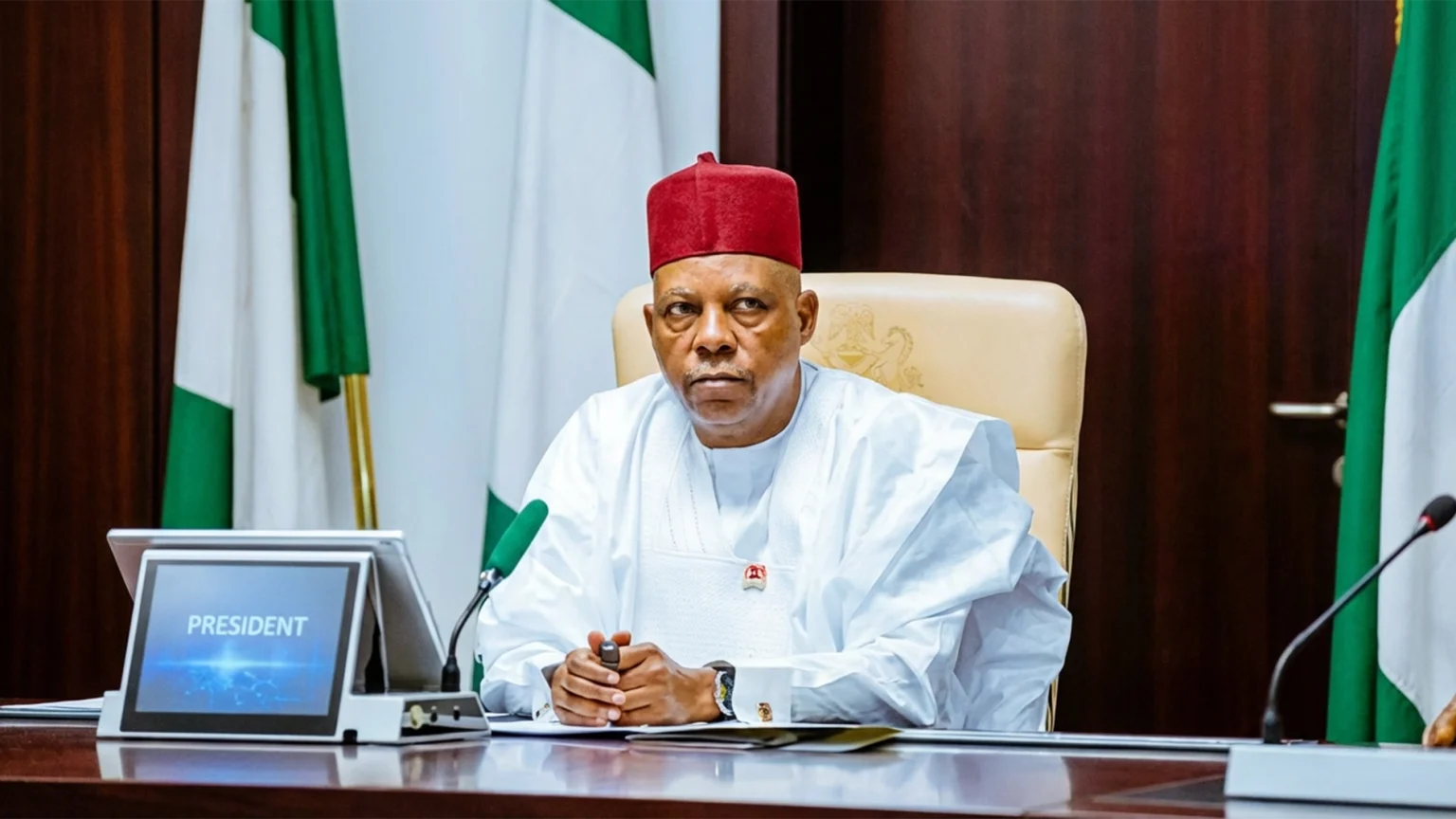
Nigeria’s push to reposition its universities as drivers of industrial growth received a major boost on Friday with the launch of the Mine-Tech University Innovation Pod (Mine-Tech UniPod) at Nasarawa State University, as the Federal Government declared that the country must transition from exporting raw minerals to building a technology-driven mining economy.
Speaking at the high-level unveiling of the innovation hub, Vice President Kashim Shettima described the Mine-Tech UniPod as a strategic intervention designed to connect education, research, enterprise and industrialisation.
Represented by the Minister of Education, Dr Tunji Alausa, the Vice President said the initiative reflects the commitment of President Bola Tinubu’s Renewed Hope Agenda to human capital development, innovation and youth empowerment.
He noted that although Nigeria possesses more than 44 commercially viable minerals valued at over $1trillion, the solid minerals sector has continued to contribute below its full potential to the nation’s economy.
According to him, the country is now shifting from dependence on raw material exports to value addition, industrial processing and innovation-led growth.
Shettima said the global economy is increasingly being driven by critical minerals required for electric vehicles, semiconductors, renewable energy systems and advanced manufacturing, stressing that Nasarawa State is strategically positioned to benefit from the emerging market due to its vast lithium, tantalite, gemstone and lead-zinc deposits.

He explained that the Mine-Tech UniPod would serve as a platform for students, researchers, environmental experts, investors and mining professionals to collaborate on practical solutions for Nigeria’s mineral economy.
The Federal Government, he pointed out, was aggressively implementing the Nigeria Education Sector Renewal Initiative aimed at strengthening STEMM education, Technical and Vocational Education and Training, digital literacy, research commercialisation and university-industry partnerships.
He disclosed that about 160,000 youths are currently undergoing training in roughly 1,200 TVET centres nationwide, while over one million applications were received shortly after the reopening of the programme’s portal.
According to him, the government plans to train an additional 100,000 youths in the coming months as part of efforts to prepare Nigerian youths for emerging sectors of the economy.
The Vice President also revealed that seven UniPods with different thematic focus areas have already been established across the country, covering Artificial Intelligence, Agriculture, Manufacturing and Trade, Industrial Technology, Resilience Technology, Green and Blue Technology, and Mine-Tech Innovation.
The Guardian reports that that the Mine-Tech UniPod, powered by the United Nations Development Programme (UNDP) Nigeria and supported by Tertiary Education Trust Fund (TETFund), aims to foster innovation in minerals development, featuring a specialized laboratory, prototyping space, and technology transfer office to support students and innovators.
The facility houses four specialised laboratories, including the Mineral Intelligence Laboratory, Materials and Processing Laboratory, Geo-Spatial Innovation Studio and Green Mining and ESG Technology Hub.
In his remarks, Nasarawa State Governor, Engineer Abdullahi Sule described the facility as a timely intervention that would position the state as a major hub for mining innovation and technology-driven industrial development in Nigeria.
He revealed that the state government would provide a solar mini-grid to guarantee sustainable power supply for the facility and ensure uninterrupted operations.
The governor also called on investors, development partners and private sector players to leverage the opportunities being created through the innovation ecosystem to support research, entrepreneurship, technology transfer and job creation for young Nigerians.
Sule noted that Nasarawa State’s vast mineral resources, particularly lithium and other strategic minerals, place it at the centre of the global transition toward clean energy and advanced manufacturing, adding that the state was committed to creating an enabling environment for responsible mining and industrial investments.

