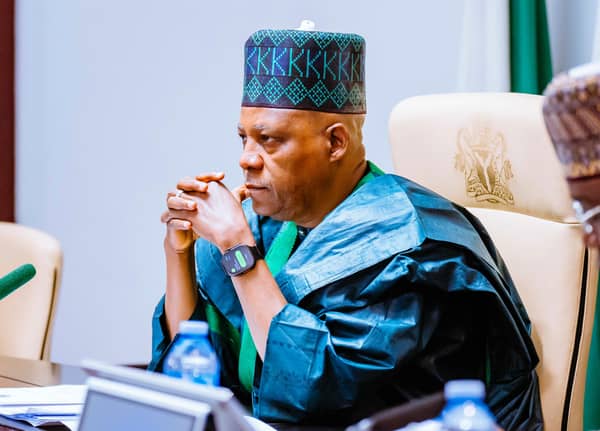
Vice President Kashim Shettima has called for bold, accelerated action to maximise Nigeria’s $14.23 billion sanitation economy, stating that sanitation remains “at the heart of government policy.”
Shettima made the call on Monday while declaring open the 2025 National Sanitation Conference in Abuja.
He was represented by Binta Inna Audu, Senior Special Adviser to the President on Humanitarian Matters.
The Two-day conference, themed “Accelerating Sanitation for All,” brought together government officials, development partners, civil society, academia, and community leaders to chart a new direction for the country’s Water, Sanitation, and Hygiene (WASH) sector.
Shettima described the conference as historic, noting that the lack of access to safe sanitation remains one of the world’s and Nigeria’s most pressing public health challenges.
“Sanitation is not merely about toilets or infrastructure; it is about human health, dignity, productivity and the future of our nation’s children,” she said.
The vice president highlighted the significant economic toll of poor sanitation, citing a World Bank report that shows Nigeria loses $3 billion annually due to inadequate sanitation, resulting in preventable diseases, contaminated water sources, and reduced productivity.
Open defecation, he warned, continues to damage the nation’s image and jeopardise children’s health through diseases such as cholera and diarrhoea.
He, however, noted that Nigeria has made notable gains, particularly through the Clean Nigeria: Use the Toilet Campaign. So far, 158 Local Government Areas across the country have been certified Open Defecation Free (ODF), with Katsina and Jigawa achieving statewide ODF status.
Shettima commended both states, saying their progress should “spur others to accelerate efforts” toward achieving national ODF status.
He noted that the country’s sanitation economy, projected to grow to $14.23 billion by 2030, includes: $9.9 billion in the Toilet economy; $2.5 billion in the Circular sanitation economy; $25 million in Smart sanitation technologies; and $1.8 billion in the Menstrual hygiene marketplace. However, only a small portion of this potential is currently being tapped.
“We must strengthen the supply side, bring in innovation, and create an enabling environment that incentivises private-sector investment,” he said.
Shettima outlined ongoing federal initiatives, including the National Action Plan, P-WASH, SOAR-WASH, School and Health WASH programmes, and the nationwide WASHNORM survey for tracking progress on SDGs 6.1 and 6.2.
He emphasised that President Bola Ahmed Tinubu’s administration has placed WASH at the centre of national development through the creation of the Federal Ministry of Water Resources and Sanitation.
Shettima urged all levels of government, private-sector players, development partners, and communities to “act together and act faster” to ensure universal access to safe sanitation.
“The time for collective acceleration is now,” he declared. “Let this conference mark a turning point — from dialogue to decisive action.”
Prof. Joseph Utsev, Minister of Water Resources and Sanitation, said the conference is crucial for national development, describing sanitation as a cornerstone of prosperity.
In his welcome remarks, he emphasised that sanitation is not merely an infrastructure issue, but “a cornerstone of human development, a driver of productivity, and a key determinant of national prosperity.”
The Minister noted that the conference aligns with the Renewed Hope Agenda of President Bola Ahmed Tinubu, under whose leadership the Federal Ministry of Water Resources and Sanitation has strengthened national efforts to improve sanitation systems, promote public health, and uphold the dignity of citizens.
He stated that the conference was convened to provide a national platform for dialogue, innovation, and partnership, especially in advancing initiatives such as the Clean Nigeria: Use the Toilet Campaign.
Prof. Utsev expressed optimism that the diverse stakeholders attending the conference would forge partnerships and develop actionable recommendations to guide Nigeria’s next steps toward achieving Sustainable Development Goal 6, which aims to ensure the availability and sustainable management of water and sanitation for all by 2030.
The Minister also extended profound appreciation to President Tinubu for his policy guidance and continued support for the WASH sector.
Hussan Abdukadiri, representing the Federal Capital Territory, FCT Minister Nyesom Wike, announced that the FCT aims for six area councils to achieve open defecation-free, ODF, before the next conference.
Mrs. Didi Esther Walson-Jack, Head of Service, reaffirmed the civil service’s commitment to improving workplace sanitation.
She expressed her willingness to continue partnering with the ministry to improve access to sanitation in the country.
Chidera Chukwu, UK Government Health Adviser, called for bold acceleration, data-driven planning, and a break from “old traditions” to harness the sanitation economy.
Engr. Abele Okeke, Nigeria’s WASH Ambassador, urged stakeholders to unite in building a national movement for improved sanitation.