 Follow Us on Google News


 Follow Us on Google Discover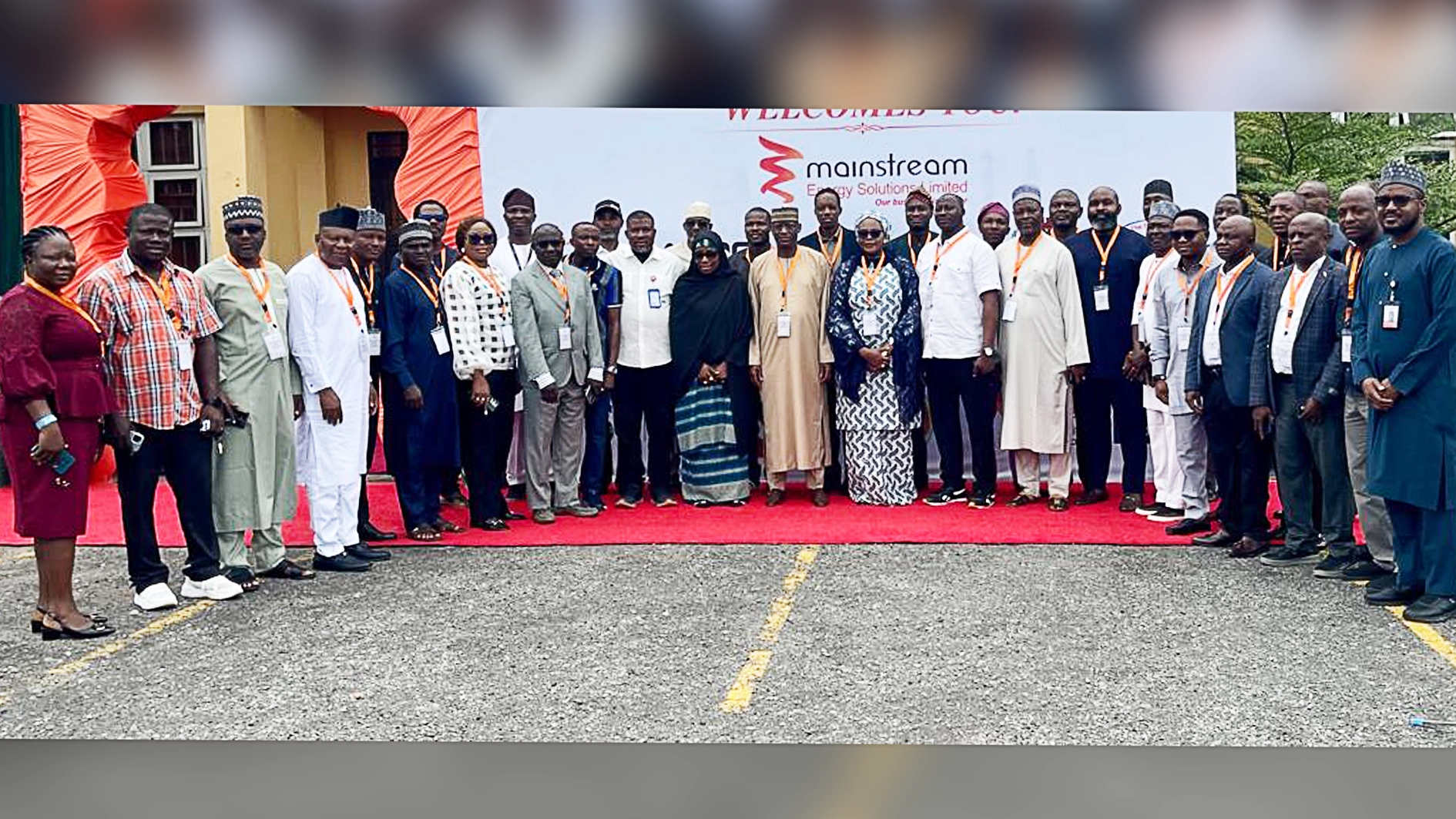
.MESL seeks collaboration as TCN, BPE, DisCos, GenCos canvass grid reliability
.NISO to commission SCADA
The Nigerian Electricity Regulatory Commission (NERC) will in the coming days fine or possibly disconnect some power generating plants from the national grid following recommendations by the Nigerian Independent System Operator (NISO).
The move follows attempts to enforce compliance with Free Governor Mode of Operation (FGM) requirement as part of measures to avert grid collapses, Managing Director of NISO, Abdu Mohammed said yesterday in Jebba, Niger State.
Mohammed, speaking at a grid stability workshop hosted by Mainstream Energy Services Limited at Jebba Hydropower Plant warned that power generating companies that fail to comply could face financial penalties, disconnection and suspension from market participation.
With years of economic hemorrhage caused by grid instability, a development which continues to affect commercial stability of the power sector as well as homes and businesses that are constantly turning to costly diesel and other self generation, stakeholders at the workshop revealed that the industry has been operating without proper coordination.
Mohammed said the system operator had completed assessments of generating companies and submitted a report to the Nigerian Electricity Regulatory Commission (NERC) for enforcement.
Mohammed said while some generating companies had complied with the requirement, others had requested extensions, while some remained non-compliant.
“We are now at the stage where defaulting generating companies will be sanctioned,” he said, adding that NISO had communicated its findings to the electricity regulator and was monitoring compliance.

According to him, a report identifying the level of compliance was presented to the regulator the previous week, with sanctions expected to follow.
“There is already an order of the Commission prescribing the sanctions and penalties that defaulting companies will face,” Mohammed said.
He explained that the immediate sanctions would be financial, but warned that persistent non-compliance could attract more stringent measures.
“For now, yes, they are financial penalties. But as we progress, there may be a need to take further measures, including disconnection, suspension from existing market participation and other sanctions,” he said.
Mohammed clarified that the immediate enforcement focus was on generating companies because they were responsible for providing the FGM facility, although other enforcement mechanisms exist for distribution companies and the Transmission Company of Nigeria (TCN).
The FGM requirement is critical to grid stability because generating units equipped with governor controls can automatically respond to changes in system frequency, helping to arrest sudden deviations caused by changes in generation or demand. But GenCos had maintained that the sector must pay to keep turbines spinning when they are producing no power.
The development comes as stakeholders intensify efforts to address vulnerabilities in Nigeria’s electricity system and reduce the risk of widespread system disturbances.
Mohammed said the power sector required long-term planning and significant investment rather than ad hoc interventions.
“The power system is highly capital-intensive, and it requires extremely careful planning. You cannot plan for it on an ad hoc basis,” he said.
According to him, the system has recorded “tremendous improvement” in stability, noting that there had been no system-wide collapse recently, despite pockets of disturbances.
“These are the issues we are addressing by continuing to invest, plan and prioritise,” he said.
At the workshop, stakeholders stressed that grid stability could not be achieved by one segment of the electricity value chain alone.
At the event, NISO disclosed it was working on a Supervisory Control and Data Acquisition/Energy Management System (SCADA/EMS) project, which he described as critical to improving system operations and investment management.
“We intend to commission it as soon as possible. The resilience and stability of the grid of the future will depend not only on how effectively we operate the system today, but also on how we plan and prepare the network to accommodate emerging energy sources and growing system demand,” Mohammed said.
Executive Director, Corporate Services, Mainstream Energy Solutions Limited, Usman Muhammad Umar, said generation, transmission, distribution, regulators and market institutions must work collectively to deliver a stable and reliable electricity system.
“Grid stability is sometimes discussed as though it belongs to one part of the electricity value chain. It does not. Grid stability reflects the collective performance of all stakeholders,” Umar said.
He said generation must respond appropriately to system requirements, transmission must provide a resilient network and effective coordination, while distribution companies must responsibly manage their interface with the grid.
Umar added that regulators and market institutions must provide appropriate rules, incentives and discipline to ensure that the electricity market functions effectively.
He said the capital-intensive nature of the power sector also made long-term planning and investment essential, particularly as Nigeria seeks to integrate flexible generation and renewable energy sources.
Umar also identified a potential role for subnational governments in strengthening the electricity sector, particularly through investment in infrastructure within their respective jurisdictions.
He also acknowledged that challenges remained around the dispatch of available generation capacity into the national grid, although he said there had been significant improvement over the past year.
The workshop, titled “Strengthening Grid Stability: A Collaborative Workshop for Industry Practitioners,” brought together representatives of NISO, Transmission Company of Nigeria, generating companies, distribution companies, regulators and other market participants.
The stakeholders insisted that the complexity of the electricity system was increasing due to changing demand patterns, frequency excursions, voltage-security challenges and the need to accommodate a more diverse generation mix.
They identified sudden generation or load losses, inaccurate generation scheduling, faults and disturbances, inadequate system inertia and the response characteristics of generating units as some of the factors that could trigger frequency excursions.
They noted that addressing such challenges required accurate and timely operational information, adequate frequency and voltage-control resources, effective outage management, strict compliance with the Grid Code and stronger coordination across the sector.
NISO also highlighted the need for greater investment in transmission infrastructure and improved system planning as new generation projects come on stream.
To them, the successful integration of new projects would require careful assessment of transmission adequacy, system strength, operational flexibility, reserve requirements, reliability criteria and future demand growth.

