 Follow Us on Google News
 Follow Us on Google Discover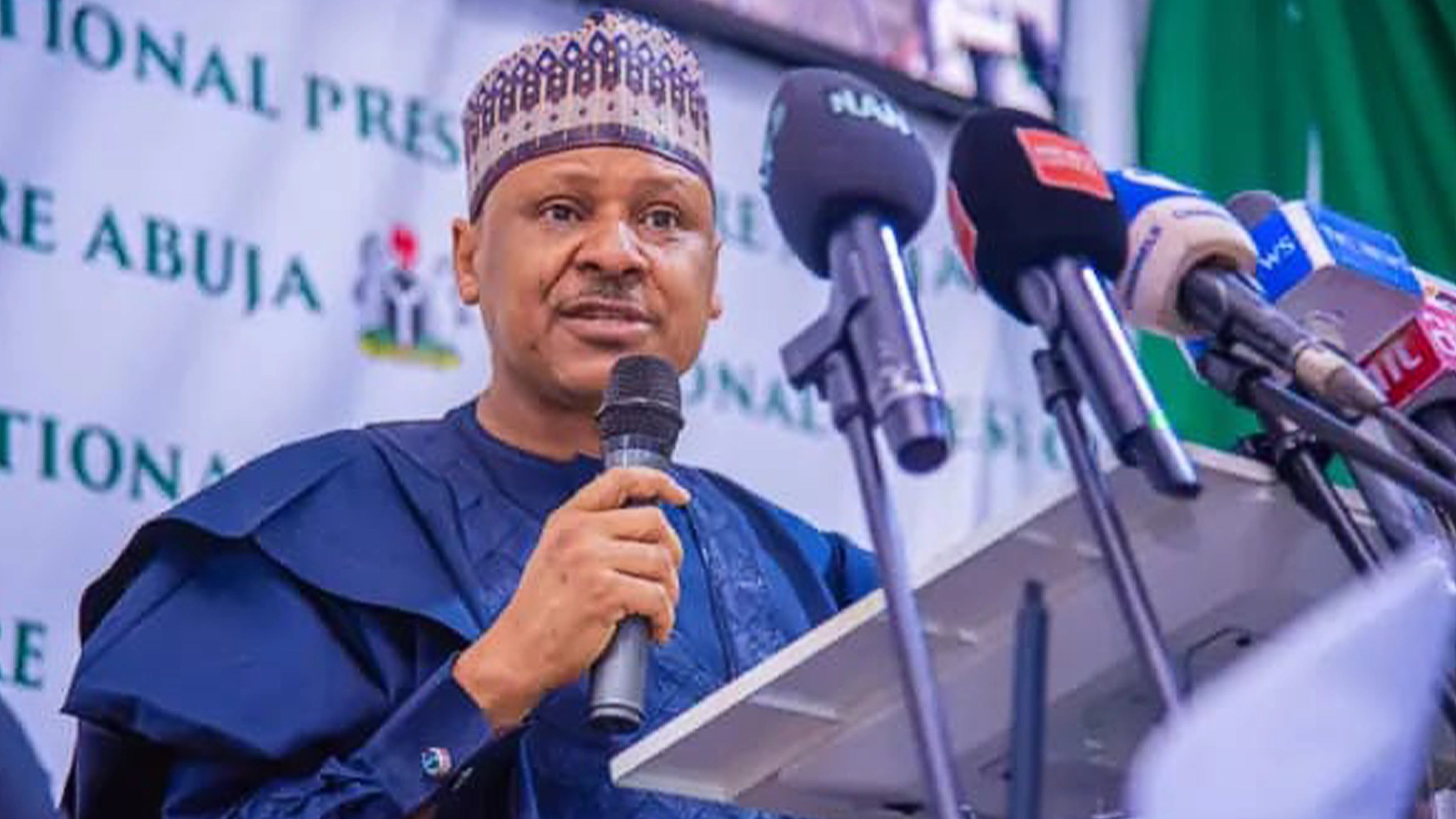
• Says economic reforms must lift every Nigerian
• Rolls out five World Bank-backed initiatives to tackle poverty, others
• Governors, National Assembly pledge support
• SAP at 40: Experts blame economic reforms for poverty, unemployment,
backwardness
• Nigeria to launch scorecard to track poverty, incomes, inequality
President Bola Ahmed Tinubu yesterday launched five landmark social protection and human capital development programmes valued at about $3 billion, declaring that the success of his administration’s economic reforms would ultimately be judged by their impact on the lives of ordinary Nigerians rather than by macroeconomic statistics.
He said the initiatives would drive the next phase of the Renewed Hope Agenda by reducing poverty, strengthening healthcare and education, expanding livelihood opportunities, supporting internally displaced persons and building resilient communities across the country.
Tinubu, represented by the Minister of Finance and Coordinating Minister of the Economy, Taiwo Oyedele, unveiled the NG-CARES Additional Financing, Solutions for Internally Displaced Persons and Host Communities (SOLID), and the Human Capital Opportunities for Prosperity and Equity (HOPE) initiative, comprising HOPE-GOV, HOPE-PHC and HOPE-EDU, at a ceremony held at the Presidential Villa, Abuja.
The president, while describing the interventions as “promises kept,” said the programmes were designed to ensure that the benefits of ongoing economic reforms reach every household as Nigeria pursues its ambition of becoming a $1 trillion economy by 2030.
He said the programmes would serve as the bridge between macroeconomic stability and improved living standards by investing directly in people, communities and human capital.

Earlier, the Minister of Budget and Economic Planning, Abubakar Atiku Bagudu, said the programmes were designed to ensure that the gains of Tinubu’s economic reforms translate into better livelihoods for ordinary Nigerians.
Also speaking, Minister of Health and Social Welfare, Prof. Muhammad Ali Pate, said the Tinubu administration had already revitalised more than 3,000 primary healthcare centres, with another 1,000 facilities nearing completion nationwide.
Minister of Education, Dr Tunji Alausa, however, announced the $552 million
HOPE for Quality Basic Education Programme, saying it would benefit 30 million pupils, 500,000 teachers and about 65,000 public primary schools across all 36 states and the Federal Capital Territory (FCT).
World Bank Country Director for Nigeria, Dr Matthew Verghis, said the bank remained committed to supporting Nigeria’s efforts to strengthen institutions, expand access to quality healthcare and education, and build resilience against economic shocks.
The Nigeria Governors’ Forum (NGF) also pledged the commitment of all 36 state governments to implementing the programmes.
The NGF, speaking through Ondo State Governor, Lucky Aiyedatiwa, the Chairman of the Forum, and Kwara State Governor, AbdulRahman AbdulRazaq, said the initiatives would strengthen governance, improve service delivery, and deepen investments in health, education, and social protection.
Meanwhile, the President of the Senate, Godswill Akpabio, represented by the Chairman of the Senate Committee on Finance, Sani Musa, assured the administration of the National Assembly’s backing, saying that the legislature would provide the legal framework and oversight needed to ensure the success of the programmes.
RELATEDLY, 40 years after Nigeria adopted the Structural Adjustment Programme (SAP), leading economists, labour leaders, development experts and civil society organisations have declared that the controversial economic reforms programme bears significant responsibility for the country’s deepening poverty, mass unemployment, weak industrial base and decades of stalled development.
The verdict emerged yesterday during a high-level conference in Abuja themed “Forty Years of Structural Adjustment Programme (SAP) in Nigeria: History, Impact and the Way Forward,” where participants said that the market-driven reforms introduced in 1986 fundamentally altered Nigeria’s economic direction but failed to deliver the industrialisation, broad-based prosperity and structural transformation they promised.
HOWEVER, the Federal Government, yesterday, said it would soon begin publishing a new “shared prosperity” scorecard to measure whether its economic reforms are improving the lives of Nigerians, with a focus on poverty reduction, real income growth and income inequality.
Oyedele announced the initiative during his keynote address at the BusinessDay 14th CEO Forum in Lagos.
He said the new framework would move beyond traditional economic indicators, such as Gross Domestic Product (GDP) growth and inflation, by measuring outcomes that directly affect citizens’ welfare.
According to him, the framework is built around three key indicators: reducing multidimensional poverty, increasing real income per capita and narrowing income inequality.
The minister said the Ministry of Finance would soon unveil the framework and begin publishing the indicators to enable Nigerians to assess the government’s performance using measurable social and economic outcomes.
The Founding Executive Director of Centre LSD, Dr Otive Igbuzor, said the conference was convened to critically assess the impact of SAP four decades after its introduction and draw lessons for Nigeria’s current economic reforms.
He noted that many of today’s policies – including exchange-rate liberalisation, fuel subsidy removal, fiscal consolidation and public sector restructuring – closely resemble the prescriptions introduced under SAP in 1986.
Also, delivering the keynote address on behalf of renowned political economist, Prof. Adebayo Olukoshi, Director of Operations at AIPCTA, Egghead Odewale, described SAP as perhaps the most influential economic reform programme in Nigeria’s post-independence history.

