 Follow Us on Google News
 Follow Us on Google Discover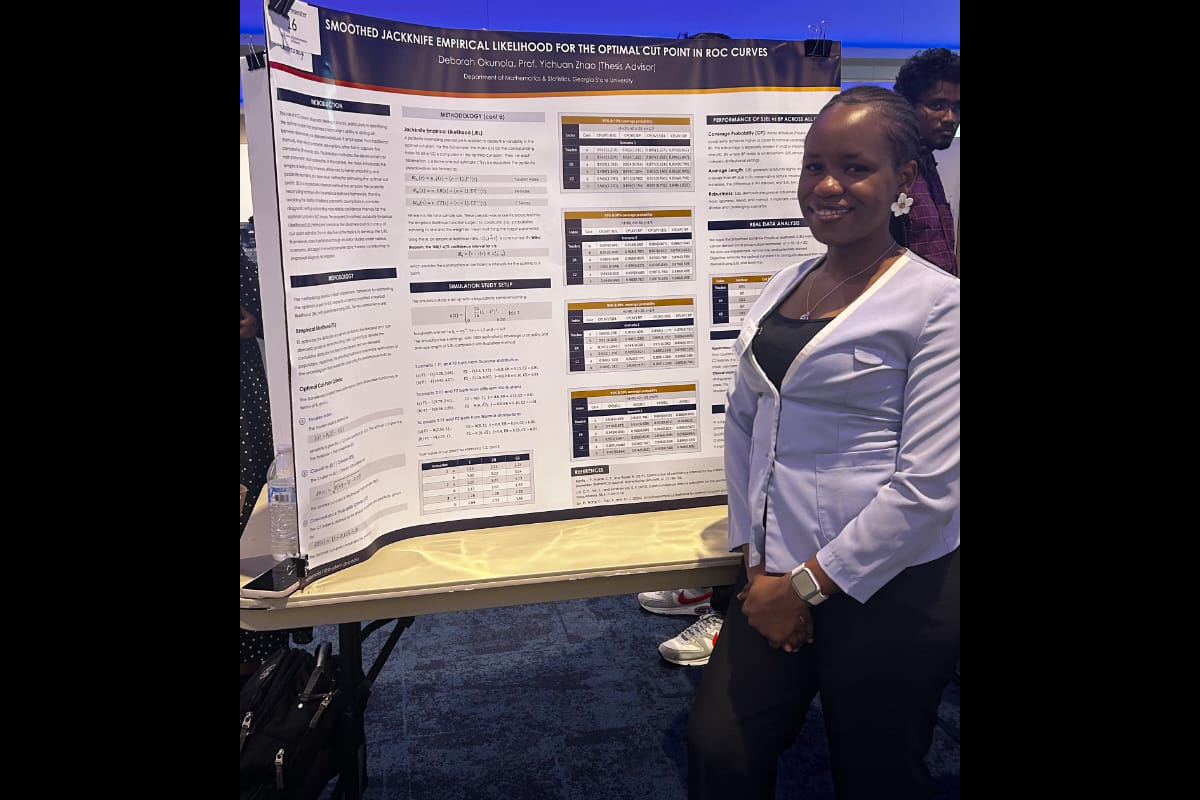
At the 5th International Conference of the Professional Statisticians Society of Nigeria (PSSN) held in July 2021 at the Zenith ICT Centre, University of Nigeria, Nsukka, deliberations extended beyond statistical theory to emphasize the real-world economic and societal value of data-driven public health research. Under the theme “Statistics for National Security and Socio-Economic Development,” scholars highlighted how rigorous statistical analysis can inform policy, reduce healthcare costs, and improve national productivity. One of the presentations that drew notable attention during the conference was delivered by Deborah Okunola, a biostatistics expert trained at the Federal University of Technology, Akure, with advanced specialization in epidemiology, multivariate modeling, survival analysis, and public health data analytics. Her work reflects a growing class of statistical research that integrates quantitative rigor with real-world healthcare challenges. Conference materials described her expertise in disease modeling, vaccination analysis, and health disparities research, supported by strong technical proficiency in statistical programming and data systems.
Okunola presented findings from a mixed-methods study titled “Examining the Connection Between Social Support Systems and Future Aspirations Among Pregnant Adolescents Seeking Maternal Healthcare in Faith-Based Maternity Clinics in Nigeria.” The research, conducted in Ibadan, Oyo State, combined statistical modeling with qualitative interviews to assess how social structures influence maternal healthcare utilization and long-term outlook among adolescent mothers. According to her presentation, adolescents with stronger social support systems, including family engagement, peer networks, and institutional backing from faith-based clinics, were significantly more likely to attend antenatal services consistently and reported more positive expectations regarding education and economic participation after childbirth. In contrast, those with limited support demonstrated lower healthcare engagement and greater uncertainty about their prospects.
Experts at the conference noted that the study provides important insight into how non-clinical factors shape health outcomes. Adekola Adegboyega, a professor of medical statistics in attendance remarked that Okunola’s work “demonstrates a strong command of both statistical methodology and public health context, particularly in integrating social determinants into analytical frameworks.” He added that such approaches are essential for designing interventions that are both effective and economically sustainable. Beyond its public health relevance, the study was discussed in terms of its economic implications. Participants emphasized that poor maternal health outcomes, especially among adolescents, carry high costs for national economies. In Nigeria, preventable maternal complications contribute to increased healthcare expenditures, reduced female labor participation, and long-term economic dependency. A health economist at the conference noted that “improving maternal healthcare access through low-cost, community-based interventions, such as strengthening social support systems, has the potential to yield substantial savings and productivity gains.” Estimates discussed during the sessions suggested that maternal and child health challenges can cost Nigeria billions of naira annually through lost productivity and increased medical spending. By improving healthcare engagement among adolescent mothers, interventions informed by studies like Okunola’s could contribute to measurable gains in workforce participation and human capital development, thereby supporting GDP growth over time.
The implications are similarly significant across Africa. Conference participants referenced broader regional analyses indicating that inadequate maternal healthcare reduces economic growth by limiting workforce participation and increasing public health burdens. In this context, Okunola’s findings were viewed as contributing to a growing body of evidence supporting cost-effective, community-driven health interventions. Comparisons were also drawn with the United States, where maternal health disparities continue to impose a substantial economic burden. Attendees noted that preventable maternal morbidity and mortality cost the U.S. economy billions of dollars annually in direct healthcare expenses and lost productivity. A visiting researcher observed that “the economic rationale for improving maternal health is universal, whether in Nigeria, across Africa, or in high-income countries like the United States, the benefits extend beyond health to economic stability and growth.” During discussions, several attendees commended Okunola’s analytical approach and clarity of presentation. A public health researcher from Abuja described her work as “methodologically sound and practically relevant,” noting that the integration of qualitative insights strengthened the interpretation of statistical findings. Another participant highlighted that her use of mixed-methods design “provides a more complete picture of the issue, which is critical for policy formulation.”
A keynote speaker noted that “statistical research, when effectively applied, has the power to reduce suffering, improve productivity, and enhance overall quality of life.” The maternal health study presented by Deborah Okunola was frequently referenced as an example of how localized, data-driven research can inform broader policy and economic strategies. By identifying the role of social support systems in healthcare utilization, the study points to interventions that are not only effective but also cost-efficient and scalable. As the conference concluded, participants underscored the importance of continued investment in statistical research and capacity building. The discussions in Nsukka reflected a growing recognition that statistics is not merely an academic discipline but a critical tool for national development, economic planning, and global health improvement.
In the words of one attendee, “the strength of statistical research lies in its ability to connect data with real human outcomes.” In this regard, contributions such as those presented by Deborah Okunola illustrate how expertise in biostatistics can be applied to address pressing societal challenges while supporting both economic progress and the broader well-being of populations.


