 Follow Us on Google News
 Follow Us on Google Discover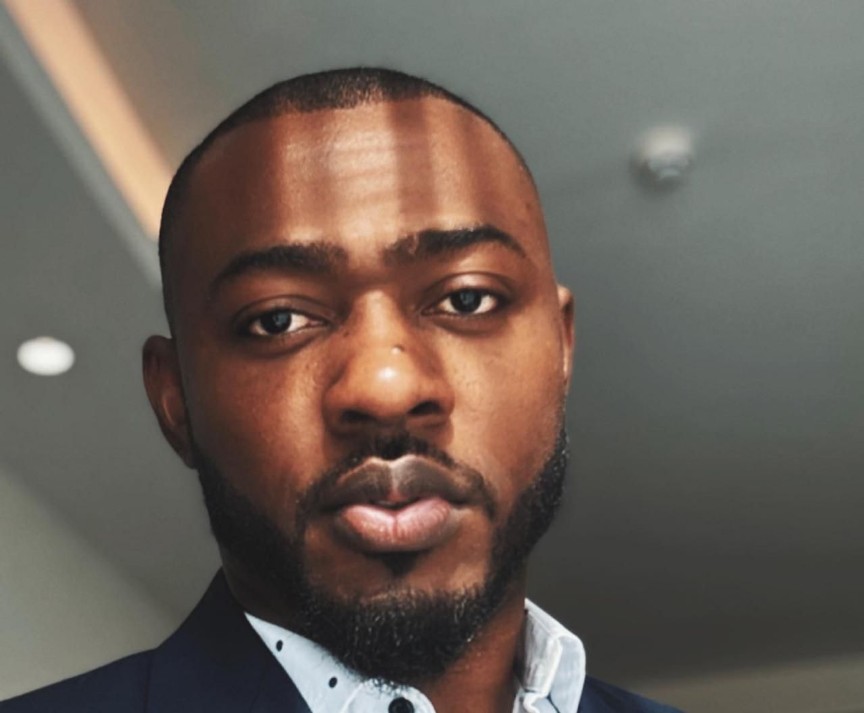
The rise of artificial intelligence has been called the next great industrial revolution, but behind the algorithms and breakthroughs are individuals whose work is quietly transforming industries.
Godwin Okwara is one such figure, standing at the crossroads of finance, technology, and healthcare.
Okwara’s career demonstrates a rare blend of versatility and focus.
Trained as a statistician and data engineer, he earned his master’s degree in statistics from Georgia State University, where his early research explored how image augmentation could help radiologists and pathologists detect hidden patterns in medical scans.
That academic foundation became the springboard for a career devoted to solving high-stakes problems with data.
In healthcare, Okwara is tackling one of the most pressing challenges facing artificial intelligence: the lack of reliable, annotated medical images for rare diseases.
Without enough training data, AI systems often miss subtle but life-threatening conditions. His solution is to generate synthetic data through advanced diffusion models, essentially creating lifelike medical images that expand the datasets available for training.
“Diagnostic blind spots happen when the model has not seen enough examples,” Okwara explains. “Synthetic imagery offers a way to fill that gap, ensuring rare and subtle cases are not overlooked.”
His models generate realistic anomalies in X-rays and mammograms, enabling AI tools to recognise diseases with greater confidence.
This work does more than sharpen diagnostic accuracy. By reducing reliance on scarce patient data, synthetic imagery offers a path to medical research that protects patient privacy.
Artificially generated scans can be widely shared for training without exposing sensitive personal information, a development Okwara sees as crucial for balancing innovation with ethics.
But healthcare is only part of the story. Before venturing into biomedical informatics, Okwara honed his skills in high-pressure sectors such as banking and finance.
At Guaranty Trust Bank, he managed data platforms that processed billions of transactions with almost no downtime. Later, at Bahrain Financing Company, he led a major migration of analytics from on-premise systems to cloud infrastructure, boosting resilience and efficiency.
Those experiences taught him that the architecture of data systems is not just a technical question but a question of trust. Whether in finance or healthcare, Okwara argues that reliability is the ultimate test of a data platform.
“If the infrastructure fails, everything built on it crumbles,” he says.
Today, that philosophy informs his vision for big data in healthcare.
Hospitals, research labs, and government agencies are overwhelmed by growing volumes of information, from electronic health records to genetic data and real-time inputs from wearable devices. For Okwara, the challenge is not simply storing this data but integrating it into systems that can deliver actionable insights.
The goal is precision medicine, a model of care where treatment is customised for each individual.
Big data analytics, paired with machine learning, can identify patterns invisible to the human eye, predicting risks before symptoms appear and guiding doctors toward the most effective therapies.
This future requires the same kind of robust infrastructure that powered financial systems, adapted to the needs of healthcare.
Okwara believes his cross-sector background gives him an advantage in designing these systems.
Lessons from fraud detection and regulatory compliance, for example, inform his thinking on patient data security and medical ethics.
Yet he is quick to stress that technology is only part of the solution.
For AI to succeed in healthcare, it must be adopted responsibly, with physicians and patients alike confident in its recommendations.
Synthetic data and diffusion models are powerful tools, but their integration must always serve the human core of medicine.
As AI moves from the lab into clinics, Okwara’s work stands as a reminder that the most transformative innovations often come from those willing to bridge disciplines. His journey from banking halls to research hospitals underscores a single principle: the future belongs to those who can see connections where others see boundaries.

