 Follow Us on Google News


 Follow Us on Google Discover
Welcome, dear reader, and thank you for joining me on this fascinating exploration of Africa’s military landscape. This article represents the culmination of months of intensive research into continental defence capabilities and years of experience analysing military dynamics across Africa for Guardian Nigeria. I’ve pored over Global Firepower Index data, examined defence budgets, interviewed military analysts, and tracked the evolving security challenges that shape how African nations build their armed forces.
What is the top 10 powerful country in Africa by military? According to the 2025 Global Firepower Index, the continent’s most formidable armed forces belong to Egypt, Algeria, Nigeria, South Africa, Ethiopia, Angola, Morocco, Democratic Republic of Congo, Sudan, and Libya, in that order. These nations represent a combined military investment exceeding $50 billion annually, commanding over 2.5 million active personnel and maintaining arsenals that shape regional security dynamics from the Mediterranean to the Cape of Good Hope.
I still remember the first time I witnessed a Nigerian military parade in Abuja. The precision, the discipline, the sheer scale of equipment on display made me reconsider what I thought I knew about African military capabilities. That day sparked my journey into understanding not just Nigeria’s armed forces, but the broader continental military architecture that determines who holds power, who maintains regional stability, and who responds when security crises emerge.
What is the Top 10 Strongest Military in Africa?
The Global Firepower Index employs a sophisticated methodology to rank military strength, and the 2025 results reveal a continent where military investment reflects both strategic imperatives and resource availability. Let me walk you through the top performers and what makes them formidable.
Egypt dominates Africa’s military rankings with a Power Index score of 0.3427, placing it 19th globally out of 145 nations assessed. The Egyptian Armed Forces maintain 440,000 active personnel, supplemented by 480,000 reserves. Their arsenal includes 3,620 tanks, 1,093 aircraft (including 238 fighter jets), and a naval fleet featuring eight submarines and two helicopter carriers capable of hauling 236,000 tonnes of cargo. Egypt’s annual defence budget exceeds $5.8 billion, enabling continuous modernization programmes that keep their military at the cutting edge of regional power projection.
What makes Egypt particularly formidable isn’t just numbers. It’s strategic positioning astride the Suez Canal, one of the world’s most critical maritime chokepoints. Egyptian forces benefit from decades of American military assistance ($1.85 billion annually since the Camp David Accords), access to advanced Western weaponry, and battle-hardened experience from multiple Arab-Israeli conflicts and ongoing counter-terrorism operations in the Sinai Peninsula.

Algeria claims Africa’s second position with a Power Index of 0.3589 and global ranking of 26th. The Algerian military commands 610,000 total personnel (325,000 active, plus 150,000 paramilitaries), fielding 1,485 tanks, 26,000 military vehicles, and 608 aircraft including 102 fighter jets. Algeria’s $25 billion defence budget dwarfs most African nations, funded by substantial oil and gas revenues that enable procurement of advanced Russian military hardware.
The Algerian military’s strength lies in its comprehensive modernization programmes. Recent acquisitions include Sukhoi Su-57 fighter jets, advanced air defence systems, and modern armoured vehicles. Algeria’s conscription system ensures a steady pipeline of trained personnel, whilst its focus on border security reflects lessons learned from the devastating civil war of the 1990s and ongoing counter-terrorism operations in the Sahel region.
Nigeria ranks third in Africa and 31st globally with a Power Index of 0.5771. The Nigerian Armed Forces maintain 280,000 total personnel (230,000 active) distributed across army (65,000), air force (15,000), and navy (5,500), plus approximately 50,000 paramilitary forces. Nigeria’s military equipment includes 330 tanks, 8,962 vehicles, 163 aircraft (including 14 fighter jets and 66 helicopters), and 109 naval patrol vessels. The defence budget of $3.16 billion reflects Nigeria’s commitment to counter-insurgency operations against Boko Haram and ISWAP terrorist groups.
What Nigeria lacks in equipment sophistication compared to Egypt or Algeria, it compensates through combat experience and regional influence. Nigerian forces have extensive peacekeeping experience across Africa, from ECOMOG operations in Liberia and Sierra Leone to current AU and UN deployments. The Nigerian Ministry of Defence has prioritized modernization programmes including drone capabilities, command centre upgrades, and improved logistics to enhance operational effectiveness across Nigeria’s diverse terrain and security challenges.
What is the Rank of Nigeria Military in Africa?
Nigeria’s military ranks third on the African continent according to the 2025 Global Firepower Index, representing a significant achievement given the country’s ongoing security challenges and budget constraints relative to oil-rich Algeria or strategically positioned Egypt.
This ranking reflects substantial progress from previous years. In 2024, Nigeria held fourth position in Africa and 39th globally. The jump to third place continentally and 31st worldwide demonstrates the impact of sustained investment in military modernization, expanded international partnerships, and intensified counter-terrorism operations that have degraded insurgent capabilities in the Northeast and Northwest regions.
Several factors explain Nigeria’s strong continental ranking despite a relatively modest defence budget. First, Nigeria maintains Africa’s largest economy (until very recently), providing an industrial and technological base that supports defence procurement and maintenance. Second, Nigerian forces benefit from extensive combat experience fighting asymmetric warfare against sophisticated terrorist networks. Third, Nigeria’s strategic partnerships with the United States, United Kingdom, and China provide access to training, intelligence sharing, and equipment transfers that multiply force effectiveness.
The Nigerian Army traces its lineage to the West Africa Frontier Force formed in 1890, giving it over 130 years of institutional experience. This historical depth matters because it creates traditions of professionalism, established training pipelines through institutions like the Nigerian Defence Academy, and regional respect that enhances Nigeria’s ability to lead multinational operations.
However, Nigeria’s ranking also reveals challenges. The relatively small number of tanks (330) and fighter jets (14) compared to Egypt (3,620 tanks, 238 fighters) or Algeria (1,485 tanks, 102 fighters) highlights gaps in conventional warfighting capabilities. Nigeria has prioritized counter-insurgency assets like helicopters, armoured personnel carriers, and light weapons over heavy armour and air superiority fighters. This makes strategic sense given current threats, but it limits Nigeria’s ability to deter or defeat conventional military aggression from peer competitors.
Budget constraints create ongoing challenges. Nigeria’s $3.16 billion defence budget sounds substantial in Naira terms (approximately ₦4.58 trillion at recent exchange rates), but it pales beside Algeria’s $25 billion or even smaller economies that prioritize defence spending. The Nigerian Ministry of Defence Army Affairs Department has identified critical shortfalls including insufficient arms and ammunition stockpiles, deficit of military personnel, inadequate equipment procurement funding, and limited acquisition of modern armoured vehicles.
Recent developments suggest Nigeria’s military trajectory remains upward. The 2025 US-Nigeria Joint Working Group on counter-terrorism provides enhanced intelligence sharing, expedited defence equipment requests, and expanded training opportunities. Precision strikes against Islamic State enclaves in Sokoto State in December 2025, conducted jointly with US forces, demonstrated growing operational sophistication and international military cooperation that strengthens Nigeria’s regional standing.
Which African Country is the Most Powerful in 2025?
Egypt unquestionably holds the title of Africa’s most powerful military in 2025, a position it has maintained for over a decade through sustained investment, strategic alliances, and comprehensive force modernization.
Egypt’s military supremacy rests on multiple pillars. Numerically, the Egyptian Armed Forces field 440,000 active personnel supported by 480,000 trained reserves, creating a mobilization potential of nearly one million soldiers. This massive manpower advantage alone would make Egypt formidable, but it’s the quality and diversity of equipment that truly sets Egyptian forces apart from continental competitors.
The Egyptian Air Force operates over 1,000 aircraft, including 238 fighter jets featuring advanced American F-16s, French Rafales, and Russian MiG-29s. This multi-source procurement strategy provides operational flexibility and reduces dependence on any single supplier. Egyptian pilots train extensively with US, French, and regional partners, maintaining proficiency levels that exceed most African air forces. The 348 helicopters include attack variants like the AH-64 Apache, providing devastating close air support capabilities for ground operations.
On land, Egypt’s 3,620 tanks represent more than double Algeria’s inventory and over ten times Nigeria’s fleet. These aren’t obsolete Soviet-era relics either. Egypt has systematically upgraded its armoured forces with American M1 Abrams tanks, modernised T-80s, and domestically modified older variants. The 41,012 armoured fighting vehicles and 1,056 self-propelled guns provide mechanized infantry capabilities that allow Egyptian forces to rapidly deploy and sustain operations across Egypt’s vast deserts and beyond.
Egypt’s naval strength particularly distinguishes it from African competitors. The eight submarines provide underwater warfare capabilities no other African nation matches. Two helicopter carriers enhance power projection, allowing Egyptian forces to conduct amphibious operations throughout the Red Sea and Mediterranean. The naval focus reflects Egypt’s control of the Suez Canal and responsibility for securing one of global commerce’s most vital arteries.
Strategic factors amplify Egypt’s military advantage. Geographic position at the crossroads of Africa, Asia, and Europe provides Egypt with geopolitical leverage that translates into military partnerships and procurement opportunities. The 1978 Camp David Accords brought $1.85 billion in annual US military aid, funding that continues to this day and has enabled Egypt to acquire American weaponry worth tens of billions of dollars over four decades.
Egypt’s defence industrial base also distinguishes it from African peers. Domestic production facilities manufacture ammunition, small arms, armoured vehicles, and naval vessels, reducing dependence on imports and supporting sustainable military modernization. Joint ventures with Western and Asian manufacturers bring technology transfer that builds indigenous capabilities while providing employment to Egyptian engineers and technicians.
Combat experience matters too. Egyptian forces have fought multiple conventional wars (1948, 1956, 1967, 1973 Arab-Israeli conflicts), conducted sustained counter-insurgency operations in Sinai against Islamic State affiliates, and participated in coalition operations in Yemen. This operational history creates institutional knowledge, battle-tested doctrine, and experienced leadership that peacetime forces cannot replicate.
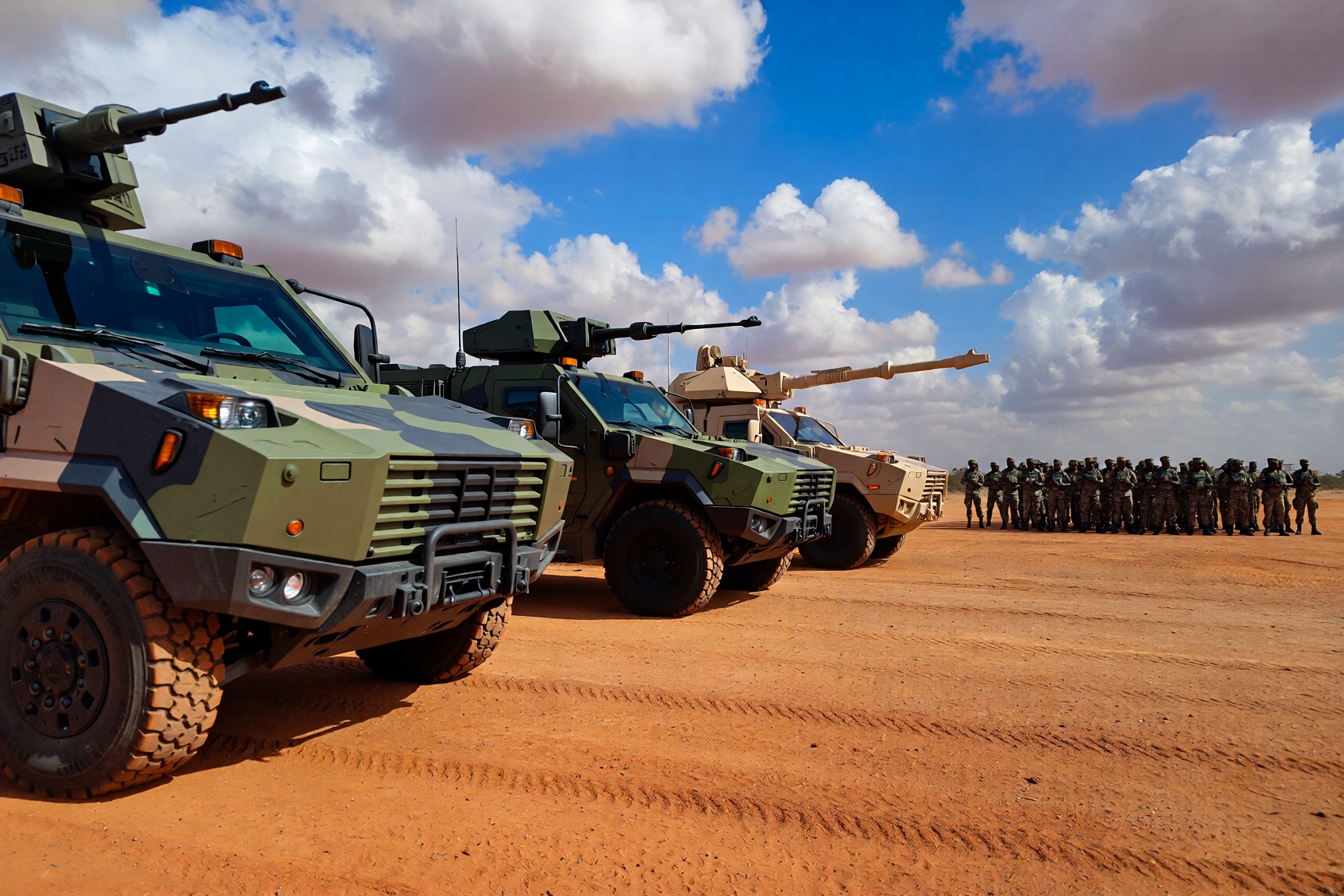
Who is the Top 5 Superpower in Africa?
The term “superpower” might be ambitious for any African nation given global comparisons to the United States, China, or Russia, but within the African context, five nations demonstrate military capabilities that enable them to project power regionally, shape security outcomes, and command respect from continental peers.
7 Steps to Understanding African Military Power Rankings
Let me provide you with a practical framework for evaluating military strength across Africa, drawn from years of analyzing defence capabilities and understanding how different factors interact to create military power.
1. Assess Active Personnel and Mobilization Capacity
Start by examining both active military personnel and reserve forces that can be mobilized during conflict. Ethiopia demonstrates this principle perfectly with over 200,000 active personnel creating one of Africa’s largest standing armies despite modest equipment inventories. Numbers alone don’t guarantee victory (as various conflicts have proven), but they provide the manpower base necessary for sustained operations, territorial defence, and regional influence. Look at conscription systems like Algeria’s that ensure continuous personnel refreshment versus purely voluntary forces that may struggle with recruitment during peacetime.
2. Evaluate Equipment Quality, Not Just Quantity
A thousand tanks sounds impressive until you discover they’re 1960s Soviet models without modern fire control systems, night vision, or reactive armour. South Africa illustrates this principle by maintaining a smaller but more technologically advanced military than larger African armies. Their defence industry produces sophisticated armoured vehicles, artillery systems, and ammunition that give South African forces qualitative advantages over numerically superior competitors. When evaluating militaries, ask: how old is the equipment? Who manufactured it? Has it been upgraded with modern electronics, weapons, and protection systems?
3. Examine Defence Budget Trends Over Time
A single year’s defence spending reveals less than budget trajectories over five to ten years. Algeria’s $25 billion annual defence budget reflects sustained oil revenue investment in military modernization, whilst Nigeria’s budget fluctuations mirror economic volatility and competing priorities for limited government funds. Declining defence budgets often signal either improved security environments or economic constraints forcing difficult choices. Guardian Nigeria’s analysis of escalating global military spending provides context for how African defence investments compare to global patterns, noting that Africa allocates approximately 1.9% of GDP to military spending compared to 4.2% in the Middle East.
4. Consider Strategic Geography and Regional Threats
Egypt’s military power gains significance from controlling the Suez Canal, whilst Ethiopia’s location astride the Blue Nile headwaters gives it strategic leverage over downstream Egypt and Sudan regardless of military hardware. Morocco’s focus on border security reflects Western Sahara disputes, whilst Kenya’s military priorities emphasize counter-terrorism against al-Shabaab infiltration from Somalia. Understanding regional threat environments explains why certain nations prioritize air forces (Libya, Egypt) whilst others focus on ground forces (Ethiopia, DRC) or internal security capabilities (Nigeria, Chad).
5. Analyze Combat Experience and Operational Readiness
Battle-tested forces possess advantages that peacetime militaries cannot replicate. Nigerian forces fighting Boko Haram for over 15 years have developed counter-insurgency expertise, small unit tactics, and resilience under fire that parade ground armies lack. Angolan forces that fought the decades-long civil war maintain institutional knowledge about sustained operations under austere conditions. Conversely, militaries that haven’t seen combat in generations may look formidable on paper whilst struggling with basic operational tasks when conflict erupts. Guardian Nigeria’s editorial on Nigeria-US strikes against terrorism highlights how joint operations with experienced American forces enhance Nigerian military effectiveness through knowledge transfer and real-time intelligence sharing.
6. Investigate International Military Partnerships
Who trains a nation’s officers matters enormously. Nigerian officers attending UK Sandhurst, US Army Command and Staff College, or Russian military academies return with different doctrinal approaches, equipment familiarity, and international networks. Defence partnerships provide access to intelligence, advanced weaponry, spare parts, and technical support that multiply force effectiveness. Egypt’s partnership with the United States, Algeria’s relationship with Russia, and Morocco’s NATO cooperation each create different capability sets and operational advantages. The recent US-Nigeria Joint Working Group demonstrates how deepened military cooperation provides “real-time intelligence” and expedited equipment requests that enhance counter-terrorism capabilities.
7. Track Domestic Defence Industrial Capacity
South Africa’s defence industry allows it to produce indigenous armoured vehicles, small arms, and ammunition, reducing import dependence and building technological expertise. Egypt manufactures significant military equipment domestically through technology transfer agreements and joint ventures. Nigeria’s Defence Industry Corporation in Kaduna produces some equipment locally but relies heavily on imports for advanced systems. Nations with robust defence industries can sustain operations during international sanctions or supply disruptions, maintain equipment through domestic spare parts production, and employ skilled workers in high-value manufacturing that builds national technical capabilities.
This framework won’t make you a military expert overnight, but it provides structure for understanding why rankings show certain patterns and how different factors interact to create military power beyond simple equipment counts.
Comparative Analysis of Africa’s Top Five Military Powers (2025 Data)
| Ranking | Country | Active Personnel | Reserve Personnel | Total Aircraft | Fighter Jets | Tanks | Naval Assets | Defence Budget (USD) | Power Index Score | Global Ranking |
|---|---|---|---|---|---|---|---|---|---|---|
| 1st | Egypt | 440,000 | 480,000 | 1,093 | 238 | 3,620 | 150 (inc. 8 submarines) | $5.88 billion | 0.3427 | 19th |
| 2nd | Algeria | 325,000 | 135,000 | 608 | 102 | 1,485 | 86 | $25 billion | 0.3589 | 26th |
| 3rd | Nigeria | 230,000 | 0 | 163 | 14 | 330 | 133 | $3.16 billion | 0.5771 | 31st |
| 4th | South Africa | 73,000 | 15,000 | 224 | 17 | 195 | 30 | $3.87 billion | 0.6724 | 40th |
| 5th | Ethiopia | 200,000+ | Unknown | 103 | 25 | 338 | Landlocked | $750 million (est.) | 0.7938 | 52nd |
This comparative analysis reveals fascinating patterns in how African military powers distribute their resources. Egypt and Algeria demonstrate comprehensive military capabilities across land, air, and sea domains with substantial budgets supporting large, well-equipped forces. Nigeria prioritizes counter-insurgency capabilities over conventional warfare assets, reflected in modest tank and fighter jet numbers but substantial personnel and helicopter inventories. South Africa maintains technological sophistication despite smaller force size, whilst Ethiopia relies on massive manpower to compensate for limited equipment modernization.
Beyond these top five, Angola (6th), Morocco (7th), Democratic Republic of Congo (8th), Sudan (9th), and Libya (10th) round out Africa’s most powerful militaries. Angola benefits from oil revenues funding military modernization after decades of civil war. Morocco’s Western partnerships and border security focus create capabilities specialized for North African challenges. The DRC struggles with logistical challenges across vast, underdeveloped territory despite huge manpower potential. Sudan faces political instability hampering military effectiveness despite substantial forces. Libya’s post-Gaddafi fragmentation limits military cohesion despite equipment inherited from the former regime.
Several nations punch above their weight through specialization. Chad maintains exceptional desert warfare capabilities and counter-terrorism expertise that make its forces valued partners for French and American operations in the Sahel. Kenya focuses on rapid deployment forces and peacekeeping expertise, fielding some of East Africa’s best-trained soldiers. Zimbabwe’s military, whilst poorly equipped, maintains professional standards and combat experience from historical conflicts.
Regional security dynamics shape military priorities in ways raw numbers cannot capture. North African states emphasize conventional capabilities suitable for potential interstate conflicts. West African militaries prioritize internal security and counter-terrorism. Southern African forces balance peacekeeping contributions with limited conventional threats. East African militaries address diverse challenges from al-Shabaab terrorism to potential water conflicts and border disputes.
The data also reveals troubling gaps. Many African militaries operate aging Soviet-era equipment requiring replacement or major upgrades. Defence budgets often cannot sustain both personnel costs and equipment modernization, forcing difficult choices. Corruption diverts funds from intended military uses, undermining effectiveness. Limited domestic defence industries create dependence on foreign suppliers who may withhold support during conflicts or impose conditions contrary to national interests.
Understanding Africa’s Military Power Dynamics in Regional Context
Africa’s military landscape reflects both remarkable diversity and concerning challenges as we progress through 2025. The top ten militaries command capabilities that would seem impressive by global developing world standards, yet they lag significantly behind truly global military powers.
Consider the United States defence budget of $886 billion compared to Africa’s combined military spending of roughly $50-60 billion. The entire African continent spends less on defence than France ($64.6 billion) or Germany ($67.8 billion) alone. This disparity limits technological sophistication, reduces procurement options, and constrains operational reach for even Africa’s most powerful militaries.
China’s growing military presence across Africa complicates traditional power structures. Chinese military assistance, arms sales, and training programmes provide alternatives to Western partnerships whilst advancing Chinese strategic interests. Djibouti’s Chinese naval base represents Beijing’s first permanent overseas military installation, positioning Chinese forces to protect maritime interests in the Red Sea and Gulf of Aden. Nigerian cooperation with China on military equipment procurement reflects similar patterns across the continent.
Russia maintains influence through arms sales and military training despite Western sanctions limiting Moscow’s global reach. Algerian and Egyptian militaries operate substantial Russian equipment inventories creating dependencies that survive political changes. Wagner Group mercenaries operating in Mali, Central African Republic, and elsewhere represent privatized Russian military influence that operates with fewer diplomatic constraints than conventional state-to-state partnerships.
Regional conflicts shape military priorities in ways peacetime analysis misses. The ongoing war in Sudan demonstrates how political instability can rapidly degrade military effectiveness regardless of paper strength. Ethiopia’s Tigray conflict revealed limitations in even large, experienced forces when facing determined insurgencies. Somalia’s decades-long collapse shows how state failure can neutralize military power completely, leaving foreign forces (AMISOM peacekeepers) providing security that Somalia’s nominal government cannot.
Counter-terrorism dominates military thinking across the Sahel, West Africa, and East Africa. Guardian Nigeria’s analysis of US strikes on terrorists in northwest Nigeria examines how Nigerian forces cooperate with American intelligence and air power to combat Islamic State and other terrorist groups. These operations require capabilities quite different from conventional interstate warfare, privileging intelligence, special operations, helicopter mobility, and small unit tactics over tank armies or fighter jet fleets.
Climate change creates emerging security challenges that African militaries increasingly address. Desertification in the Sahel drives pastoral communities into conflict over shrinking resources. Lake Chad’s dramatic reduction exacerbates competition for water and arable land. Rising sea levels threaten coastal infrastructure and populations. These environmental stresses create instability that military forces must manage despite lacking specific training or equipment for climate-related security operations.
The generational shift in military leadership matters too. Officers who fought independence struggles or Cold War proxy conflicts are retiring, replaced by younger leaders trained in Western or Chinese military academies. These new leaders bring different perspectives on everything from civil-military relations to operational doctrine to procurement priorities. Whether this generational transition strengthens African militaries or creates friction depends on how countries navigate the change.
Defence industrial development represents perhaps the most important long-term factor for African military power. Nations that build indigenous capacity to manufacture equipment, maintain complex systems, and innovate solutions to local challenges will surpass those permanently dependent on imports. South Africa’s defence industry decline following apartheid’s end warns that capabilities, once lost, prove extraordinarily difficult to rebuild. Egypt’s growing defence manufacturing partnerships with European and Asian firms suggest an alternative model that might prove more sustainable.
Peacekeeping contributions enhance both military capabilities and international standing. Nigerian forces serving in UN and AU missions across Africa gain operational experience, international recognition, and financial compensation that benefits both individual soldiers and national defence budgets. Ethiopia, Rwanda, South Africa, and others similarly leverage peacekeeping to build capabilities whilst contributing to continental stability. Guardian Nigeria’s editorial on the military and Nigeria’s security praises how Nigerian forces’ peacekeeping in Congo, Sierra Leone, Liberia, and elsewhere “have done the nation proud” whilst building professional expertise.
Navigating the Future of African Military Power
Africa’s military landscape will evolve significantly over the next decade as emerging technologies, shifting alliances, and changing threat environments reshape defence priorities. Understanding these trajectories helps contextualize where military power is heading, not just where it stands today.
Drone warfare represents perhaps the most significant technological shift affecting African militaries. Turkish Bayraktar TB2 drones operating in Libya, Ethiopia, and Nigeria demonstrate how relatively affordable unmanned systems provide intelligence, surveillance, and strike capabilities that traditionally required expensive manned aircraft and extensive pilot training. Chinese military drones sold across Africa offer similar capabilities at lower costs than Western alternatives. The democratization of air power through drones may fundamentally alter how African nations project military force.
Cyber warfare capabilities remain extremely limited across Africa, creating vulnerabilities that adversaries can exploit. Few African militaries maintain dedicated cyber warfare units or defensive capabilities to protect military networks from intrusion. As warfare increasingly incorporates information operations, electronic warfare, and cyberattacks, African forces risk falling further behind global competitors who invest heavily in these domains. Building cyber capabilities requires different skill sets than traditional military training, demanding partnerships with domestic technology sectors and educational institutions.
Regional integration initiatives like the African Standby Force aim to create rapid deployment capabilities for continental crisis response, but progress remains frustratingly slow. National sovereignty concerns, funding shortfalls, and equipment incompatibilities hamper efforts to build truly integrated multinational forces. Yet the potential benefits of pooled resources, shared training standards, and coordinated doctrine could multiply African military effectiveness far beyond what individual nations achieve alone.
The African Continental Free Trade Area’s economic integration may eventually facilitate defence industry cooperation that currently proves elusive. If African nations could collectively develop and manufacture military equipment, costs would decrease, capabilities would increase, and dependence on external suppliers would diminish. South Africa’s Denel, Nigeria’s Defence Industry Corporation, and Egypt’s defence manufacturers could anchor regional production networks that serve continental markets rather than relying on limited domestic demand.
Demographic trends will shape African military power profoundly over coming decades. Africa’s youth bulge creates both security challenges (unemployed young men vulnerable to extremist recruitment) and opportunities (large pools of potential military recruits). How African nations harness demographic dividends whilst avoiding demographic disasters will determine military recruitment quality, societal support for defence spending, and overall national power trajectories.
Climate-induced migration and resource conflicts will likely increase, requiring military responses to environmental security challenges. Competition for water resources along the Nile, Niger, and other shared river systems could spark interstate conflicts that current diplomatic mechanisms fail to prevent. Military forces will need capabilities to de-escalate resource conflicts, protect critical infrastructure, and respond to climate disasters whilst maintaining traditional security functions.
The balance between internal security and external defence will continue shifting as terrorism, insurgency, and civil unrest consume military resources across the continent. Egyptian forces fighting Islamic State in Sinai, Nigerian military battling Boko Haram and bandits, Kenyan forces combating al-Shabaab, and Mozambican security confronting Islamic State affiliates all demonstrate how internal threats dominate military planning. This focus on irregular warfare potentially weakens conventional capabilities needed for interstate conflicts, creating strategic vulnerabilities that hostile neighbours might exploit.
International partnerships will remain crucial but may diversify beyond traditional Western or Russian patrons. Turkey’s growing military engagement across Africa (Libya, Somalia, Niger), Gulf state investments in African security (UAE in Libya, Saudi training programmes), and Indian defence cooperation suggest an increasingly multipolar environment where African nations can shop for partners offering the best terms. This flexibility benefits African states but creates coordination challenges as forces trained and equipped by different partners struggle to operate together.
Related Articles on Nigerian Identity and Regional Power
Understanding Africa’s military power dynamics connects deeply to broader questions of national identity and regional influence. My previous explorations of Nigerian society provide valuable context for how military power intersects with cultural identity and national prestige.
In What is Nigerian Society Like?, I examined how Nigeria’s complex ethnic composition, regional variations, and social structures shape national institutions including the military. The armed forces mirror Nigerian society’s diversity, drawing personnel from all 371 ethnic groups whilst navigating the same tensions over representation, resources, and regional balance that affect civilian governance. Military service traditionally provided upward mobility for Nigerians from all backgrounds, though concerns about ethnic favoritism in promotions and appointments persist.
Similarly, What are Nigerians Known For? explores how Nigeria’s global reputation rests not just on military power but on cultural influence, entrepreneurial spirit, and creative excellence that enhance soft power. Nigeria’s military ranking as Africa’s third most powerful force amplifies diplomatic leverage, but the nation’s true global influence comes from Afrobeats music, Nollywood films, and literary achievements that shape how the world perceives Africa. Military strength enables security, but cultural power builds lasting influence that survives beyond military superiority.
Concluding Thoughts on Africa’s Military Powers
What is the top 10 powerful country in Africa by military? The answer reveals a continent where military power remains concentrated among a handful of nations with resources, strategic imperatives, and historical experiences that drive sustained defence investment.
Egypt’s dominance reflects geographic advantage, international partnerships, and comprehensive capabilities across all military domains. Algeria’s oil wealth funds a military second only to Egypt whilst maintaining operational readiness for border security and counter-terrorism. Nigeria’s rise to third place demonstrates how sustained investment and combat experience can elevate military standing despite budget constraints. South Africa’s technological sophistication and Ethiopia’s massive manpower round out the top five, whilst Angola, Morocco, DRC, Sudan, and Libya complete the top ten through diverse combinations of resources, equipment, and personnel.
Understanding African military power requires looking beyond equipment inventories to strategic context, operational experience, defence industrial capacity, and future trajectories. The most powerful militaries aren’t necessarily the largest or best-equipped, but those that align capabilities with strategic needs, maintain professionalism despite political pressures, and invest wisely in modernization that multiplies force effectiveness.
Africa’s security challenges demand capable military forces, but military power alone cannot solve the continent’s deep-rooted problems. Poverty, weak governance, ethnic tensions, and climate stress create the conditions that spark conflicts requiring military intervention. Investing in development, strengthening institutions, promoting reconciliation, and building resilience would reduce security threats more sustainably than military buildups alone can achieve.
Yet security remains foundational to development, making capable military forces essential for African nations pursuing prosperity. The top ten militaries provide security that enables economic activity, deter aggression that would destabilize regions, and respond to crises that civilian institutions cannot handle. Strengthening these forces whilst ensuring civilian control, fighting corruption, and maintaining professionalism serves both national interests and continental stability.
Key Takeaways
- Egypt leads Africa with 440,000 active personnel, 3,620 tanks, 1,093 aircraft, and strategic control of the Suez Canal, whilst Algeria’s $25 billion defence budget funds Africa’s second-most-capable military featuring 1,485 tanks and 608 aircraft backed by oil revenues.
- Nigeria ranks third in Africa and 31st globally (up from 39th in 2024) through sustained counter-insurgency operations, enhanced US partnerships providing intelligence and equipment, and combat experience against Boko Haram that builds operational expertise.
- Africa’s top ten militaries (Egypt, Algeria, Nigeria, South Africa, Ethiopia, Angola, Morocco, DRC, Sudan, Libya) demonstrate diverse paths to military power through combinations of resources, strategic partnerships, combat experience, and specialized capabilities, though all lag significantly behind global powers in technology and defence spending.
Frequently Asked Questions About Africa’s Most Powerful Militaries
Which African Country Has the Strongest Military in 2025?
Egypt possesses Africa’s strongest military in 2025 with 440,000 active personnel, 3,620 tanks, 1,093 aircraft including 238 fighter jets, eight submarines, and a $5.88 billion defence budget that maintains comprehensive capabilities across land, air, and sea domains. Egypt’s strategic location controlling the Suez Canal, decades of American military assistance exceeding $1.85 billion annually, and battle-tested forces from multiple conflicts cement its position as Africa’s undisputed military superpower.
How Does Nigeria’s Military Compare to Other African Countries?
Nigeria ranks third in Africa and 31st globally with 280,000 total personnel, 163 aircraft, 330 tanks, and a $3.16 billion defence budget focused on counter-insurgency operations against Boko Haram and ISWAP terrorist groups. Nigeria’s military strength derives from combat experience, regional peacekeeping expertise, and growing partnerships with the United States providing intelligence sharing and advanced equipment rather than matching Egypt or Algeria’s conventional warfare capabilities.
What Makes Algeria’s Military So Powerful Despite Its Smaller Population?
Algeria maintains Africa’s second-most-powerful military through a $25 billion annual defence budget funded by oil and gas revenues that enable procurement of advanced Russian military equipment including Sukhoi Su-57 fighter jets and modern air defence systems. Algeria’s conscription system ensures steady personnel pipelines whilst 610,000 total forces (325,000 active plus 150,000 paramilitaries) provide substantial manpower backed by 1,485 tanks and 608 aircraft creating comprehensive capabilities.
Why Did South Africa Drop From Third to Fourth in Africa’s Military Rankings?
South Africa slipped from third to fourth place in Africa’s military rankings due to budget constraints limiting force modernization, reduction in active personnel to 73,000 compared to competitors maintaining larger forces, and economic challenges preventing equipment acquisitions needed to match Nigeria’s sustained military investment. South Africa maintains technological advantages through its advanced defence industry but cannot compensate for numerical and budgetary disadvantages against Nigeria’s growing capabilities.
Which African Military Has the Most Combat Experience?
Nigerian forces possess extensive recent combat experience from over 15 years fighting Boko Haram insurgents, decades of peacekeeping operations across Africa including Liberia, Sierra Leone, and Mali, and ongoing counter-terrorism campaigns against ISWAP and bandit groups in multiple regions. Ethiopian forces similarly maintain significant combat experience from the recent Tigray conflict, border wars with Eritrea, and ongoing internal security operations, whilst Egyptian forces combat Islamic State affiliates in Sinai.
How Do African Military Budgets Compare to Global Powers?
Africa’s entire combined military spending of approximately $50-60 billion equals less than France’s $64.6 billion or Germany’s $67.8 billion individual defence budgets, whilst the United States alone spends $886 billion annually on defence. Algeria’s $25 billion budget leads Africa but represents merely 2.8% of American military spending, illustrating the vast gap between African and global military powers in resources, technology, and procurement capabilities.
What Role Does Foreign Military Aid Play in African Armed Forces?
Foreign military aid critically shapes African military capabilities, with Egypt receiving $1.85 billion annually from the United States enabling procurement of American F-16 fighters and M1 Abrams tanks that would otherwise exceed Egyptian defence budgets. Nigeria’s growing partnership with the United States provides intelligence sharing, training, and expedited equipment requests that multiply force effectiveness, whilst Chinese and Russian military assistance to various African nations offers alternatives to Western partnerships.
Which African Countries Have the Largest Active Military Personnel?
Egypt maintains 440,000 active personnel leading Africa, followed by Algeria with 325,000 active soldiers, Nigeria with 230,000 active forces, and Ethiopia with over 200,000 active personnel despite economic challenges. These four nations account for approximately 1.2 million of Africa’s roughly 2.5 million active military personnel, demonstrating how military power concentrates among a handful of populous, resource-rich, or strategically positioned states.
How Important Are Air Forces in African Military Power?
Air forces provide critical advantages in African military operations, with Egypt’s 1,093 aircraft (238 fighters) enabling air superiority, close air support, and reconnaissance capabilities that ground-focused competitors cannot match. Algeria’s 608 aircraft and Nigeria’s 163 aircraft (though only 14 fighters) demonstrate varying air power investments, whilst drone warfare increasingly provides affordable air capabilities to nations unable to maintain expensive manned fighter fleets.
What Security Challenges Drive African Military Development?
Counter-terrorism operations against groups like Boko Haram, Islamic State affiliates, and al-Shabaab dominate African military priorities, requiring intelligence capabilities, helicopter mobility, and special operations forces rather than conventional tanks and fighter jets. Border security, internal insurgencies, peacekeeping contributions, potential resource conflicts over water and minerals, and climate-induced migration increasingly shape military planning across the continent.
Can African Countries Manufacture Their Own Military Equipment?
South Africa maintains the continent’s most advanced defence industry producing armoured vehicles, artillery, small arms, and ammunition, though capacity has declined since apartheid’s end. Egypt manufactures substantial military equipment through joint ventures and technology transfer agreements with Western and Asian partners, whilst Nigeria’s Defence Industry Corporation in Kaduna produces limited equipment locally but relies heavily on imports for advanced systems.
How Do African Militaries Recruit and Train Personnel?
Algeria employs conscription ensuring steady personnel pipelines and broad military experience across society, whilst Egypt maintains both conscription and professional forces creating massive total military strength of 920,000 including reserves. Nigeria, South Africa, and most African nations rely on voluntary recruitment supplemented by military academies like Nigeria’s National Defence Academy in Kaduna providing officer training modelled on British Sandhurst and American West Point institutions.

