 Follow Us on Google News


 Follow Us on Google Discover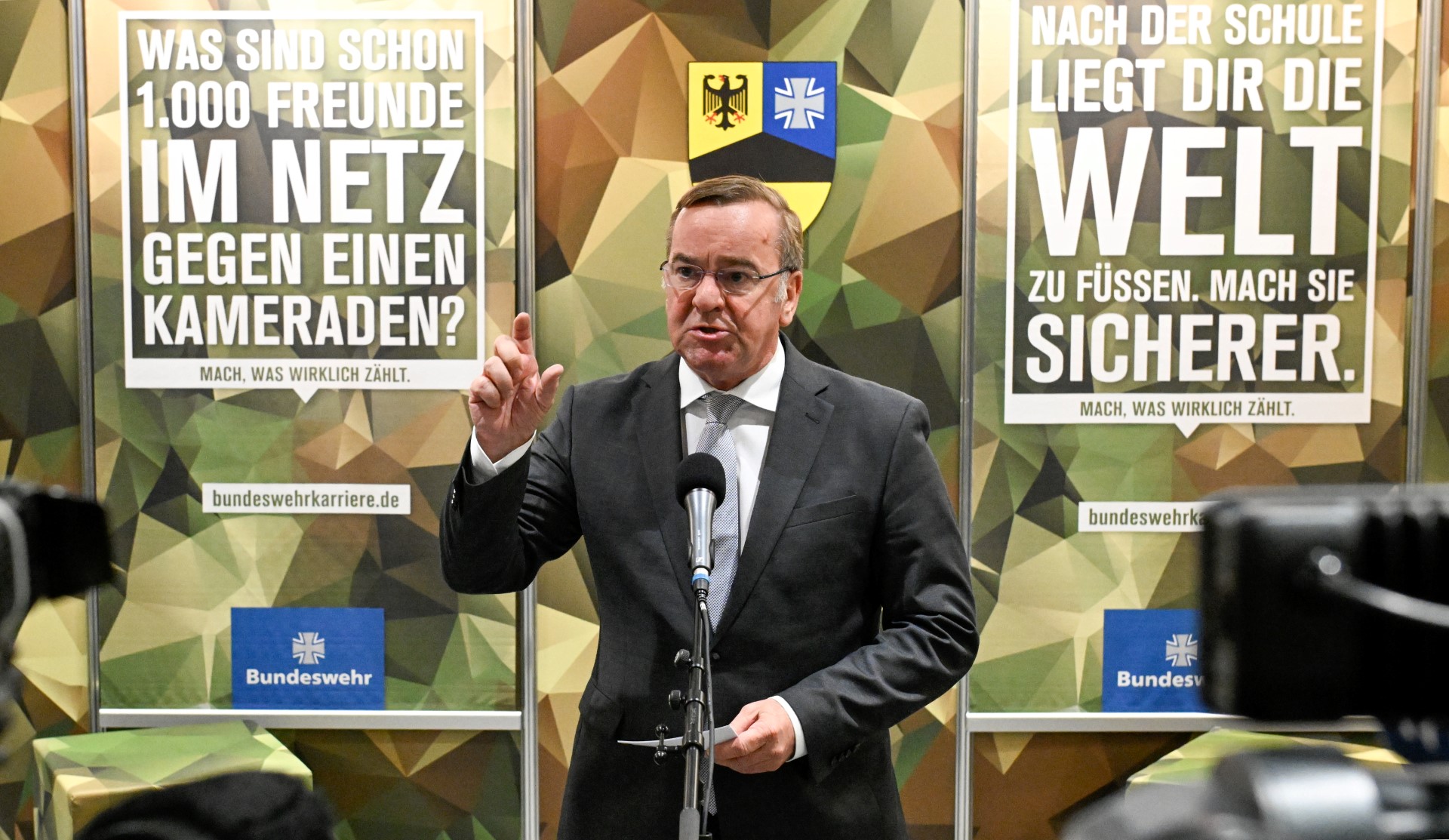

Germany’s armed forces are facing major problems in attracting new recruits, the defence minister said Wednesday, as Berlin seeks to overhaul its creaking military following Russia’s invasion of Ukraine.
[ad]
The Bundeswehr has long suffered from a lack of resources and funding but the start of the Ukraine war prompted Chancellor Olaf Scholz to pledge to boost spending.
However, a central challenge is recruiting the next generation of soldiers, admitted Defence Minister Boris Pistorius during a visit to an armed forces career centre in Stuttgart.
“Everyone is talking about a shortage of personnel in the Bundeswehr — and no one knows this better than I,” he told reporters.
“We have seven percent fewer applicants this year compared to the same period last year.”
[ad]
During training in the army, there is a dropout rate of about 30 percent, he said.
The acute problems facing the Bundeswehr were laid bare in March when a top MP said the military had “too little of everything” and its barracks were in a pitiful state.
Some troops’ living quarters were lacking Wi-Fi and even working toilets, said Eva Hoegl, a German parliamentary commissioner tasked with scrutinising the military.

The centrepiece of Berlin’s efforts to overhaul the military is a special 100-billion-euro ($110 billion) fund — but Hoegl said that none of this was spent in 2022 amid sluggish bureaucratic decision-making.
[ad]
When it came to recruitment, Pistorius said the younger generation had greater concerns about work-life balance than in the past, which were hard to reconcile with a military career.
And the fact German society was ageing — leading to shortages of workers across many industries — meant military recruitment was particularly difficult.
“By 2050, we will have 12 percent fewer people in the 15-24 age group,” he said.
The Bundeswehr currently has a target to boost the number of soldiers to 203,000 by 2031, from around 180,000 currently, although Pistorius stressed that figure was being reviewed.
[ad unit=2]

