 Follow Us on Google News


 Follow Us on Google Discover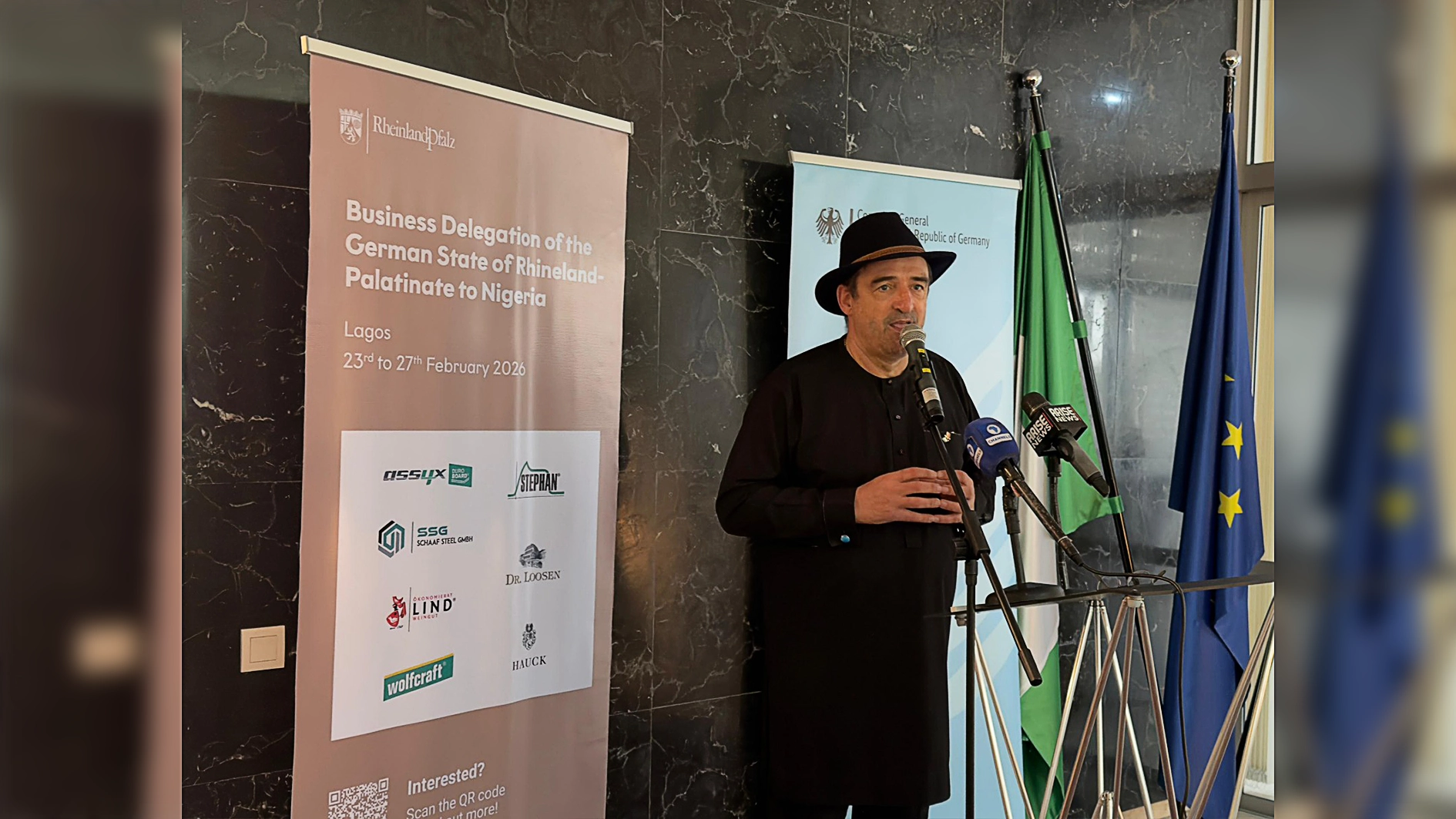
The Consul General of Germany in Lagos, Daniel Krull, has emphasised the critical role of the Agrofood sector in securing Nigeria’s economic stability, calling for deeper collaboration with German industry to drive food processing, job creation, and long-term resilience.
Speaking at a reception hosted at the German Consulate in Lagos for the 13 participating German companies at the Agrofood Nigeria 2026, Krull said Germany remains committed to supporting Nigeria with advanced technology and expertise in food processing.
Krull described agriculture and food systems as central to Nigeria’s future, noting that strengthening these sectors would enhance food security and economic growth.
He pointed to Germany’s global leadership in food processing as a model, explaining that although Germany does not grow coffee, it is Europe’s largest exporter due to its processing capabilities and ability to tailor products to consumer needs.
He stressed that German companies possess highly specialised engineering skills, particularly in the production of bottling machines, food processing equipment, and additives essential for modern food systems. According to him, these capabilities can significantly support Nigeria’s efforts to expand its food processing industry and reduce reliance on imported goods.
On trade relations, Krull noted that while overall trade between Nigeria and Germany remains stable, driven largely by machinery imports and energy exports, food exports from Nigeria to Germany are still far below their potential.

He attributed this in part to security challenges affecting agricultural production but insisted that increasing local processing capacity would create jobs and unlock economic opportunities.
The Consul General also highlighted Germany’s broader support for Nigeria through development cooperation initiatives valued at about €570 million.
These include vocational training programmes, technical assistance, and financing support for small and medium-scale enterprises.
He added that German institutions are also contributing to security efforts through advisory roles and development projects aimed at improving economic conditions in vulnerable regions.
Krull further underscored the importance of private sector involvement, noting that German companies not only supply machinery but also train Nigerian workers, often abroad, to operate and maintain advanced equipment.
He said this transfer of knowledge is essential for building sustainable local capacity.
Managing Director, Fairtrade, organisers of Agrofood Conference and Exhibition, Paul Marz, outlined the scope and impact of the trade fair.
He said the 11th edition of Agri-Food Nigeria features 137 companies from 17 countries, including 14 German firms, with official pavilions from Germany, Belgium, Denmark, and the Netherlands.
Maas explained that the exhibition covers the entire food value chain, serving as a key meeting point for stakeholders in agriculture, food production, processing, and distribution across Nigeria and West Africa.
He said the primary objective is to promote self-sufficiency in Nigeria’s food supply by introducing modern technologies and expertise.
Reflecting on the exhibition’s impact since its launch in Nigeria in 2015, Maas noted improvements in packaging quality, supermarket expansion, and the export readiness of Nigerian agricultural products.
He attributed these gains partly to technologies introduced by participating companies, including equipment for packaging, bottling, and recycling.
Addressing investment concerns, Maas clarified that most foreign participants are focused on providing machinery and technical solutions rather than direct investment.
However, he noted that some companies have established local operations over time, contributing to skills development and industrial growth.
He added that while the exhibition largely features established global firms with proven track records, it also provides a platform for knowledge exchange, enabling Nigerian businesses to make informed investment decisions and adopt efficient production methods.

