 Follow Us on Google News


 Follow Us on Google Discover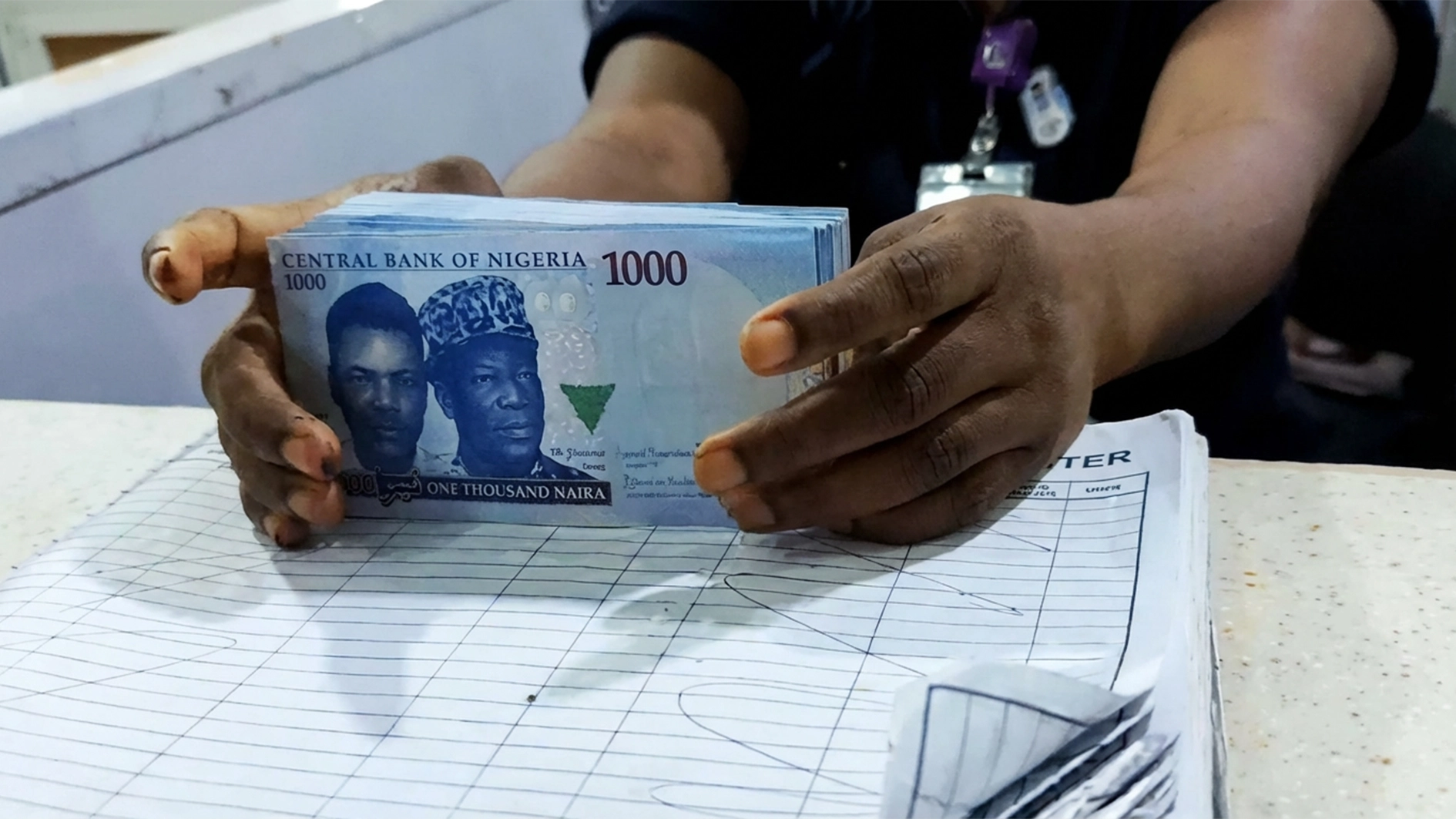
Oye queries N11.85tr borrowing, N30.64tr govt spending
Yoruba socio-political group, Afenifere, has said state governments can now pay salaries following the removal of fuel subsidy because of the resulting revenue windfall, but argued that the real value of wages has been eroded by inflation triggered by the policy.
Raising concerns over transparency and accountability in the Federal Government’s $5 billion financing arrangement with First Abu Dhabi Bank, the Chairman of the Alliance for Economic Research and Ethics LTD/GTE, Dele Oye, questioned the composition of the President Bola Tinubu-led administration’s reported N20.4 trillion in incremental resources and N30.64 trillion in additional expenditure.
In a statement signed by its National Publicity Secretary, Justice Faloye, the Yoruba group reacted to Tinubu’s remark during his meeting with Osun State Governor, Ademola Adeleke, at the State House, Abuja, that his economic policies had enabled 27 states to pay workers’ and pensioners’ salaries, which they previously struggled to afford.
The President also described calls for the restoration of subsidy as stemming from “serious ignorance” of governance and the economy.
Afenifere, however, said the President’s position amounted to “insult upon economic injury” to Nigerians.

The statement reads: “If President Tinubu does not know that states are paying wages because real wages have been grossly devalued by his neoliberal economic policies, then, with all due respect, he is the one suffering from serious ignorance of governance and the economy.
“Unfortunately, he is ignorant of the economic multiplier effects on income and employment, as the removal of $10 billion in subsidies and devaluation cost Nigeria over $100 billion in productive value.”
The group also faulted Tinubu’s remark during the visit of Catholic bishops that there had always been hunger in Nigeria, saying it demonstrated a lack of understanding of relativity and proportionality.
It claimed that poverty and hunger had increased from 38 per cent under the administration inherited from former President Muhammadu Buhari to 66 per cent.
“Wages, pensions and property values were devalued in real terms, since the increase in wages was less than the increase in naira supply in state government coffers, and especially the increase in inflation and decrease in spending power caused by the twin neoliberal economic policies of subsidy removal and devaluation,” it said.
Afenifere accused the President of knowing the economic realities but “playing politics of disinformation tied to the Western-imposed neoliberal ideology”, which it said had created elite apathy towards the plight of Nigerians since the late 1970s.
OYE stated that the government’s handling of the Abu Dhabi facility required greater public disclosure, particularly because the transaction involves public institutions, sovereign obligations and public collateral.
His position followed the presentation of the Federal Government’s economic reform scorecard by the Finance Minister and Coordinating Minister of the Economy, Taiwo Oyedele, on August 19, 2026.
Oyedele had said the government would not publish details of how funds from the Abu Dhabi facility were being spent, arguing that the government’s expenditure was already subject to public reporting, questioning why that particular facility should be treated differently.
But the Oye said the explanation did not adequately address the accountability concerns surrounding the transaction.
He said the government should disclose the material terms of the facility, including the drawdown schedule, purpose of funds, collateral framework, fees, margin-call provisions, early-termination triggers and periodic utilisation reports.
He stressed that legislative approval of the facility was not the same as continuous public accountability.
Beyond the Abu Dhabi facility, the Alliance queried the presentation of the government’s claim that reforms had generated approximately N20.4 trillion in incremental Federal Government resources.
The figure, according to the Ministry’s scorecard, comprises N5.43 trillion in estimated Federal Government subsidy savings, N3.12 trillion in other incremental revenues and N11.85 trillion in incremental borrowing.
The organisation noted that borrowing accounted for about 58 per cent of the stated N20.4 trillion.
Oye, therefore, argued that the figure should not be interpreted as N20.4 trillion in internally generated or “free” resources, but rather as a combination of fiscal savings, additional revenue and financing.
According to the report, currency-in-circulation increased from N3.325 trillion in 2021 to N5.733 trillion in 2025, representing a nominal growth of 72.4 per cent over the period.
But after adjusting for inflation, the report said the picture changed significantly, with the purchasing power of cash held by Nigerians falling by approximately 29 per cent between 2021 and 2025.
The report challenged the CBN’s explanation that the increase reflected stronger economic activity. It noted that while Nigeria’s real Gross Domestic Product (GDP) grew by 3.87 per cent in 2025 from 3.38 per cent in 2024, yearly average inflation stood at 23.01 per cent during the same period.
Using inflation adjustment, the report calculated that real currency-in-circulation declined by approximately 14.3 per cent in 2025, despite the nominal increase in cash supply.

