 Follow Us on Google News


 Follow Us on Google Discover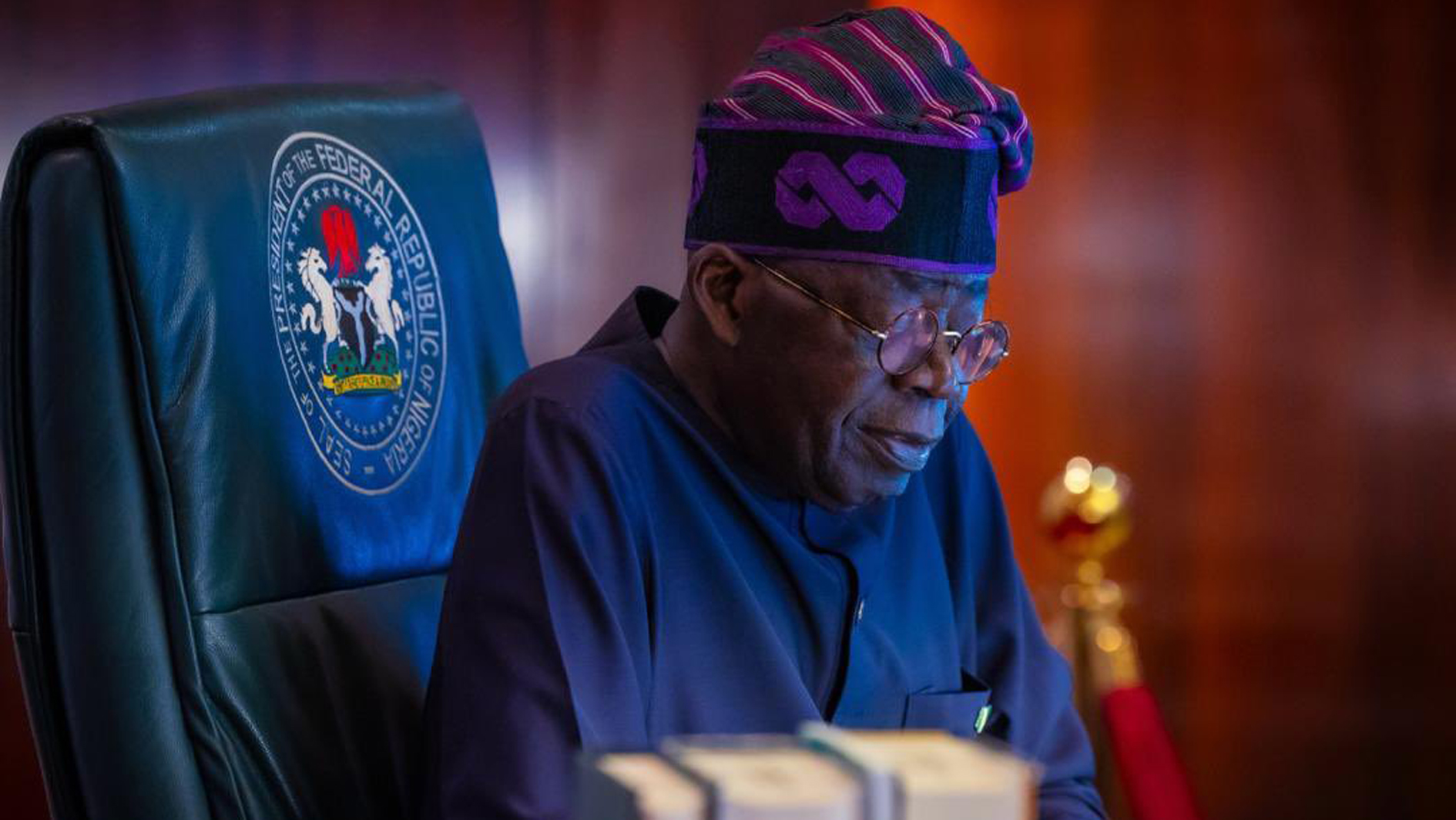
A Senior Advocate of Nigeria (SAN), Babatunde Ogala, has defended President Bola Ahmed Tinubu’s reform agenda, describing policy decisions since 2023 as difficult but necessary steps toward economic stability and institutional strengthening.
Ogala spoke at the Silver Knights 2026 Annual May Day Lecture held at Lead City University, Ibadan, where he delivered a paper titled “Innovative Strategies for Improved Governance in Nigeria Since 2023—From Courage to Consolidation.”
He said Nigeria reached a critical juncture in 2023 where it had to choose between politically convenient policies and structural reforms, noting that the administration opted for what he called “correction over comfort.”
According to him, the removal of fuel subsidies marked a decisive break from past fiscal practices, creating room for improved revenue allocation to states and reducing distortions in the downstream sector.
“Subsidy removal was not incremental reform; it was structural surgery. While painful, it was necessary to restore fiscal discipline and transparency,” he said.
Ogala also cited the unification of the foreign exchange market as a key reform that improved investor confidence by reducing arbitrage and enhancing transparency in currency transactions.

On education, he highlighted the student loan scheme under the Nigerian Education Loan Fund (NELFUND), saying it is expanding access to tertiary education through structured, interest-free financing.
He further referenced the Supreme Court judgment on local government autonomy, describing it as a landmark that strengthened grassroots governance through direct allocation and financial independence for councils.
The SAN also pointed to amendments to the Electoral Act aimed at improving election preparedness and strengthening the capacity of the Independent National Electoral Commission (INEC).
He said reforms in the judiciary, including improved welfare for judicial officers and expansion of the Supreme Court bench, were designed to enhance efficiency and restore public confidence in the justice system.
Ogala added that the introduction of the Compressed Natural Gas (CNG) initiative demonstrated adaptive governance in response to rising energy costs following subsidy removal.
On infrastructure, he said the government had shifted toward public-private partnerships, citing the Lagos-Calabar Coastal Highway, while reducing dependence on sovereign borrowing.
He also noted ongoing tax reforms aimed at simplifying the system, easing pressure on low-income earners and small businesses, and improving compliance through technology.
According to him, digital governance reforms, including integration of financial and identity systems, have improved transparency and reduced leakages in social intervention programmes.
Ogala said reforms in the power sector were gradually decentralising electricity generation and distribution, opening space for state and private sector participation.
He called for sustained policy consistency, institutional strengthening and targeted social interventions to consolidate reform gains.
Ogala added that long-term development would depend on the willingness of leaders and citizens to support difficult but necessary decisions.
Also speaking, Managing Director/Chief Executive Officer of the South West Development Commission (SWDC), Dr. Charles Akinola, said Nigeria’s governance challenges stem more from weak institutional structures than leadership failure.
Akinola, who spoke at the same event, said sustainable development requires deliberate institutional design capable of addressing complex national challenges.
Delivering a paper titled “The South West Development Commission as an Institutional Innovation for Improved Governance in Nigeria,” he said governance reform must go beyond political rhetoric and technology to focus on building durable institutions.
He noted that challenges such as transport systems, food supply chains, investment flows and environmental issues cut across state boundaries and require coordinated regional responses.
Akinola said the SWDC was created as a strategic institutional response, providing a platform for regional planning, infrastructure coordination and economic integration.
He stressed that it is not a fourth tier of government but a complementary structure designed to support collaboration among states.
“The SWDC is not a rival authority. It is an administrative innovation intended to enable collaboration across states and deliver development at scale,” he said.
He added that the South-West must function increasingly as a single economic bloc, noting that investors already perceive the region as one market.
Akinola said institutional continuity beyond electoral cycles is essential for development, as political transitions often disrupt long-term planning.
He listed the Commission’s priorities to include infrastructure development, human capital growth, industrialisation, agricultural value-chain integration and regional security coordination.
He urged stronger collaboration with state governments, describing governors as key partners in achieving regional development goals.
“The ultimate test of governance is the welfare and security of the people. Institutions must be judged by the results they deliver, not by their titles,” he said.
Akinola called for reforms anchored on institutional strengthening, warning that over-reliance on political leadership without structural innovation would limit development outcomes.
A governance scholar at Lead City University, Dr. Adebola Alade, also said Nigeria’s governance challenges require deep institutional innovation.
She said corruption, weak enforcement systems and bureaucratic inefficiencies, not resource scarcity, remain the core obstacles to development.
Alade called for stronger federalism, enhanced local government autonomy, digital governance reforms, data-driven policymaking and greater citizen participation.
She warned that governance reform must be continuous and not episodic, citing examples from Estonia, Singapore and Rwanda as models of institutional discipline.
Earlier, SK Club Chief, Steve Okwubi, described governance reform as a long-term journey requiring sustained commitment.

