 Follow Us on Google News


 Follow Us on Google Discover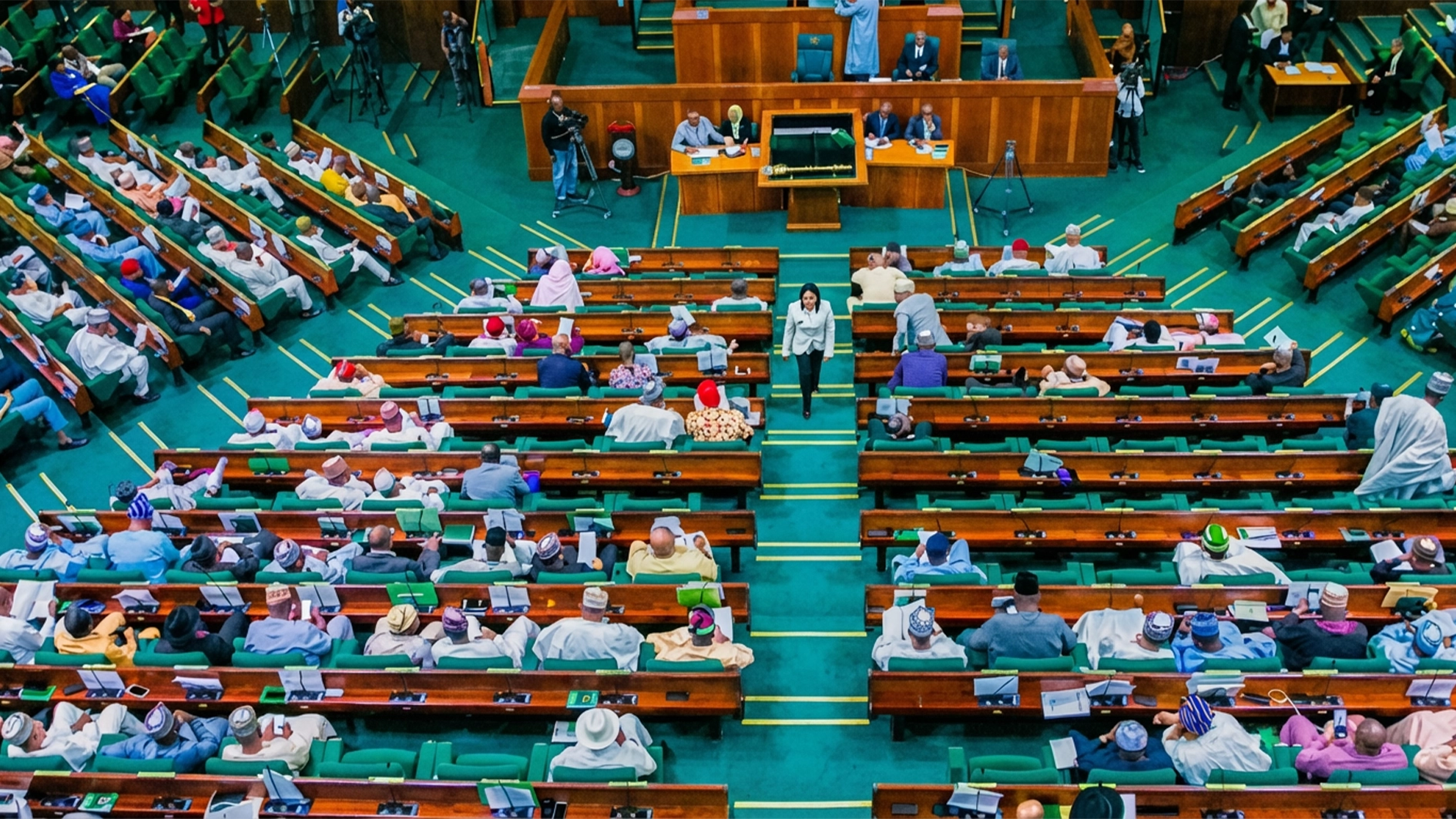
• National Police Council restructured, govs excluded
• Bill guarantees direct funding, independent oversight
• Federal intervention limited under strict conditions
• Minority alleges constitutional breaches, backs initiative
• Vigilante groups barred from automatic conversion
• Experts welcome reform, caution over implementation
A constitutional amendment establishing State Police Services sailed through the House of Representatives yesterday, marking the biggest step yet towards overhauling Nigeria’s policing architecture after years of debate over the need to decentralise law enforcement.
The landmark reform, however, was immediately overshadowed by a walkout by minority lawmakers, who accused the House leadership of breaching constitutional procedures during its passage, even as supporters insisted the bill contains safeguards designed to prevent political abuse.
The bill, titled ‘A Bill for an Act to Alter the Constitution of the Federal Republic of Nigeria, 1999 to Provide for the Establishment of State Police Services and for Related Matters (HB.2797)’, was considered by the Committee of the Whole before securing the constitutionally required two-thirds majority.
President Bola Tinubu had transmitted the Constitution of the Federal Republic of Nigeria (Alteration) (State Police) Bill, 2026, to the House, seeking constitutional approval for the establishment of state police services across the country.
The President said the proposed legislation seeks to amend the 1999 Constitution to provide the legal framework for the creation of state police as part of efforts to strengthen Nigeria’s security architecture.

Presenting the committee’s report on the floor of the House, the Deputy Speaker and Chairman of the House Committee on Constitution Review, Benjamin Kalu, described the proposal as a landmark reform aimed at strengthening Nigeria’s security architecture.
He commended President Bola Tinubu for transmitting the Executive Bill to the National Assembly, saying the move demonstrated effective collaboration between the executive and legislative arms of government.
According to Kalu, the constitutional amendment seeks to bring policing closer to the people, improve intelligence gathering, strengthen community policing, enhance coordination among security agencies and empower governments to respond more effectively to evolving security challenges.
“This bill is not merely about creating another policing institution. It is about bringing policing closer to the people, strengthening intelligence gathering, enhancing community policing, improving coordination among security agencies and empowering governments to respond more effectively to the complex and evolving security challenges confronting our nation,” he said.
He acknowledged that the proposal might not satisfy every stakeholder but stressed that constitutional reform is an incremental process.
Kalu explained that the amendment provides only the constitutional foundation for state police, while detailed implementation issues, including recruitment, training, operational standards, funding, accountability and intergovernmental coordination, would be addressed through subsequent legislation.
“We must not allow the pursuit of perfection to become the enemy of meaningful progress,” he said, urging lawmakers to support what he described as a historic reform.
During the consideration of the bill, Speaker Tajudeen Abbas read its long title before putting it to a voice vote.
Before the vote, Abbas announced that 311 members supported the bill, comprising 211 APC members, 65 lawmakers from other political parties who were physically present and 35 members who participated virtually through the House’s electronic platform.
He explained that the Constitution requires the support of at least two-thirds of the House’s membership—240 votes—for a constitutional amendment to pass.
State police bill proposes direct funding, independent oversight, strict federal safeguards
THE State Police Constitution Alteration Bill sets out constitutional safeguards intended to insulate proposed State Police Services from political interference, establishing a framework for direct funding, independent oversight, federal intervention and community policing.
The bill amends the 1999 Constitution to create a dual policing system comprising a Federal Police Service and State Police Services, and sets out the institutional, financial and operational mechanisms meant to guide the new architecture.
Among its most far-reaching provisions, as sighted by The Guardian, is a constitutional guarantee of direct funding for State Police Services. The bill amends Section 121 of the Constitution to provide that “any amount standing to the credit of a State Police Service established for a State shall be paid directly to the Service.” The provision is designed to shield state police from political control through financial deprivation, a concern that featured prominently during legislative deliberations. The House observed that guaranteed funding is essential to keep state police effective and free from political manipulation.
The legislation also strengthens the independence of police oversight institutions by removing executive control over their operations. It amends Sections 158 and 202 of the Constitution to provide that the Federal Police Service Commission, the National Police Council and State Police Service Commissions “shall not be subject to the direction or control of any other authority or person including the President” at the federal level and “including the Governor” at the state level.
Lawmakers argued that an earlier draft of the bill extended independence to the Federal Police Service Commission alone, leaving the National Police Council — which oversees both federal and state police services — under presidential control. The House said this created a significant gap, warning that “without similar independence for the National Police Council, the oversight of state police services could be compromised by political interference from the executive branch.” The final bill closes that gap by extending the same protection to all three bodies, and empowers each commission to regulate its own procedures independently, with State Police Service Commissions reporting annually to their respective State Houses of Assembly.
The bill draws a clear boundary between federal and state policing responsibilities. The Federal Police Service retains responsibility for terrorism, organised crime, cybercrime, border security, policing of the Federal Capital Territory and offences with interstate or international dimensions. State Police Services are responsible for enforcing state laws, maintaining public order, and protecting lives and property within their respective states. State police are restricted to operating within their home states, except where authorised by an Act of the National Assembly or under fresh pursuit and reciprocal arrangements.
The legislation sets strict constitutional conditions on federal intervention in state policing affairs. It provides that the Federal Police “shall not deploy or initiate any intervention within a State unless it has first exhausted all necessary operational and technical support to the State Police Service,” describing such intervention as “an absolute measure of last resort.” Intervention is permitted only where there is an actual or imminent breakdown of public order beyond a state force’s capacity, where a governor requests assistance, where a state force becomes incapable of functioning, where there is substantial evidence of serious human rights violations or partisan intimidation, or where national security is under threat. Even then, intervention must be “strictly temporary, necessary, proportionate, and limited to the specific territory, functions, and timeframe required.”
The President must authorise any intervention in writing, stating its grounds, duration and territorial scope, and must notify the Governor, the Speaker of the State House of Assembly, the National Police Council and the National Assembly within 48 hours. Extensions beyond the prescribed period require approval by resolutions of both chambers of the National Assembly, and the courts retain power to review the legality, scope, duration and conduct of any intervention on an accelerated basis. The bill states explicitly that “no intervention shall dissolve a State Police Service or suspend the elected institutions of a State except in accordance with this Constitution.”
The National Police Council is also restructured. The President and the 36 state governors are removed as members, replaced by a Chairman appointed by the President and confirmed by the National Assembly, and by the Attorneys-General of the states. The reconstituted Council will comprise the Attorney-General of the Federation, a serving police officer not below the rank of Deputy Inspector-General, six retired police officers representing the geopolitical zones, representatives of the National Human Rights Commission, the Public Complaints Commission, the Nigeria Labour Congress and the Nigerian Bar Association, and a Secretary. Beyond its existing advisory role, the Council will coordinate national policing policy, supervise both police institutions, and recommend appointments and removals of the Inspector-General of Police and State Chiefs of Police.
At the state level, each Chief of Police will be appointed by the Governor on the Council’s recommendation and confirmed by the State House of Assembly, and may be removed only after a fair hearing with two-thirds approval of the Assembly. The bill also requires every State Police Service to establish Community Policing Committees in each of the 774 local government areas, drawing on traditional institutions, local governments, women, youth groups, persons with disabilities and civil society, though these committees will serve purely advisory functions.
To ensure continuity, the Nigeria Police Force will continue operating as the Federal Police Service throughout the transition, retaining its personnel, while existing vigilante and community security outfits are barred from automatically becoming State Police Services. An analysis of the bill identified several implementation gaps that may require further legislative action.
Minority walks out over state police bill, alleges constitutional breaches
SHORTLY after the passage of the bill, members of the minority caucus staged a walkout from the chamber in protest, accusing the House leadership of violating constitutional procedures during the consideration of the constitutional amendment.
Addressing journalists after the walkout, Minority Caucus spokesman, Afam Ogene, faulted the method adopted in determining the quorum and voting process.
He argued that the only legitimate way of determining members present for legislative business was through the attendance register signed by lawmakers at the commencement of plenary.
“We were shocked to hear names being read out that we do not know where they came from. The way of determining members present in a sitting is through the register. That is why members sign it every legislative day,” Ogene said.
He alleged that the Speaker, while presiding over the Committee of the Whole, disregarded the provisions of Section 9(2) of the 1999 Constitution governing constitutional amendments and denied members the opportunity to move amendments during the clause-by-clause consideration.
Also speaking, Minority leader, Fred Agbedi insisted that the Minority Caucus was not opposed to the creation of State Police but objected to what it described as the failure to follow due legislative process.
According to him, the House Standing Orders require every clause of a constitutional amendment bill to be voted upon separately by a two-thirds majority of members.
“We are not against State Police. Whatever will help address insecurity in this country, we will support. But every action of Parliament must follow due process,” he said.
He accused the Committee of the Whole of merely reading the long title of the bill before putting it to a voice vote without allowing lawmakers to consider the provisions clause by clause or propose amendments.
Agbedi also alleged that he was prevented from raising a constitutional point of order before being ruled out of order by the Chair.
“If we walked out of the chamber, where then did our votes come from? Can anyone count our votes? Can a constitutional amendment be decided by a voice vote?
“The Constitution and our Standing Orders require a two-thirds majority for each clause,” he argued.
The Minority Leader maintained that the protest was aimed at defending the integrity of the National Assembly and the rule of law, stressing that the caucus remained committed to supporting the establishment of State Police under a constitutionally sound and transparent legislative process.
The Minority Caucus formally protested the decision in a letter addressed to the Speaker, insisting that while it supports the establishment of State Police, the current constitutional framework contains significant deficiencies.
The letter, signed by Afam Ogene, argued that the bill should be recommitted for further legislative work to address constitutional ambiguities, drafting inconsistencies, jurisdictional uncertainties, governance gaps and unresolved institutional questions.
“The Minority Caucus unequivocally supports the principle of State Police. Our concern is not against State Police; it is against adopting an incomplete constitutional framework,” the letter stated.
The caucus warned that constitutional amendments create permanent institutions and therefore require the highest level of legislative scrutiny.
It further argued that rushing the reform could result in constitutional disputes, institutional conflicts and operational uncertainty.
Among its major recommendations, the Minority Caucus called for a restructuring of Nigeria’s fiscal framework to enable states to shoulder the financial burden of policing.
It proposed that 15 per cent of the Federation Account revenue currently allocated to the Federal Government should be transferred to states to finance State Police operations.
According to the caucus, transferring policing responsibilities to states without corresponding financial resources would create an unfunded constitutional mandate.
The lawmakers urged the Speaker to suspend the immediate adoption of the bill and recommit it for a limited, technically driven review involving constitutional experts, security professionals, state governments, fiscal authorities and other stakeholders.
The caucus maintained that its intervention was intended to strengthen, not frustrate, the establishment of State Police, insisting that Nigeria deserves “the right State Police framework” that is constitutionally sound, adequately funded and capable of withstanding future legal and operational challenges.
State police bill raises hope, but experts urge safeguards as reform advances
MEANWHILE, the passage of the State Police Bill has been welcomed by security experts as a major step towards policing reform, although some have cautioned that critical issues relating to implementation, funding and operational structure must be addressed before the proposed system becomes effective.
Chairman of the Nigeria Police Committee on the Establishment of State Police, Prof Olu Ogunsakin, described the bill’s passage as a significant milestone in Nigeria’s quest for policing reform, saying it offers fresh hope for tackling the country’s growing security challenges.
Reacting to the development yesterday, Ogunsakin said the approval marked a major step towards resolving a constitutional issue that had remained unresolved for years.
While acknowledging the controversy surrounding the passage of the bill, particularly the walkout staged by members of the minority caucus, he said such disagreements were part of the democratic process and should not detract from the substance of the proposed reform.
Similarly, security analyst Dr Charles Omole dismissed concerns that the walkout signalled opposition to state policing, describing it as a protest against legislative procedure rather than the amendment itself.
According to Omole, the lawmakers themselves acknowledged that they were not opposed to the creation of state police but were dissatisfied with the procedures adopted during proceedings when the House sat as a Committee of the Whole.
He argued that procedural disputes are common in parliamentary democracies and should not be interpreted as a rejection of the proposed reform, adding that the outcome of the vote would not have changed even if the procedures questioned by the opposition had been strictly followed, given what he described as overwhelming support for the amendment across the National Assembly.
Omole also sought to clarify what he described as widespread misconceptions surrounding the amendment, stressing that lawmakers were not yet establishing a state police system but merely creating the constitutional basis for one.
According to him, the more significant phase will come with a national policing bill that will outline operational guidelines, safeguards, accountability mechanisms, oversight structures and regulations governing state police formations.
While acknowledging that mistakes may occur during the reform process, he urged stakeholders not to allow procedural disagreements to delay progress in policing reform.
Ogunsakin argued that the proposed establishment of state police is one of the most practical responses to Nigeria’s worsening security situation, noting that the current centralised policing structure has struggled to respond effectively to local security threats.
He explained that the bill would create a dual policing system, with the Federal Police handling national security issues such as terrorism, border protection, cybercrime and interstate offences, while state police would be responsible for local law enforcement and public safety.
According to him, the proposed legislation contains safeguards against abuse by political office holders, including written operational directives, statutory protection for officers who refuse unlawful orders, complaints response units in every state and clearly defined conditions for federal intervention.
He added that the bill also provides for State Police Service Councils to oversee administration and accountability, fixed four-year tenures for state commissioners of police and dedicated funding arrangements aimed at improving transparency and performance.
Describing the development as a victory for President Bola Tinubu’s security reform agenda, Ogunsakin urged the Senate and state Houses of Assembly to sustain the momentum by ensuring the bill receives the necessary legislative backing.
He expressed optimism that, with adequate oversight, funding mechanisms and constitutional safeguards, state police would strengthen community policing, improve accountability and provide a more responsive security architecture capable of addressing Nigeria’s complex security challenges.
However, retired Assistant Commandant-General of the Nigeria Security and Civil Defence Corps (NSCDC), Dr Billy David Adaji, urged a more cautious and coordinated approach, warning that unresolved questions surrounding funding and operational structure could undermine the effectiveness of state police.
Adaji expressed concern that the ongoing legislative process may not be adequately aligned with the recommendations of a committee established by the Inspector-General of Police to develop a long-term framework for state policing.
He also questioned proposals that would place responsibility for funding state police entirely on state governments, arguing that some states may struggle to sustain police operations while maintaining national standards and cohesion.
He urged lawmakers to review the bill thoroughly and ensure that the constitutional provisions align with the recommendations of the IGP’s committee before the reform is fully implemented.

