 Follow Us on Google News
 Follow Us on Google Discover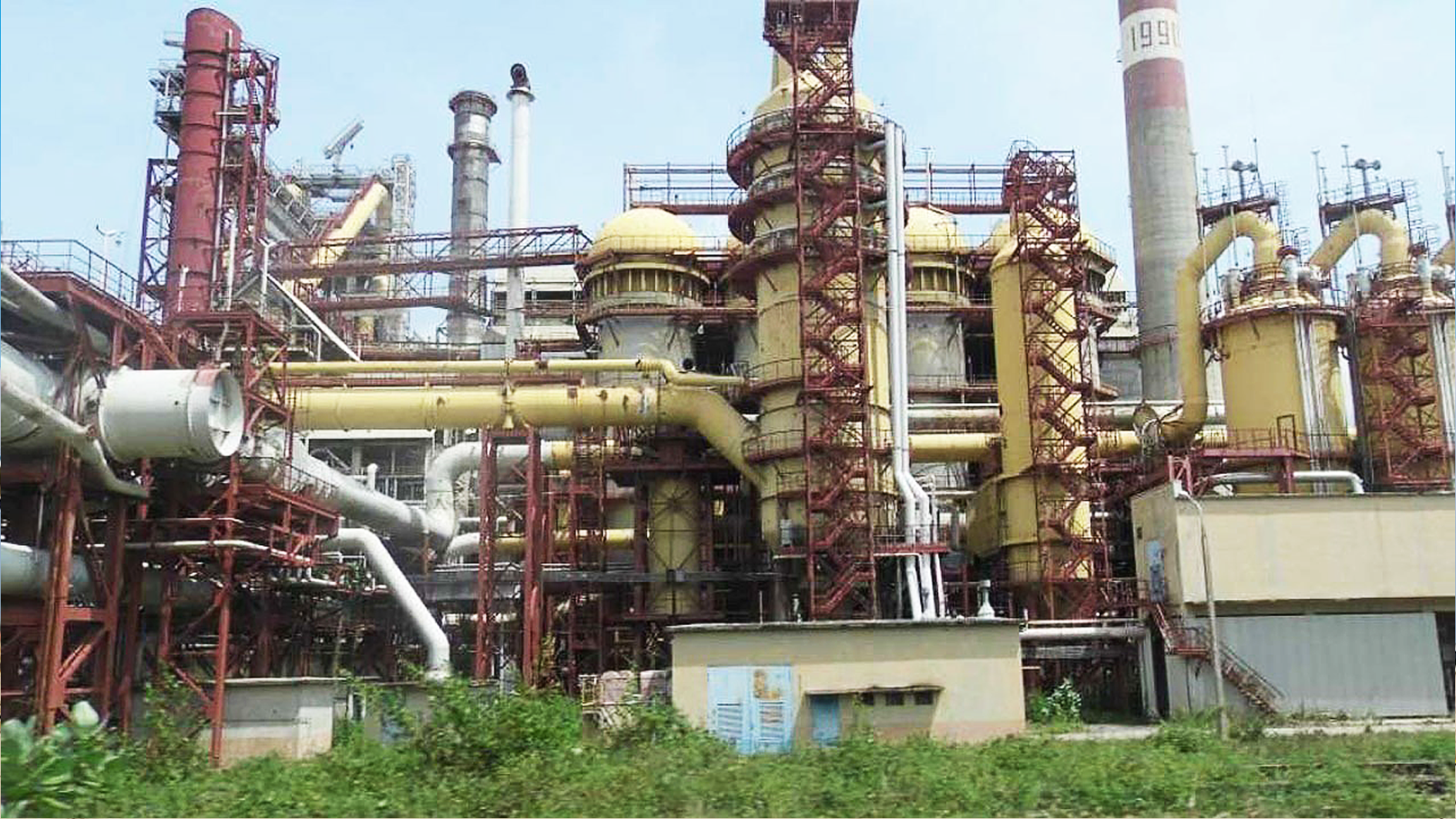
Lack of domestic steel production in Nigeria has continued to hobble the country’s expected industrial growth and economic stability. While Ajaokuta Steel Company struggles to survive despite numerous revamping attempts, the country, unfortunately, spends an enormous amount of foreign exchange each year on steel imports, ERNEST NZOR reports.
Nigeria’s continuous dependence on imported steel has remained one of the most critical structural weaknesses confronting its industrialisation drive. Billions of dollars are lost yearly to foreign markets despite vast domestic mineral resources capable of supporting local production.
Consequently, industry stakeholders warned that unless urgent reforms are implemented to revive dormant steel assets such as the Ajaokuta Steel Company Limited, the country may remain trapped in an import-dependent cycle that weakens economic diversification and drains scarce foreign exchange reserves.
Available industry data showed that Nigeria imports between eight and 10 million metric tonnes of steel yearly. This comprises construction steel, flat sheets, reinforcement bars, industrial steel components, and specialised alloys.
Sector analysts estimate that the country spends between $3 billion and $5 billion yearly on steel imports, while over 90 per cent of the steel used in infrastructure and manufacturing projects is sourced from foreign markets. Major imports originate from China, Turkey, India and Ukraine, where mass production significantly reduces costs. The implication of such a situation is the sustained pressure on Nigeria’s foreign exchange earnings, particularly at a time the country is grappling with currency volatility and declining purchasing power.
Records showed that between 2014 and 2024, the country spent about N29.11 billion on salaries and wages for redundant staff at the Ajaokuta Steel Company and an additional N9.8 billion on allowances.

Yet, the company, which was established in 1979 to boost the country’s industrialisation, has remained largely non-operational as a steel producer, despite ongoing federal efforts to revive it and a N6 billion budgetary allocation for personnel in the 2026 fiscal year.
At inception, Ajaokuta was designed as an integrated steel plant with a multi-phase projection to reach a final capacity of 5.2 million tonnes of steel yearly. The initial phase was planned to produce 1.3 million tonnes of liquid steel yearly, with subsequent expansions expected to reach 2.6 million and eventually 5.2 million tonnes.
As the country pursues economic diversification under the ongoing reforms, including encouragement of local production and industry value chains, the steel sector is increasingly viewed as a strategic gateway to industrial transformation.
According to experts, proposed metallurgical reforms, alongside renewed attention towards the revival of Ajaokuta Steel Company, may have shown policy intent, but their execution will ultimately determine the outcome.
They believed that without measurable progress in domestic steel production, Nigeria risks continued exposure to global price shocks, rising infrastructure costs and stagnation of the local industry. However, a successful revival of local steel manufacturing could reposition Nigeria as West Africa’s industrial hub. It will also reduce import bills, stabilise foreign-exchange demand, and unlock large-scale employment opportunities.
For many stakeholders, the conclusion is that the country’s economic future is closely tied to the extent to which it transforms its steel sector from rhetoric into productivity. Economically, steel importation ranks among the largest contributors to the non-oil import bill, alongside machinery and refined petroleum products.
Minister of Steel Development, Shuaibu Audu, recently reaffirmed the federal government’s commitment to reversing decades of decline in the metallurgical sector. The minister had earlier projected that operations at Ajaokuta Steel Company would commence before 2025, a timeline widely presented as a potential turning point in Nigeria’s industrial history.
However, with 2026 already moving to the end of its first quarter and production yet to begin, concerns are mounting over the recurring cycle of missed deadlines that have historically trailed the steel complex.
Audu, however, emphasised that the proposed Nigeria Metallurgical Industry Bill will establish a comprehensive regulatory framework capable of transforming the steel ecosystem.
According to him, the legislation seeks to strengthen the regulation of steel and metal operations, enforce quality standards and industrial best practices, curb substandard steel imports and address scrap metal theft and illegal mining.
It will also promote research and technological innovation and attract both domestic and foreign investments.
The minister maintained that institutional reforms remained essential to positioning steel production as a major pillar of economic diversification beyond crude oil. Despite renewed assurances, doubts remain. Industry professionals have remained cautious, citing decades of unfulfilled promises surrounding Ajaokuta’s revival.
Chairman, Nigerian Institution of Mechanical Engineers (NIMechE), Abuja Chapter, Odama Ojeka Matthew, identified infrastructure deficiency as the sector’s most fundamental challenge.
He said that there will be no progress until the energy crisis is fixed. According to him, uninterrupted electricity supply is non-negotiable for sustainable steel production. Without dedicated power solutions, Matthew stated, policy declarations alone cannot revive the steel industry.
He explained that local production is further constrained by obsolete manufacturing equipment, limited investment in research and development, inadequate automation systems, poor beneficiation of iron ore, a shortage of skilled technical manpower, and policy inconsistencies that discourage investors. He stressed that modernisation, workforce training and independent energy generation are critical requirements for competitiveness.
Also speaking, Chief Executive Officer of Iche Construction and Global Services Limited, Engr Odey Sunday Ogbudu, expressed concern over the influx of low-priced imported steel, particularly from Asian markets, warning that local manufacturers are struggling to survive due to price-dumping practices that undermine domestic production. “We cannot compete when cheaper foreign steel floods our market,” he lamented, calling for the government’s intervention through protective tariffs and industrial subsidies.
Ogbudu warned that continued reliance on imports exposes Nigeria’s economy to global supply disruptions and accelerates foreign exchange depletion. He added that strong domestic steel capacity will enhance Nigeria’s defence manufacturing capability through local production of security infrastructure and equipment.
Other professionals have also identified some macroeconomic consequences arising from steel imports. They include foreign exchange drain, high infrastructure costs, industrial underdevelopment and unemployment. They frowned that yearly steel imports consume billions of dollars, thereby worsening the pressure on the naira and limiting available capital for domestic investment.
Imported steel also increases project costs for roads, railways, housing, and power infrastructure, slowing developmental timelines. “Operations of the manufacturing sector that are dependent on steel, such as automobile assembly, shipbuilding, construction and machinery fabrication, have remained weak and thousands of engineers, comprising metallurgists and technicians, are unutilised due to inactive steel plants,” said Engr Obi Chika, who decried the worsening unemployment rate across the sector.
Also, Ibe Cyril Godwin, an Engineering student, noted that a functional Ajaokuta complex alone can generate over 500,000 direct and indirect jobs, significantly reducing youth unemployment.
A local steel expert and infrastructure advocate, Mr James Ariku, described steel as the foundation of modern economic development, adding that countries like China, India and South Korea achieved rapid industrial growth by prioritising domestic steel production.
According to him, Nigeria’s reliance on imports makes infrastructure projects more expensive and exposes national development plans to fluctuations in the international market. “A strong steel industry is not optional; it is essential for modernisation,” he said.
Ariku added that steel development supports the entire economic value chain – from iron ore mining to manufacturing finished industrial goods, as well as creating widespread employment opportunities across sectors. He, however, warned that achieving the desired result in the sector will depend on policy continuity, transparent concession arrangements and reliable power infrastructure capable of supporting large-scale industrial operations.
No doubt, the fate of Ajaokuta Steel Company remains central to Nigeria’s industrial ambitions. For more than four decades, the facility has symbolised both the promise and frustration of Nigeria’s manufacturing aspirations.
Stakeholders argued that operationalising the plant will supply steel for national infrastructure projects and reduce import dependence. They insist that it will equally force down construction costs, stimulate mining and manufacturing activities, improve technological capacity and strengthen national security production.

