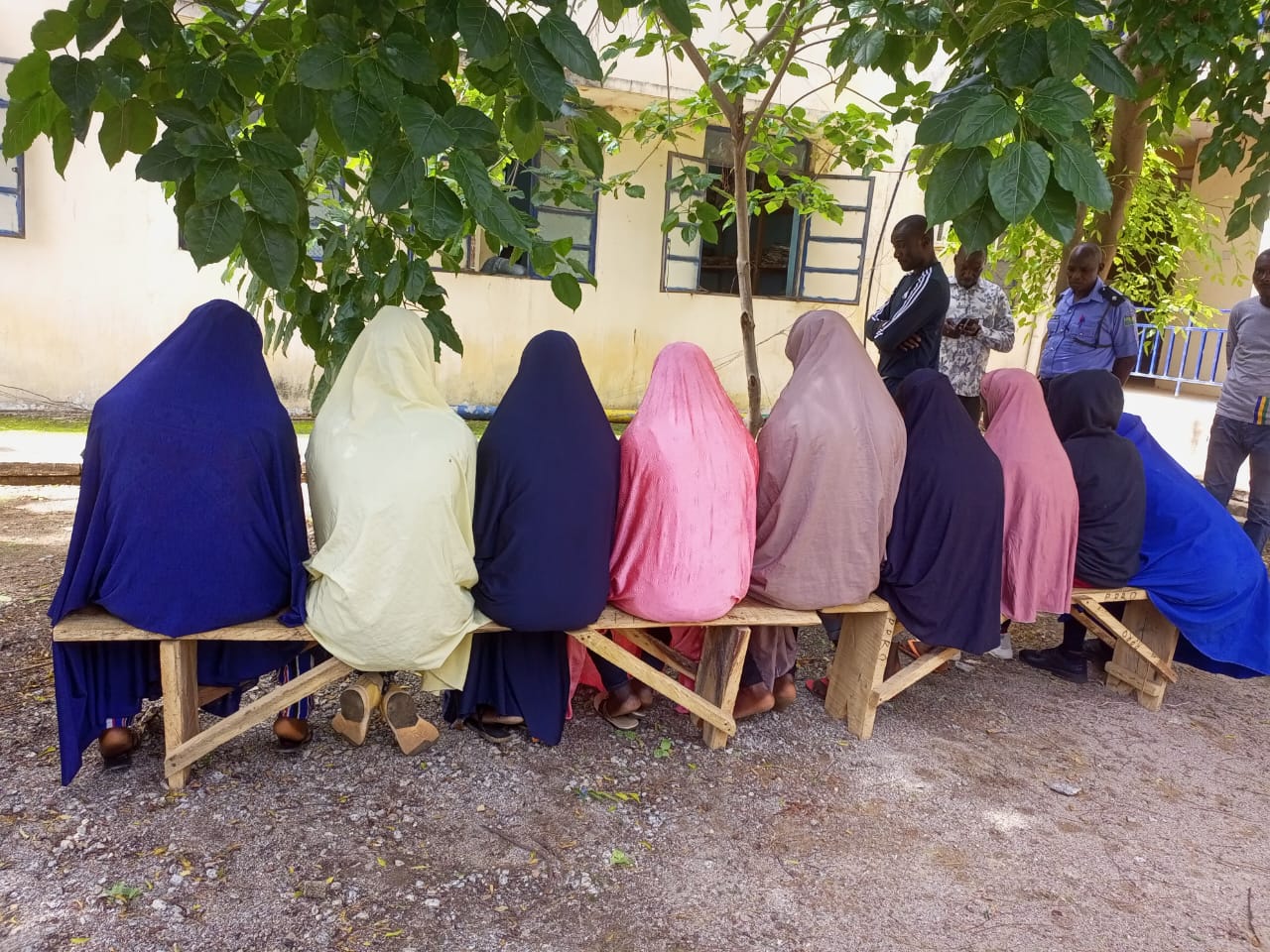
Catholic Archbishop of Abuja, Ignatius Kaigama, has called for strong collaboration between religious institutions and National Agency for the Prohibition of Trafficking in Persons (NAPTIP) to fight human trafficking and other vices.
He made the call at a thanksgiving service, yesterday, to mark the International Day Against Human Trafficking and 20th anniversary of NAPTIP, in Abuja.
The prelate noted that religious leaders play a very key role in encouraging their congregation to shun social vices such as human trafficking.
He said: “Religious institutions have a large congregation, who come to listen to us speak the Word of God to them. Also, we speak to them on contemporary social issues, one of which is trafficking in human beings.
“Ours is to enlighten them and, as they go home, they enlighten their families. In our schools, we also have many children; so we talk to them on how to identify those trying to use them for trafficking. We will do our best to ensure that we collaborate with the agency.”
Praying for the leadership of NAPTIP and flashing the red card to human traffickers, Kaigama urged religious leaders to continue to support and partner the government to end the scourge.
Speaking on the theme for this year’s World Trafficking Day, ‘Reach Every Victim of Human Trafficking, Leave No One Behind’, Director-General of NAPTIP, Prof. Fatima Waziri-Azi, said the public must understand that anyone could be a victim of human trafficking; hence, victims should be treated as victims and not offenders.
“The theme for this year’s celebration is simply ‘Reach Every Victim of Human Trafficking, Leave No One Behind’, and that re-emphasises that we should keep treating victims as victims and not criminals.
“It has been 20 years since NAPTIP has been fighting human trafficking in Nigeria, and we felt the Church, which is a very big ally in controlling and curbing the scourge of human trafficking in Nigeria, should be involved. We thought it was important for us to come here, give thanks to God and sensitise the congregation on the issue of human trafficking, for them to understand what the red flags are, so they can, in turn, protect and empower themselves through further sensitisation,” she said.
Waziri-Azi pointed out that her visit would make a huge impact because “all faith-based organisations are strong institutions, and their communities look up to them; so if they sensitise members, they will definitely heed.”