 Follow Us on Google News


 Follow Us on Google Discover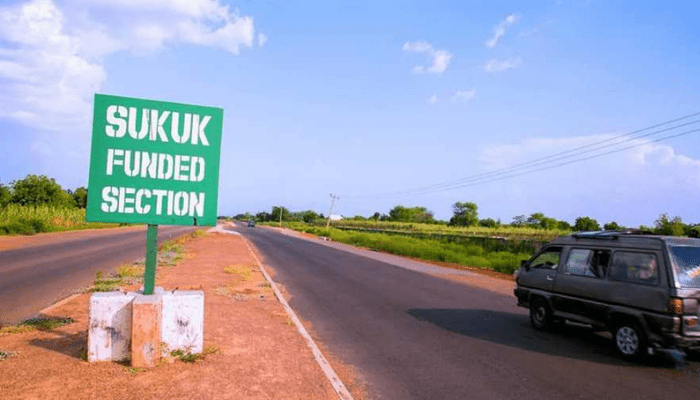
The Kogi State Government has moved decisively into Nigeria’s capital market, unveiling plans to raise a ₦50 billion Sukuk bond to fast-track the construction of the Kogi State International Airport and the Lokoja International Market, with March 2026 set as the target for the start of construction.
At an investor engagement and market-sensitisation forum in Abuja on Thursday, the state assured prospective investors that the proposed Sukuk issuance is strictly asset-backed, infrastructure-focused and aligned with its 32-year development plan.
Speaking after the engagement, the Commissioner for Finance, Budget and Economic Planning, Asiru Idris, said the bond programme was designed to accelerate strategic infrastructure delivery and unlock long-term economic value for the state.
“We are here to present how we intend to raise the ₦50 billion Sukuk for the Kogi State International Airport and the Lokoja International Market. It is fully captured in the budget, and the governor has given us a clear timeline,” Idris said.
According to him, although March remains the government’s preferred take-off date, the administration is determined to avoid avoidable delays. “March is our target. If it slips to April, it is not a failure, but June is too far for us. We want visible progress, particularly on the airport,” he added.
On security, Idris noted that Kogi’s location, bordered by nine states, makes regional security issues a concern, but he assured investors that robust measures are in place to protect lives, assets and investments.

“Investments in Kogi will be safe. The governor understands that security is fundamental to investment and development,” he said.
The Managing Director of AVA Capital Group, Kayode Fadahunsi, described the proposed issuance as a “laudable and textbook infrastructure Sukuk,” noting that the projects are revenue-enhancing and capable of strengthening the state’s internally generated revenue.
“These are the kind of transactions we like because they are tied to productive assets. Monitoring will be carried out by the Securities and Exchange Commission (SEC), alongside other layers of oversight,” Fadahunsi said.
In a keynote address to investors and capital market stakeholders, read on his behalf by the Commissioner of Finance, Governor Ahmed Usman Ododo said Kogi was approaching the capital market “not out of fiscal distress but out of strategic ambition.”
“This engagement is about trust, transparency, creditworthiness and long-term value creation. We are presenting Kogi State as a credible, disciplined and investment-ready sub-national,” the governor said.
Ododo disclosed that the state operates under a 32-year development plan that ensures policy continuity and predictability in capital deployment. He added that its fiscal discipline and governance reforms have been independently validated by Fitch Ratings, which assigned Kogi a ‘B’ rating with a stable outlook.
He said strict expenditure controls, transparent procurement processes and biometric verification had eliminated over 2,000 ghost workers, while salary obligations are consistently met on or before the 25th of every month.
The governor also revealed that Kogi began receiving 13 per cent derivation revenue in January 2026 following its recognition as an oil-producing state, a development he said has significantly strengthened the state’s revenue base and debt-servicing capacity.
According to him, proceeds from the ₦50 billion Sukuk will be dedicated exclusively to two asset-backed projects of strategic importance: the Kogi State International Airport and the Lokoja International Market.
“The airport is a catalytic project designed to unlock logistics efficiency, attract private investment and position Kogi as a natural hub linking Nigeria’s North, South, East and West,” he said, adding that the international market would formalise trade, expand revenue and create thousands of jobs.
Addressing investor concerns about risk, Ododo said the state has strengthened its security architecture by deploying surveillance drones, professionalising community policing, training hunters across local governments, and establishing forward operation bases and quick response units.
“These measures have significantly improved safety along key transport corridors, including the Lokoja–Abuja and Lokoja–Okene highways,” he said.
Market operators at the forum expressed optimism that, if documentation and regulatory processes proceed as planned, the Sukuk could reach the market within months, positioning Kogi as one of the most ambitious sub-national issuers in Nigeria’s capital market this year.
“We are not selling hope; we are offering fundamentals—assets, revenue, discipline and delivery,” the governor assured investors.

