 Follow Us on Google News


 Follow Us on Google Discover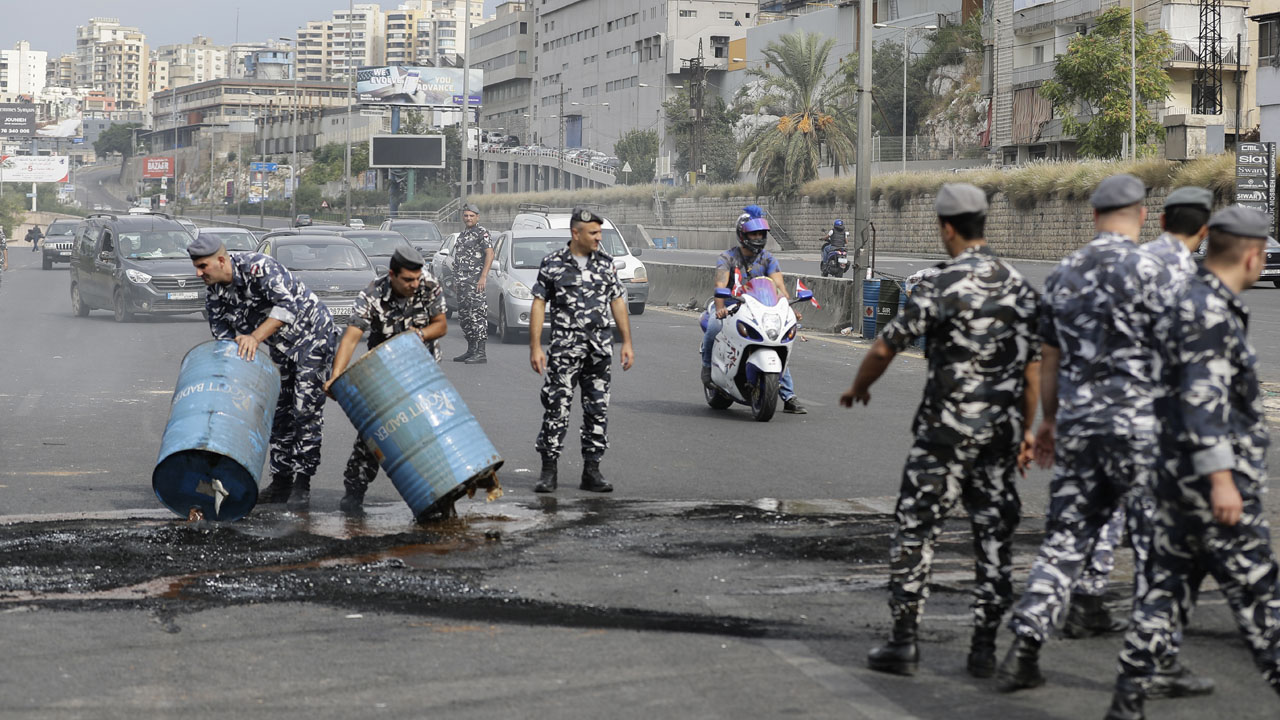
[dailymotion code=”k1QrNG7IJEG8GPveOU2″ autoplay=”yes”]
Lebanese demonstrators set up barricades and parked cars across key roads Monday to protest corruption and press their demands for a radical overhaul of their country’s sectarian political system.
Defying pleas from Lebanon’s top leaders, protesters sought to keep the country on lockdown by cutting off some of the main thoroughfares, including the main north-south highway.
A poster urging motorists to block roads with their cars started circulating on social media on Sunday.
[ad]
By Monday morning, some major routes were closed off by hundreds of angle-parked vehicles, others by groups of protesters sitting on the road.
The Lebanese security forces had been expected to make a new attempt at reopening the roads as the country faced more paralysis after 11 days of paralysis.
The army and the country’s top security agencies had agreed at the weekend to a military-led plan to clear roadblocks, but their efforts have been met with resistance from demonstrators.
On Sunday, tens of thousands of protesters joined hands nationwide to form a 170-kilometre (105-mile) human chain stretching from Tripoli in the north to Tyre in the south.

The event drew Lebanese of all ages and backgrounds, many of them draped in the national cedar flag.
Organisers said the event symbolised a national civic identity that has emerged since the start of the protests on October 17.
The unprecedented mobilisation was sparked a proposed tax on voice calls via messaging apps, but quickly morphed into a massive grassroots push to drive out a political elite which has remained virtually unchanged in three decades.
The protesters are demanding more freedom, better services and an end to corruption and sectarian politics, among other things.
Lebanon’s political leaders have appeared shell-shocked, trying simultaneously to express sympathy for the protest movement while warning of chaos in the case of a power vacuum.
[ad]

