Libyan authorities said Tuesday they would ramp up sending mainly sub-Saharan African irregular migrants back to their countries, warning against their settlement in Libya as Europe boosts efforts to curb arrivals.
With Italy some 300 kilometres (186 miles) away, Libya has become a key launchpad for tens of thousands of migrants who risk their lives at sea trying to reach Europe each year.
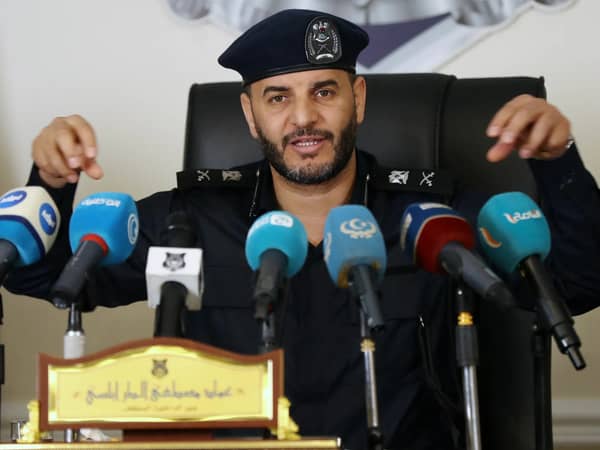
Interior Minister Imad Trabelsi spoke at a news conference in Tripoli alongside several foreign ambassadors and urged the European Union, the African Union and other Arab countries for more support.
He said Libya had received “very limited” help compared to its “significant commitments” to tackle the issue.
The EU has said it spent some 465 million euros ($540 million) on Libya in the area of migration between 2015 to 2021, while another 65 million euros was allocated for “protection and border management” in Libya from 2021 to 2027.
Trabelsi said some three million irregular migrants have lived in Libya over the past 15 years, adding that many had come “as families, which increases the risk of settlement”.
He added that Libya “refused to take in migrants intercepted at sea and have them gather” on its land.
Libya is still plagued by division and instability after years of unrest following the NATO-backed uprising that toppled longtime leader Moamer Kadhafi in 2011.
Smugglers and human traffickers have taken advantage of the instability, leading to human rights violations including extortion and slavery, according to rights groups.
EU ambassador to Libya Nicola Orlando said at Tuesday’s news conference that Europe had no intention of settling migrants in Libya and called for increasing “voluntary returns” of the migrants to their countries of origin.
Trabelsi said a national repatriation programme had been ongoing since October, with goals this month to “return thousands of migrants”, including many to Chad, Somalia and Mali.
He said Libya plans two repatriation flights per week, prioritising women, children and elderly people.
According to the International Organization for Migration, some 25,000 migrants have been intercepted and returned to Libya so far this year, including 2,196 women and 937 children.
As for the hundreds of thousands of Sudanese refugees who have entered Libya to flee war-torn Sudan, Trabelsi said “government instructions are that they be treated as Libyans and allowed access to healthcare and schools”.
Trabelsi said up to 700,000 Sudanese refugees have arrived in Libya since Sudan’s war started in April 2023.