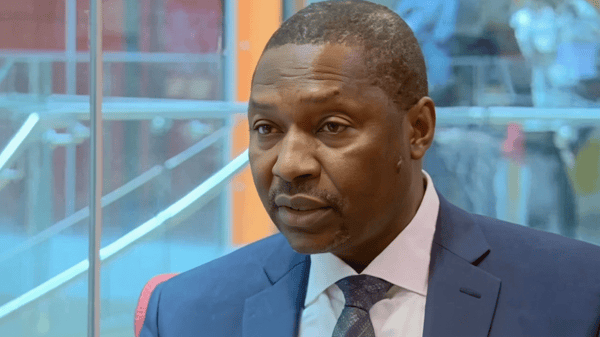
The recent opinion article widely published in the media and credited to leading journalist, Dr. Reuben Abati, with the headline “The Knee On EFCC’s Neck”, has sparked conversations in different circles and quarters, conversations that once again question the fairness and processes of the Nation’s anti-corruption agency, the Economic and Financial Crimes Commission (EFCC).
One of such conversations is one that ensued on a WhatsApp group that I belong to where the case of the recent arrest and prosecution of former Attorney-General of the Federation, Abubakar Malami SAN along with his son, Abdulaziz Malami, and his wife, Mrs. Asabe Bashir.
The argument bothered around why Malami’s wife who is an employee of Rahamaniyya Properties Ltd is been prosecuted whilst Abdulrahman Musa Basheer, the owner of Rahamaniyya Properties and a prominent figure in Nigeria’s oil sector, is not.
The discuss also questioned why Basheer a long known associate of Malami is listed as a prosecution witness rather than a defence witness. This development raised significant questions about the prosecutorial strategy and the broader implications for accountability and justice.
A curious instance of selective prosecution
Citing the cases involving the Governor of Bauchi State, Bala Muhammed and his Commissioner for Finance and Economic Development, Dr. Yakubu Adamu, as well as that of the former Attorney General of the Federation and Minister of Justice, Abubakar Malami, SAN, who are all been tried for varying alleged offenses by the EFCC, Abati in the article noted that defendants in those cases are alleging unfair and biased trial.
The Governor of Bauchi State, Bala Muhammed, the principal of the accused persons has since alleged “that the only reason he is being targeted is because he has refused to join the ruling All Progressives Congress, APC – Nigeria’s ruling party at the centre. He said: “The APC-led Federal Government thinks it can use the courts and institutions of government, like the EFCC, to persecute and prosecute Nigerians who are not in their party. If they don’t stop, we’re going to declare war”. His name was mentioned in a motion in court. He has now vowed never to join the APC. He has the support of groups in Bauchi State including the Coalition of Northern Groups (CNG), Christian Youths Initiative for Peace (CYIFP), and Concerned Bauchi Citizens. These supporters have been very loud in the media, so loud that the EFCC was left with no option but to defend itself”.
Abati in the article further wrote that, as in the Bauchi case, Malami has declared that the allegations against him and his family are “baseless, illogical and wholly devoid of substance”. He insists that he was not involved in any form of money laundering, and that the EFCC is acting on the basis of “deep-seated historical animosity, personal vendetta, bias and retaliatory persecution.” He demanded that the EFCC Chairman should step aside”.
These allegations against the EFCC further triggered discussants on the platform question why Mrs. Asabe, Malami’s 4th wife and an employee, is facing money laundering charges while her employer, Rahamaniyya Properties Ltd., and its owner, Alh. Abdurrahman Musa Basheer (also known as Rahamaniyya), are not. Traditionally, anti-graft agencies are expected to pursue not only individuals directly involved in alleged malfeasance but also the corporate entities and principal actors who may have orchestrated or benefited from the alleged crimes. The absence of charges against the company and its owner stands out starkly in this context.
Rahamaniyya was once recognized as one of Nigeria’s leading oil marketers, with extensive business interests and a reputation for significant wealth. However, he has been reported to have been convicted of fraud and found liable for breach of contract on a couple of occasions. News report showed that Rahamaniyya was sentenced earlier this year to imprisonment for one year in Dubai for issuing cheques that were returned, in what the court deemed as deliberate fraud. A UK court had in 2020 sent him to jail for 10 months for breaching orders during a case involving Sahara Energy Resources.
Rahamaniyya, the supposed EFCC’s witness, has a spotty record of indictments for fraud and contractual breaches. He continues to face complex litigation across different jurisdictions.
Rahamaniyya reportedly served as Malami’s henchman in several transactions that are either under investigation or have previously been investigated by the EFCC. One notable example is the Paris Club refunds, where Rahamaniyya’s company, Shield Energy Ltd., was allegedly used by Malami to divert public funds running into millions of dollars under the guise of consultancy fees. It is also little wonder that Rahamaniyya settled most of his debts with AMCON during Malami’s tenure as Attorney General of the Federation. Given these connections, it is surprising how Rahamaniyya has come out unscathed.
Particularly, the decision to include Rahamaniyya as a prosecution witness rather than a defence witness is viewed in legal and corporate circles as curious. Sometimes, witnesses in anti-corruption prosecutions may be granted immunity or favourable terms in return for their testimony. However, this approach can be controversial, especially when the witness is perceived as a primary beneficiary or orchestrator of alleged financial crimes.
The handling of this case raises broader questions about the consistency and fairness of anti-corruption enforcement in Nigeria. Selective prosecution, especially when it appears to favour powerful individuals or entities, can undermine public confidence in the justice system.
The exclusion of Rahamaniyya Properties Ltd. and its owner from the charge sheet, despite their centrality to the transactions, may weaken the case against the accused and reduce the deterrent effect of the prosecution. Moreover, the prosecution’s case does not hinge on Rahamaniyya’s confession; it is a case in which the fact speaks for itself.
Kabir Abubakar is a public/social commentator and analyst based in Sokoto.