 Follow Us on Google News
 Follow Us on Google Discover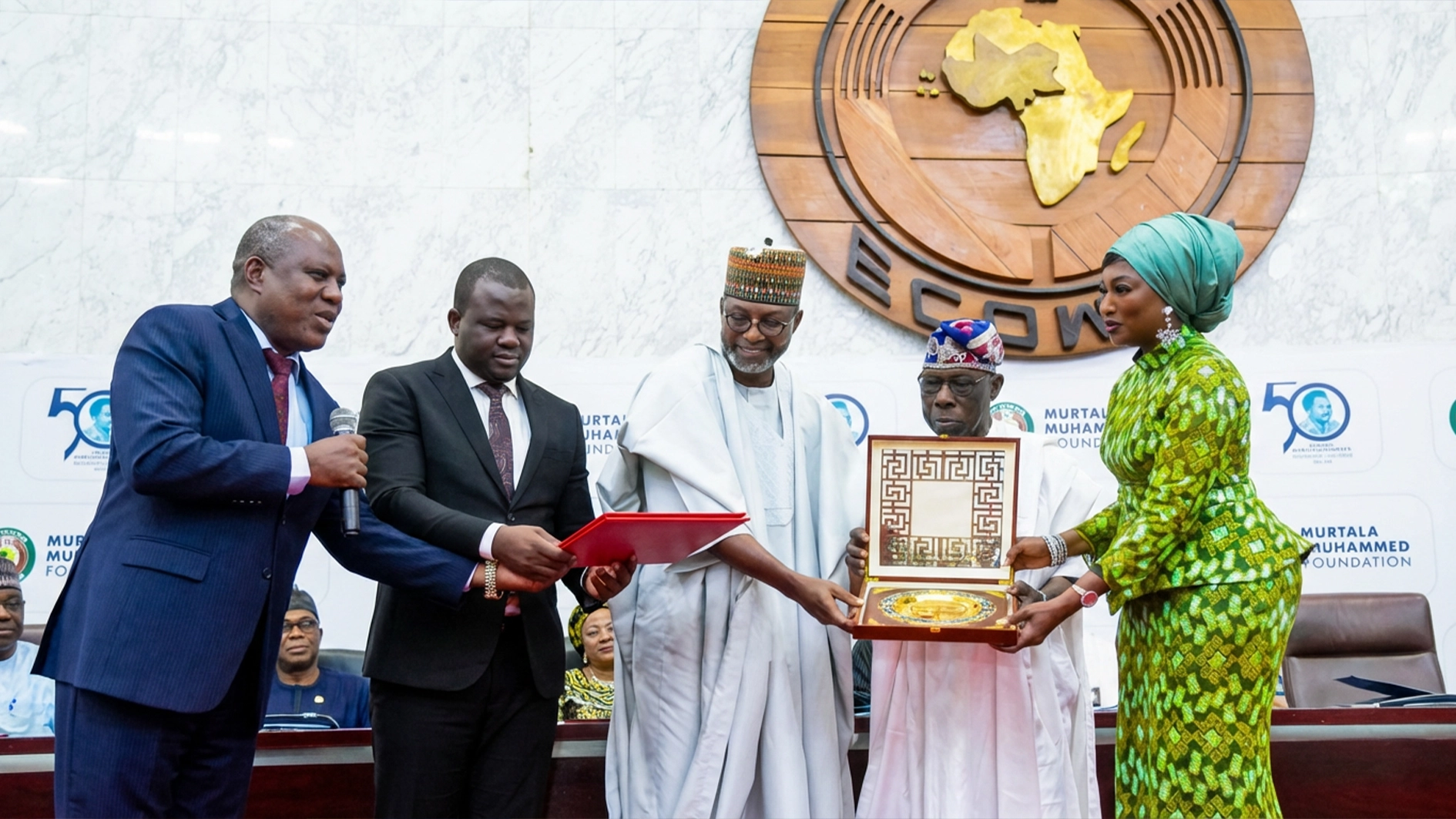
• Africa needs not old leaders who spend half of tenure in hospital, says GEJ
* Leadership not about age but ideas, FG replies
African past leaders have bemoaned the socio-economic and political challenges confronting the continent several years after independence.
Speaking yesterday at the Murtala Muhammed International Lecture and Leadership Conference, attended mostly by past Presidents of the Economic Community of West African States (ECOWAS) member states and diplomats, the forum underscored the consequences of bad governance on the region.
With the lecture theme, ‘Has Africa Come of Age?’ speakers took turns to give individual explanations of the context of the question, admitting that though the continent had made some progress over time, expected developmental stride was elusive, not due to lack of natural and human resources, but as a result of leadership failure and over-dependence on foreign aids, which necessitated the question posed by the late General Murtala Mohammed, shortly before his assignation in 1975.
In his remarks, Chairman, Board of Trustees, Murtala Muhammed Foundation, organisers of the Lecture, former President Olusegun Obasanjo, blamed the developmental challenges in Africa and Nigeria, particularly, on the lack of credible successors.
He noted that the greatest achievement of the late Mohammed was the ability to leave behind a successor, who could continue his ideas, ideals, legacy and development plans.
According to him, that was a feat no other leader in Nigeria, including himself, has achieved.
He said: “We cannot make progress if we take two steps forward, one step sideways and three steps back, which is what we have been doing. The failure of all leaders after Murtala, including myself, is that we have not been able to create successors who could go on after us.
“I handed over (in 1979) to civilians and their ideas were completely different from the ideas we handed over to them. I will give you just one example. By the time we left in July 1979, we wanted to be self-sufficient in rice production. The report showed that we would be self-sufficient in rice production that year. Based on that, we banned the importation of rice before we left the government. In October 1979, when the civilian administration came in, one of the first things they did was to lift the ban on rice importation, so they could allocate import licences to their supporters and political associates.”
According to the Ota farmer, one of the barons, who obtained a rice import licence from America, ordered rice and then asked the suppliers to add $5 million to the cost.
“They did. He then went back to New York and demanded $2.5 million out of the $5 million. They refused and gave him only $1 million. He wanted $2.5 million but had taken no risk. So, they gave him $1 million.
“Since the lifting of the rice import ban in 1979, we have not recovered from it. That is why we are still importing rice today. These are the kinds of things that go wrong.”
To move forward, he called for reform and the capacity to produce for both local consumption and export.
Former President Goodluck Jonathan, in his remarks, noted that Muhammed’s administration was driven by clarity of purpose as he led with decisiveness and an unshakable sense of national duty based on a clear vision, noting that leadership is not measured by how long one governs but the courage to act decisively when the nation needs direction and impacts a leader makes in society.
Jonathan held that Africa’s greatest governance challenge is not the absence of regular elections but the absence of a lasting democratic culture built on credible and transparent elections.
Addressing Nigerian youths, who listened with enthusiasm to different speakers, Jonathan urged them to see leadership as service, not entitlement and governance as stewardship, not a right.
“The President we are celebrating today was Head of State at the age of 38. If we are looking for people who can run nations in Africa, we should look at the age within 30 and 40 years. That is the way you can be very vibrant, physically strong and mentally sound. If they need to stay awake for 24 hours, they can, but if you subject an older person to that kind of stress, the person will spend 50 per cent of the time in the hospital.”
If Africa has come of age, Jonathan wondered why leaders spend 50 per cent of their time outside the country, stressing that in countries such as America, some governors do not leave the country throughout their tenure in office.
In sharp response to the issue of old leaders, President Bola Tinubu, represented by the Secretary to the Government of the Federation (SGF), Senator George Akume, said leadership is not about physical age but about the implementation of ideas.
He commended the late Muhammed for putting in place a meticulous programme to return the country to democracy before his assassination.
The Keynote Speaker, former Vice President Yemi Osinbajo, eulogised Muhammad for capturing the imagination of the nation through the sheer clarity of his reforms, adding that he purged the civil service to confront corruption and inertia, probed military governors and seized illicitly acquired properties.
Also speaking on whether Africa has come of age, former President of Ghana, John Kufuor, said the real question should be whether Africa today stands in the world with a settled sense of identity, responsibility and purpose, not only as a political space but as a moral presence within humanity.
According to him, Mohammed stood before African leaders and declared with conviction that Africa has come of age.

