 Follow Us on Google News


 Follow Us on Google Discover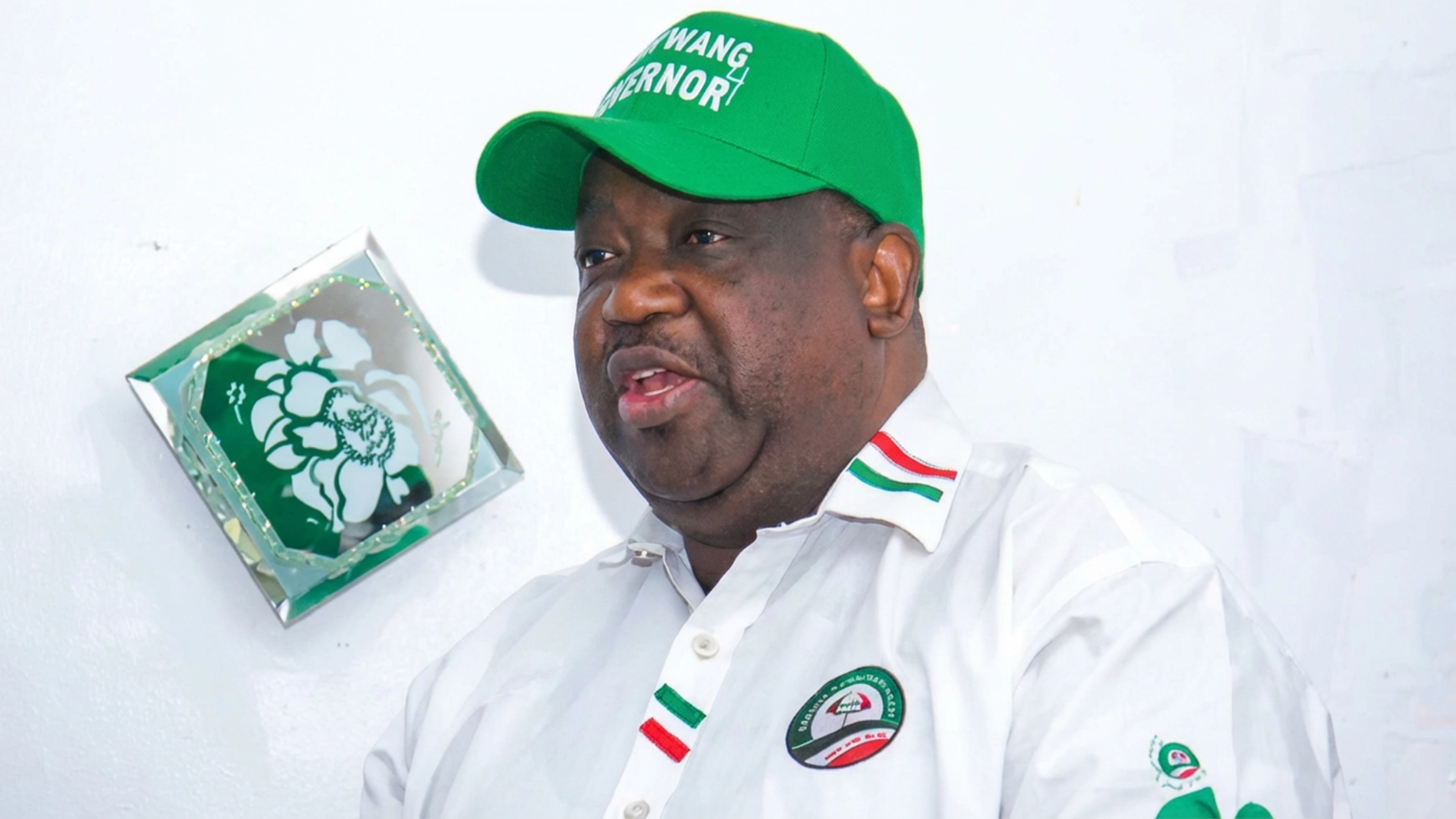
Governor Caleb Mutfwang of Plateau State has reaffirmed his administration’s commitment to achieving lasting peace through inclusive dialogue, institutional reforms and collaboration with the federal government.
Speaking in Jos when he received a report by the strategic committee constituted after the state engaged with President Bola Tinubu, Mutfwang described the document as “a strategic roadmap that would guide informed dialogue and practical interventions aimed at addressing the complex security and socio-political challenges confronting Plateau State.”
Meanwhile, Nigerian troops, yesterday, foiled an attempted infiltration of the National Institute for Policy and Strategic Studies (NIPSS) in Kuru, near Jos, Plateau State.
A counter-insurgency publication, Zagazola Makama, cited military sources as saying the incident occurred at about 1:30 am yesterday when troops, working alongside other security agencies guarding the institute, detected the movement of unidentified suspected criminals around the facility.
“The security personnel responded swiftly, forcing the suspected intruders to flee into a nearby thick shrub before they could gain access to the institute,” Makama quoted the sources as saying. “The troops immediately searched the surrounding area where the suspects were last sighted, but no contact was established, as the suspects had escaped.
“The sources said security has since been reinforced around the facility, while surveillance and area domination patrols have been intensified to prevent any further attempt to breach the premises.”

In another development, gunmen have killed two persons identified as 82-year-old Demi Duda and 19-year-old Emmanuel Chinge in separate attacks on communities in Irigwe Chiefdom of Bassa Local Council Area of Plateau State. One other person was reportedly injured and receiving treatment at an undisclosed location.
Disclosing this in a statement yesterday by its National Publicity Secretary, Joseph Yonkpa, the Irigwe Youth Movement (IYM) alleged that the attacks were carried out by gunmen within 24 hours.
The group expressed concern over what it described as the deteriorating security situation in Irigwe land, alleging that repeated attacks are threatening lives and destroying farms, resulting in economic hardship.
According to Mutfwang, the committee, chaired by the former Governor of the State, Senator Joshua Dariye, was established to harmonise issues raised during the Plateau State delegation’s visit to President Tinubu, develop a comprehensive engagement agenda with the presidency, identify priority areas requiring the federal government’s intervention, and recommend sustainable measures to promote peace, security, social cohesion, and development.
He explained that widespread misrepresentation of the purpose of the presidential engagement necessitated the establishment of the committee “to provide factual clarity and foster a common understanding of the issues affecting the state.
“The clarity provided by this committee will serve as a solid foundation for the critical conversations we must continue to have as a people.”
Mutfwang further commended traditional rulers, political leaders, religious leaders, and community stakeholders across ethnic and religious divides for sustaining dialogue in an atmosphere of mutual respect rather than confrontation.
Earlier, Dariye stated that the committee’s assignment extended beyond administrative responsibility and directly concerned “the protection of lives, the safety of communities, and the pursuit of enduring peace across the state.”
According to him, the committee produced “a comprehensive two-volume report containing detailed analyses, key findings, implementation frameworks, and practical recommendations for government action.”
Dariye described the peace and security challenges facing the state as “multidimensional, historical, layered, and dynamic, and therefore cannot be attributed to a single factor.”
The committee further observed that though the state has numerous reports, policy documents, gazettes, peace initiatives, and recommendations, “the major challenge has remained inadequate implementation, weak institutional support, inconsistent follow-up, personnel discontinuity, and insufficient accountability.”

