 Follow Us on Google News
 Follow Us on Google Discover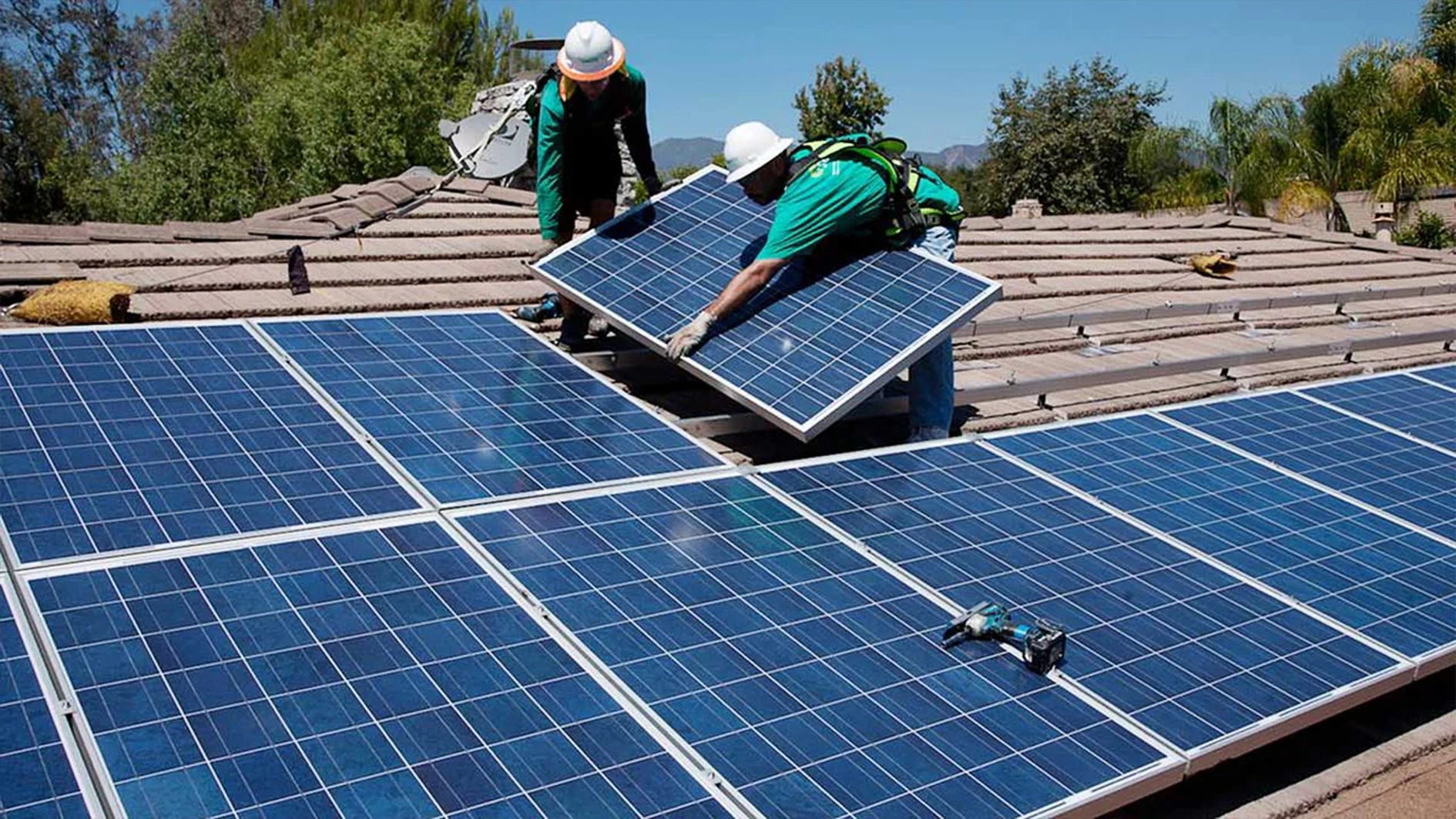
The Energy Commission of Nigeria (ECN) has commenced the installation of a 1-megawatt solar hybrid alternative power system at Bayero University, Kano (BUK), to enhance a conducive teaching and learning environment.
The alternative power supply is part of the Federal Government’s Renewable Solarisation Project, designed to address the challenge of unreliable electricity from the national grid and provide stable power to tertiary institutions and health facilities across the country.
Prior to the new intervention, Bayero University had benefited from a ₦5 billion, 7.1-megawatt solar power plant under the Energizing Education Programme (EEP), which was commissioned in 2019 by then Vice President, Professor Yemi Osinbajo, at the university’s main campus.
The EEP project, funded by the Federal Government of Nigeria, the World Bank, and the African Development Bank, included the provision of an independent power plant, upgrading of existing distribution infrastructure, installation of street lighting to enhance campus security, and the establishment of a world-class renewable energy training centre.
However, the project later suffered a major setback after its hybrid batteries and solar panels were left damaged by water, leaving the facility in a state of disrepair. The university management confirmed the incident, noting that efforts to repair the damaged equipment were unsuccessful.
Speaking during the unveiling of the new hybrid system on Friday at the university’s old campus, the Director-General of the Energy Commission, Dr. Mustapha Abdullahi, said the initiative is part of President Bola Ahmed Tinubu’s directive to improve energy supply across the 36 states and the Federal Capital Territory (FCT).
Dr. Abdullahi asserted that the intervention which also includes a 7-megawatt solar hybrid system at Aminu Kano Teaching Hospital, a 2-megawatt system at Aliko Dangote University of Science and Technology, Wudil, and the installation of 100 solar-powered street lights at BUK to enhance electricity supply on campus.
He explained that the new system incorporates advanced technology capable of generating electricity even under shade or dusty conditions. He also noted that the system features a smart monitoring mechanism that allows users to track performance and manage load remotely via mobile devices or computers.
According to him, the installation includes interconnected components such as inverters, batteries, and power transformers to ensure efficient energy distribution. “We conducted simulations based on the university’s population, which exceeds 40,000, to ensure sustainable energy generation,” he said.
Dr. Abdullahi further disclosed that similar projects are being implemented nationwide, with about 150 megawatts already underway across the states and the FCT, aimed at providing more reliable and affordable energy to Nigerians.
In his remarks, the Vice-Chancellor of Bayero University, Kano, Professor Haruna Musa, commended the Federal Government for the intervention, expressing optimism that it would significantly improve electricity supply and reduce the high cost of energy on campus.

