 Follow Us on Google News


 Follow Us on Google Discover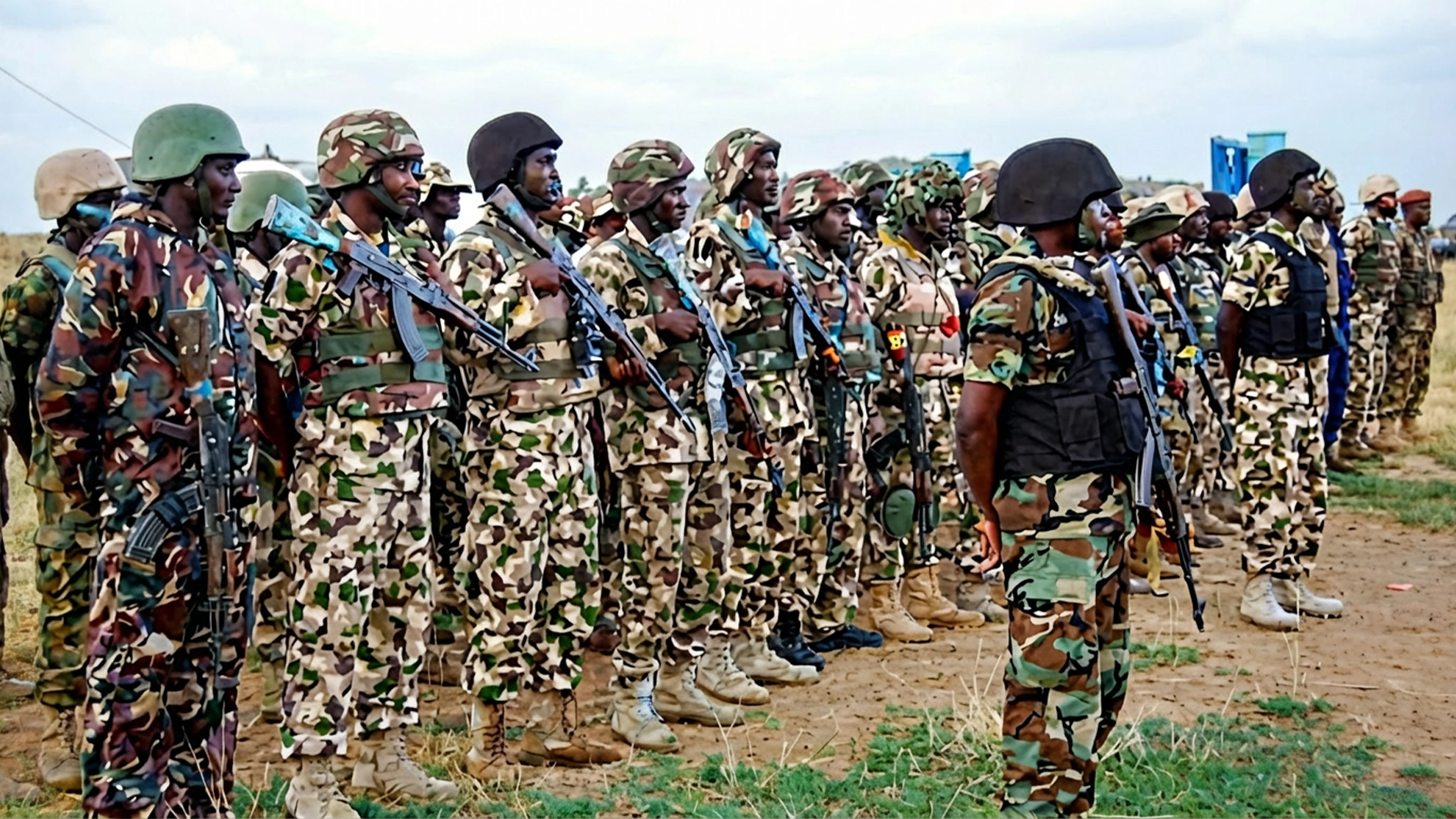
• Foundation, faith leaders demand urgent action against insecurity
• Secessionists, bigoted leaders alleging Christian genocide to eradicate Muslims, says NSCIA
A joint committee of the National Assembly has expressed satisfaction with the N1.504 trillion 2026 budget proposal of the Army, pledging to ensure the timely release of appropriated funds for its implementation.
This was as the Global Peace Foundation (GPF) and Nigerian faith leaders called for immediate and coordinated action to address the escalating violence and insecurity threatening the country’s stability.
However, the Nigerian Supreme Council for Islamic Affairs (NSCIA) said those spinning the yarn of Christian genocide were secessionist elements and “bigoted religious leaders”.
Chairman of the Senate Committee on Army, Abdulaziz Yar’Adua, after a joint budget defence session with the Chief of Army Staff (COAS), Lt-Gen Waidi Shaibu, in Abuja, explained that the joint session of the Senate and House of Representatives committees carefully considered the 2026 budget presentation by the COAS, and members unanimously expressed satisfaction.
Yar’Adua, however, identified delay in the release of funds as a recurring challenge affecting Ministries, Departments and Agencies (MDAs).
He added, “But I assure the COAS that we are committed to collaborating with him to succeed. The Army is so critical in our life as a nation and we would support you with everything that you need,” he added.
Chairman of the House Committee on Army, Aminu Balele, commended the COAS and personnel for their patriotism and commitment in the fight against insurgency and the protection of the nation’s territorial integrity.
He assured that the House committee would continue to push for the timely release of funds to enable the Army to discharge its constitutional responsibilities, while sustaining robust oversight.
The demand for urgent action against insecurity came during a forum held at Pepperdine University, Washington, D.C., which brought together senior Christian, Muslim and traditional leaders from across Nigeria to discuss strategies for tackling rising insecurity challenges in the country and the wider African region.
The Director of African Peace Initiative and Engagement at GPF, Rev. Fr. Canice Enyiaka, described religion as a critical force capable of uniting communities and fostering peace.
He stressed that faith leaders possess both moral authority and the trust of local communities, making them essential actors in addressing Nigeria’s complex security challenges.
John Cardinal Onaiyekan, a leading Catholic figure, warned that many of Nigeria’s challenges were self-inflicted and must be addressed with both moral and practical governance. “Leaders claim to be religious, yet neglect the core responsibilities of office. Moral leadership must guide practical governance if we hope to restore peace and stability,” he said.
Former ECWA General Secretary, Rev. Yunusa Nmadu Jnr, emphasised the importance of interfaith collaboration, advocating joint services, shared community spaces, and moral education to teach compassion and coexistence.
On his part, Sheikh Muhammad Sadeeq highlighted the crucial role of women and youth in sustaining peace. “Once youth are committed to peace, terrorists and bandits will have fewer avenues to recruit and destabilize communities,” he said.
In a statement yesterday, NSCIA pointed out that the alleged Christian genocide narratives were skewed to gain imperial powers.
“Muslims have found themselves in the vortex of heightened Islamophobic hysteria that seeks to criminalise Muslims through spinning narratives that are inconsistent with the reality of insecurity in Nigeria.
“The agenda of the secessionist elements and bigoted leaders is to turn Nigeria to a war theatre where Muslims would be annihilated in millions through the spurious Christian genocide that was manipulated to gain the attention of imperial powers,” said NSCIA.
Citing the massacre of over 200 people in Kwara, the Islamic council stated, “In this unprecedented anti-Islamic obsession, Muslims are being asked to denounce what they did not endorse, while those who have been victims of attacks are being framed as aggressors.”

