 Follow Us on Google News


 Follow Us on Google Discover
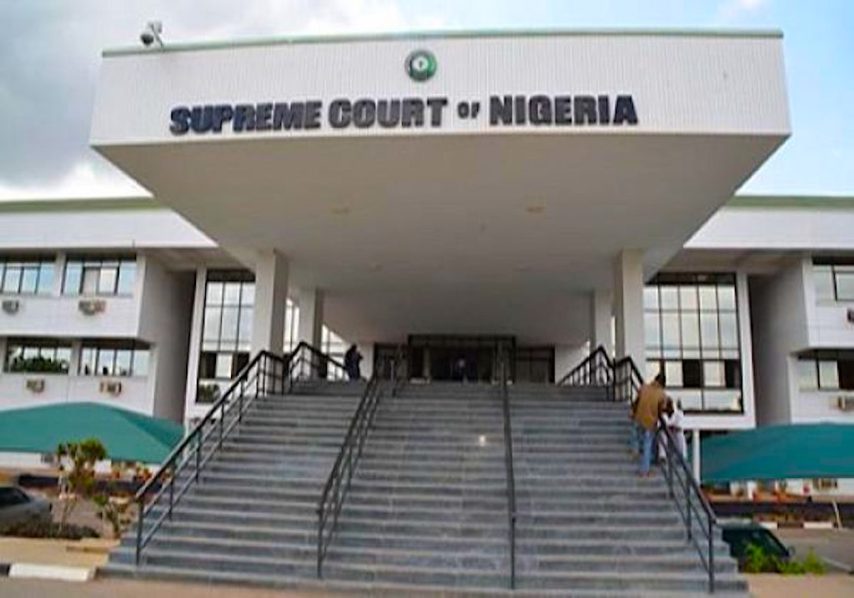
A recent survey conducted and published by the National Bureau of Statistics (NBS), in collaboration with the United Nations Office on Drugs and Crime (UNODC), indicates that Nigerian public officials received N721 billion in cash bribes in 2023. Disappointingly, the judiciary topped the list as the most corrupt institution in the country, JOSEPH ONYEKWERE, reports.
A fair and efficient judiciary is the sine qua non of a just society, even as it is key to the realisation of a country’s lofty anti-corruption goals. With the judiciary also saddled with the all-important role of providing essential checks on other public institutions, a corrupt judiciary is simply cancerous as far as the good health of society is concerned.
This appears to be Nigeria’s reality given the numero uno position that the judiciary has found itself in as far as bribe-taking is concerned. The judiciary’s excellence in bribe-taking is contained in a 160-page report titled: “Corruption in Nigeria: Patterns and Trends,” conducted and published by the National Bureau of Statistics (NBS), in collaboration with the United Nations Office on Drugs and Crime (UNODC).
Among all types of public officials captured in the survey (with an average of N31,000), the largest cash bribes were paid to judges and magistrates, followed by customs or immigration service officers (N17,800) and members of the armed forces (N16,600).
[ad]
With the scandalous revelations in the survey, some Nigerians who doubted the level of graft among public officials, especially those entrusted with the responsibility of dispensing justice come to terms with the reality.
Curiously, judiciary workers, who are greater in population within the sector are usually overlooked during corruption surveys, whereas they constitute the feedstock for corrupt practices, and also ensure that corruption festers within the sector.
Right from the time of filing a case to when it is assigned to a judge, these workers solicit gratification. Hardly a court clerk or registrar locates a file for a litigant, or lawyer without being gratified. They are also, in most cases, responsible for missing files, exhibits, and delayed filing processes, which all result lead to frustration in cases. These they do after being induced, or just to extort a party.
There have been cases where they solicit gratifications on behalf of judges, who didn’t send them, thereby damaging the image of both the judge and the system.
A retired justice of the apex court, Amina Augie, recounting her experience in a viral video, said this group of people represents the behemoth that brings the sector to disrepute. They are formidable and entrenched, and therefore, require tact and grit to dislodge. So, any effort to fix judicial corruption, which ignores this group of people will most definitely end in a fiasco.
According to the report, the average cash bribe paid in Nigeria in 2023 amounted to N8,284. This national average masks large variations in the size of cash bribes paid by citizens, which can depend on several factors, such as the reasons for which the bribe is paid, and the geographical area where the bribe is being paid.
Similarly, there are large variations in the size of bribes paid by citizens according to the types of public officials who receive them. By contrast, much smaller average amounts were paid to doctors, nurses, and midwives (N6, 000), public utility officers (N4, 600), and other health workers (N2, 900). These disparities in bribe size payments across different types of public officials suggest very different dynamics in the payment of bribes. Notably, some of the largest average bribes are paid to public officials with whom most citizens have little contact in their daily lives (such as judges, customs, or land registry officers).
For example, the top four types of officials in terms of bribe sizes all recorded contact rates of less than four per cent in 2023. This, the report noted, may suggest that large bribes, although relatively rare, are generally paid to influence important decisions by public officials, which can have substantial economic or personal consequences, such as influencing land-related decisions, immigration matters, or court decisions.
[ad]
Conversely, smaller bribe payments appear to be related to public officials with whom people have more frequent contact (such as doctors, public utility officers, and other healthcare workers).
The report noted that Nigerians’ confidence in the government’s anti-corruption effort has been declining over time and across regions. While in 2019, more than half of all citizens thought that the government was effective in fighting corruption, in 2023, it declined to less than a third of all citizens.
The downward trend in the citizens’ confidence is observable across the entire country, with all six zones recording reductions of more than 10 percentage points between 2019 and 2023 in terms of the share of citizens who thought the government was effective in fighting corruption.
The Convener, Access to Justice, Joseph Otteh, a lawyer, said that the report, which identified judicial officers as being the highest bribe takers, reinforces the position taken by previous reports, such as the 2021 ICPC survey, which claimed that the judiciary received the largest amount of bribes for the period covered by the survey.
“In this sense, the NBS/UNODC report offers a stinging reminder that we are still at the same place, as it were; we are stuck in the mud, and it shows a lack of any serious policy and leadership effort to address the failings that make the judiciary the worst culprits in behaviors, which threaten the very foundation of our collective existence as a people.
“Unfortunately, Nigerians have got used to seeing our judiciary scandalised in the way these reports do, but it is even more unfortunate that those who hold positions of authority and leadership in the Judiciary, and who can change this paradigm of stigmatisation, have themselves become numb to the embarrassments reflected in the reports,” he said.
Otteh lamented that reports ought to represent a chilling wake-up call to the judiciary and its leadership, but regretted that they would most likely be sidelined, side-stepped, and silenced by those who have the power to fix the system.
For human rights lawyer, Malcolm Omirhobo, the findings of the report regarding the judiciary, are indeed a sad and regrettable situation. Corruption, he said, is a pervasive malady that affects not only Nigeria but many countries around the world.
[ad]
Acknowledging that corruption is human nature, he advised that the judiciary should not accept it as the status quo. He, therefore, suggestedthat Nigeria needs to adopt a multifaceted approach that will involve both the government and citizens combating graft.
This, Omirhobo said, includes implementing policies that promote transparency and accountability, such as stricter beneficial ownership disclosure legislation, and improvement in transparency of public procurement processes.

According to him, key strategies to combat corruption must include strengthening institutions, public education and awareness, collaboration and partnerships, and asset recovery.
“By implementing these strategies and working together, Nigeria can reduce corruption to its barest minimum and promote economic growth and development. The fight against corruption requires the willpower of both the government and the people,” he declared.
Alarmed by the revelation, Lagos-based lawyer, Theophilus Akanwa, wants the names of all affected public officials and judges published in the media. He urged the Independent Corrupt Practices and Other Related Offences Commission (ICPC) and the Economic and Financial Crimes Commission (EFCC) to swiftly go after them for prosecution.
His words: “Corruption is killing Nigeria and if not tackled, there may not be Nigeria in a few years to come. If the National Assembly loves this country called Nigeria, it should pass a bill making corruption a capital offense. If this is done, Nigeria will be a better place and free from corruption.”
For Kano-based lawyer, Abubakar Sani, the report is a confirmation of what everyone has always known – even though the scale as reported is rather surprising.
[ad]
According to him, only the scale, which showed that judges led the pack, was worrisome and perhaps controversial.
“You would think it was the political class and civil servants that are awarding heavily inflated contracts to their cronies that would top the list. I sincerely doubt the placement of judges on the list. But that is beside the point, which is that endemic corruption is rampant in our public life and that the judiciary is not an exception.
“As I said, it is not surprising, given the winner-take-it-all style of presidential democracy that we operate and the dog-eat-dog brand of politics practiced by our politicians. Access to public office is seen as an opportunity to plunder the public till and secure the occupant’s future and that of his or her family, friends, and associates for life,” he lamented. Sani argued that the challenge has been an effective remedy that will stem the tide, adding that the greatest tragedy is that there is no end in sight.
“Who will pull us back from the brink, from the abyss before which we are all standing, seemingly transfixed, but clueless about what to do? I wish I had the answers,” he bemoaned.
A professor of Comparative Constitutional Law and Governance, Edoba Omoregie (SAN) disagrees with the report. According to him, the penchant to traduce judges and the judiciary, by persons with very limited information about how the justice system works, is appalling and worrisome.
“If my first-hand and practical experiences are to be considered, I will be right to assert that of the three branches of government, the judiciary and its personnel are unquestionably far above board compared with those in the other branches. The judiciary is administered by professionals who are subjected to several vetting measures, which when put together make it practically impossible for judges and judicial personnel to bring the system to the level of corruption now being ascribed to the judiciary.
“As part of the vetting system, judges must give reasons for every decision reached. Woe betides a judge who gives a decision that’s not founded on law, facts, and evidence. He will be subjected to disciplinary proceedings where the aggrieved feels strongly enough to write a petition against the judge. Many judges have been removed for failing the test in this regard. How are the personnel of the other branches treated in similar circumstances? How many are subjected to such extreme vetting?” He asked.
[ad]
The don explained that judges are also required to forward regular returns on their work, complete with several cases disposed of within a specified period, among other requirements. All these vetting processes, he argued, subject judges to some measure of professional regulation and control unlike those of the other two arms of government, who are more often not required to give any reason for their actions.
Therefore, the possibility of corruption occurring in those two branches, he insisted, is much higher than in the judiciary. “This is not to suggest that judges or members of the judiciary are entirely blameless. My simple point is that given the institutionalised vetting mechanism to which members of the judiciary are subjected, accusations of widespread corruption leveled against the branch might just be exaggerated, ill-informed, or largely founded on perception,” he maintained.
He stressed that given the limited level of education of a vast majority of Nigerians, and concomitant lack of sufficient enlightenment on the work judges do, it’s practically impossible for all parties to a dispute to ever be satisfied with judicial outcomes.
“We must therefore be careful about throwing the baby and the bath water away when we point accusing fingers at the judiciary as it now appears to be the pastime of many public commentators, with or without legal training,” he warned.
[ad]

