 Follow Us on Google News


 Follow Us on Google Discover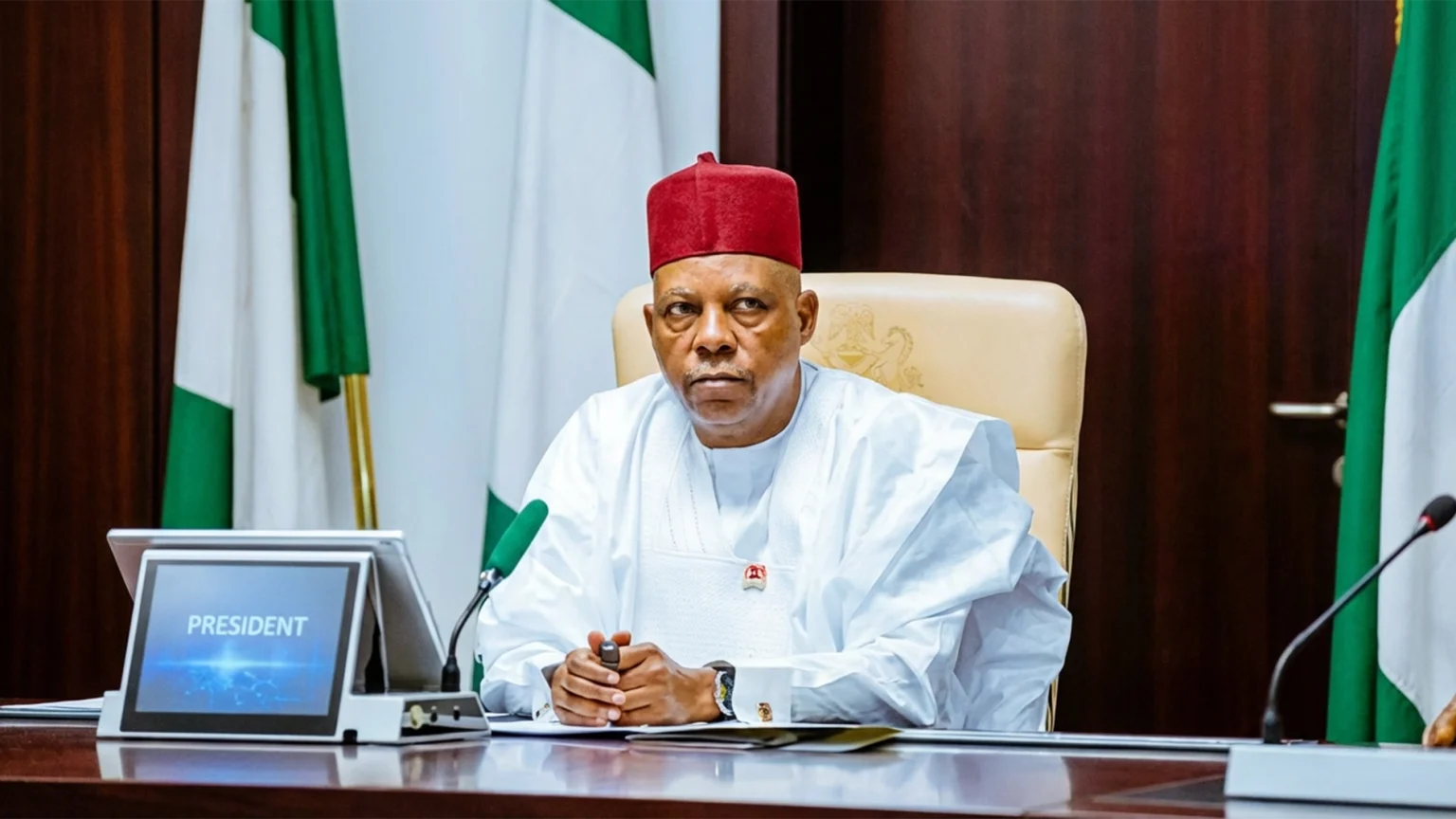
The National Economic Council (NEC) has approved the adoption of 112 as Nigeria’s unified national emergency number, in a move to strengthen rapid response systems and eliminate bureaucratic delays during crises.
The decision was taken at the 157th NEC meeting held virtually and chaired by Vice President Kashim Shettima.
Council said the adoption of 112 across all relevant agencies and tiers of government would establish a coordinated national emergency framework, ensuring quicker response to incidents such as accidents, insecurity, medical emergencies and natural disasters.
NEC also approved the establishment of a multi-agency implementation and programme coordination committee, to be led by the Office of the Vice President and the Nigerian Communications Commission (NCC).
Speaking during the meeting, the Vice President stressed that the reform is about saving lives, not just restructuring systems.
“This is not only a technical reform. It is a test of the state’s humanity. In moments of fire, accident, robbery, medical emergency, flood, violence or panic, citizens do not need bureaucracy,” he said.
“They need response. They need to know one number to call, one system to trust, and one coordinated chain of action that moves quickly enough to save lives.”

Shettima noted that while Nigeria already has an emergency number, the current challenge lies in coordination, standardisation and public awareness.
“What is required now is coordination, adoption, standard operating procedures, institutional ownership and trust,” he added.
He described NEC as a critical platform for translating the Renewed Hope Agenda of President Bola Ahmed Tinubu into measurable outcomes, urging members to prioritise impactful decisions.
“History will not ask how many meetings we held. It will ask what changed because we met,” he said.
Council also considered a report on the rehabilitation of police training institutions nationwide, presented by an ad hoc committee led by Peter Mbah.
NEC commended the committee’s progress and directed the Ministry of Finance to expedite the release of approved funds to enable the take-off of the project.
It further urged that the intervention should ensure equitable distribution across all geopolitical zones in its first phase.
NEC received an update on key national accounts as of April 27, 2026, presented by the Office of the Accountant-General of the Federation:
Excess Crude Account: $535,823.39
Stabilisation Account: N72.84 billion
Natural Resources Account: N158.19 billion
Council also reviewed progress on polio eradication efforts led by Governor Inuwa Yahaya and approved the expansion of the NEC ad hoc committee to include seven additional high-risk states: Jigawa, Kaduna, Bauchi, Niger, Yobe, Borno and Adamawa.
The move is expected to strengthen political oversight, coordination and accountability in the campaign.
NEC noted that a second phase of vaccination targeting 12 states, including Kano, Katsina, Sokoto and Kwara, will commence on May 2.
Council also considered a presentation by the Federal Ministry of Arts, Culture, Tourism and Creative Economy on the Renewed Hope Cultural Project and “Naija Season,” a unified national cultural and tourism calendar.
It approved a contribution of N200 million each by sub-national governments to support local execution and tourism activation.
Additionally, NEC received a briefing on the implementation of the National Industrial Policy (NIP) 2025 by the Minister of State for Industry, highlighting plans to develop 76 industrial clusters with projected revenues of $2.74 billion over 25 years.
Council commended ongoing efforts to align sub-national industrial strategies with national policy objectives.
Overall, NEC emphasised the need for coordinated action across all levels of government to drive economic growth, improve security response systems and enhance the welfare of Nigerians.

