 Follow Us on Google News


 Follow Us on Google Discover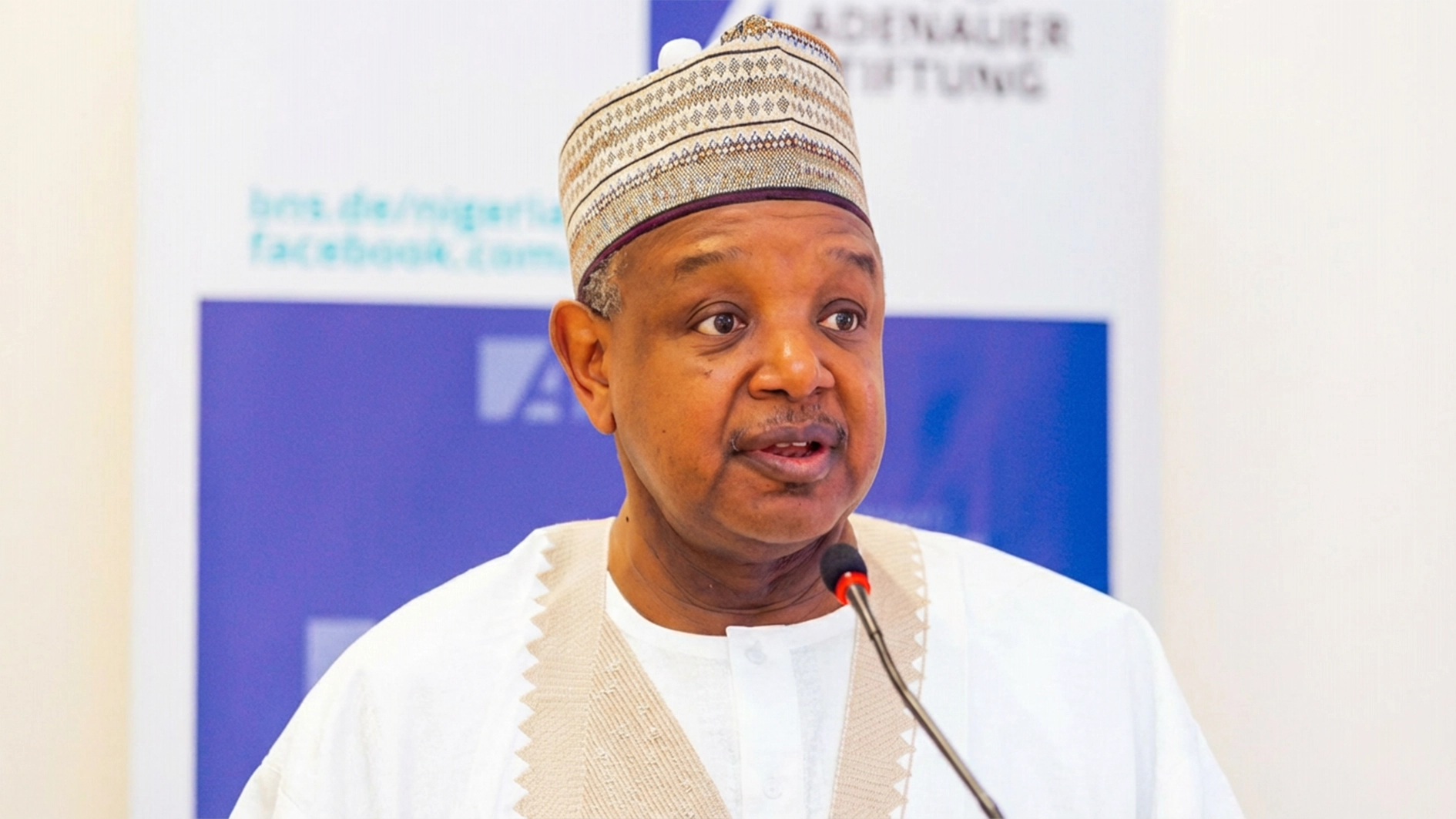
Nigeria has urged the United Nations to foster an inclusive and fair hydrogen economy, emphasising that no region should be excluded from the shift to a cleaner energy ecosystem.
The Minister of Budget and Economic Planning, Senator Abubakar Bagudu, outlined the country’s position during his closing remarks at the Conference on Clean Hydrogen: Shaping Sustainable Industry’s Future, organised by the United Nations Industrial Development Organisation in Vienna, Austria, on Wednesday.
Bagudu said the global body must tackle past inequalities, in which value creation was concentrated in a few regions, while others were relegated to suppliers of raw potential.
Explaining that hydrogen represents far more than just a decarbonisation tool, but also a pathway to industrialisation, job creation, energy security, and economic diversification for most countries, he said it must be seen as a historic opportunity to shift from the margins to the mainstream of global energy systems.
However, the minister stated that the transition must be cooperative, inclusive, and equitable.
“We must ensure that the emerging hydrogen economy does not replicate past inequalities, where value creation is concentrated in a few regions while others remain mere suppliers of raw potential,” Bagudu urged the global body.

He called for a renewed commitment to fast-tracking policies and regulatory frameworks to mobilise investment at scale, strengthen partnerships across regions, and ensure that hydrogen serves as a tool for shared prosperity.
He, therefore, called for a concerted action on a hydrogen future that is not only clean but fair; not only innovative but inclusive; and not only global but truly shared.
He noted that while the conference’s discussions confirmed that opportunities were vast, but not evenly shared, it could, however, foster shared prosperity.
For example, he noted that countries rich in renewable resources, especially in the south, are uniquely positioned to influence the future of green energy.
However, he warned that potential alone was not enough, saying it must be backed by deliberate policy choices, credible demand signals from the global north, strategic investments, and genuine international cooperation.
Bagudu emphasised Nigeria’s Hydrogen policy, describing it as a key part of the country’s broader energy and development plans, built on its commitment to enhance climate resilience while maintaining economic growth, industrialisation, and energy access.
The UNIDO International Conference on Hydrogen in Industry, Clean Hydrogen: Shaping Sustainable Industry’s Future, gathered policymakers, industry leaders, and international partners.
The event aims to promote transformative change in the local industries of developing countries and transition economies through the sustainable utilisation of clean hydrogen.

