 Follow Us on Google News
 Follow Us on Google Discover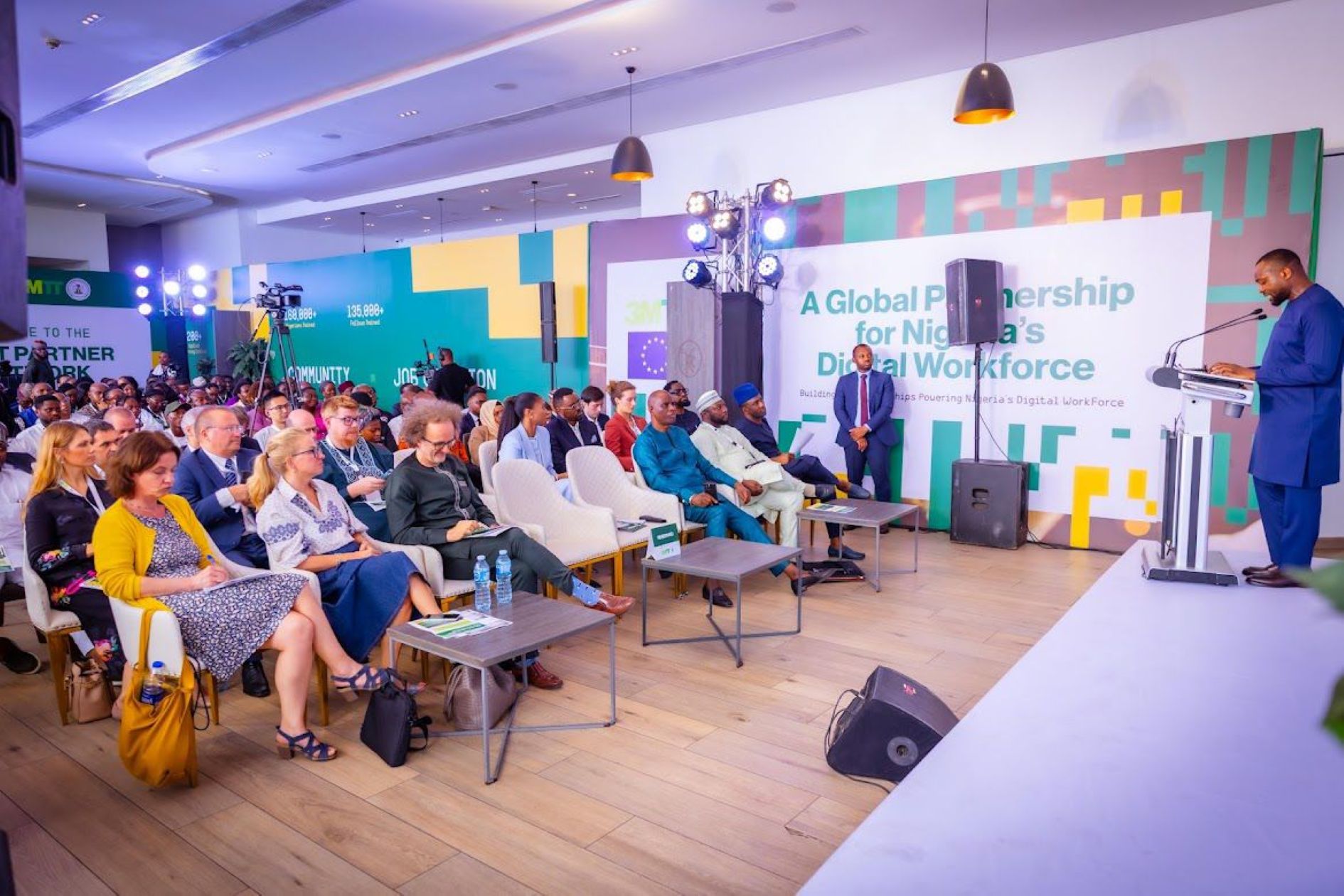
Minister of Communications, Innovation and Digital Economy, Dr. Bosun Tijani, has said Nigeria must deliberately harness its growing youth population to remain competitive in an increasingly technology-driven global economy.
He stressed that beyond access to technology, countries must build the capacity to effectively adopt and utilise digital innovations to drive economic growth and national development.
Tijani spoke at the 3MTT Partner Network Launch & Showcase organised by the Federal Ministry of Communications, Innovation and Digital Economy (FMCIDE) to formally introduce the 3MTT Partner Network and mark the commencement of the EU–3MTT partnership in Lagos.
He described the Federal Government’s Three Million Technical Talent (3MTT) programme as a strategic response to the global shortage of skilled technology professionals.
According to him, the initiative is designed to position Nigeria as a major supplier of digital talent while equipping young people with globally relevant skills that can drive shared prosperity.
He lauded partners such as EU, MTN, IHS, Airtel, among others and called for more partners, insisting that government cannot do it alone.

Diplomats representing countries like Finland, Netherlands, Spain, France and Denmark were in attendance.
He noted that the programme reflects a broader shift in government thinking, emphasising collaboration over isolation.
He said partnerships with development organisations, private sector players and global institutions have been critical in mobilising resources, expanding training capacity and creating pathways for employment opportunities for participants.
Head of Cooperation, EU Delegation to Nigeria and ECOWAS, Massimo De Luca, said the union remains strongly invested in developing Nigeria’s digital sector through sustained partnerships and policy-driven initiatives. He noted that Nigeria’s digital talent is globally competitive, stressing the need for a coordinated approach that nurtures skills organically within a well-aligned ecosystem involving government, private sector and development partners.
De Luca explained that the EU’s engagement goes beyond short-term interventions, describing it as a long-term commitment that includes investments in connectivity, digital public infrastructure and capacity building. He added that collaboration with member states and European businesses would be critical to delivering inclusive and sustainable growth, positioning Nigeria as a key player in the global digital landscape.
One of the programme’s beneficiaries, Ismail Adam, said the initiative transformed his life from struggling as a teacher to becoming a competitive software developer, adding that the training opened up income opportunities and enabled him to compete in international digital challenges where he emerged as a top finalist.

