 Follow Us on Google News


 Follow Us on Google Discover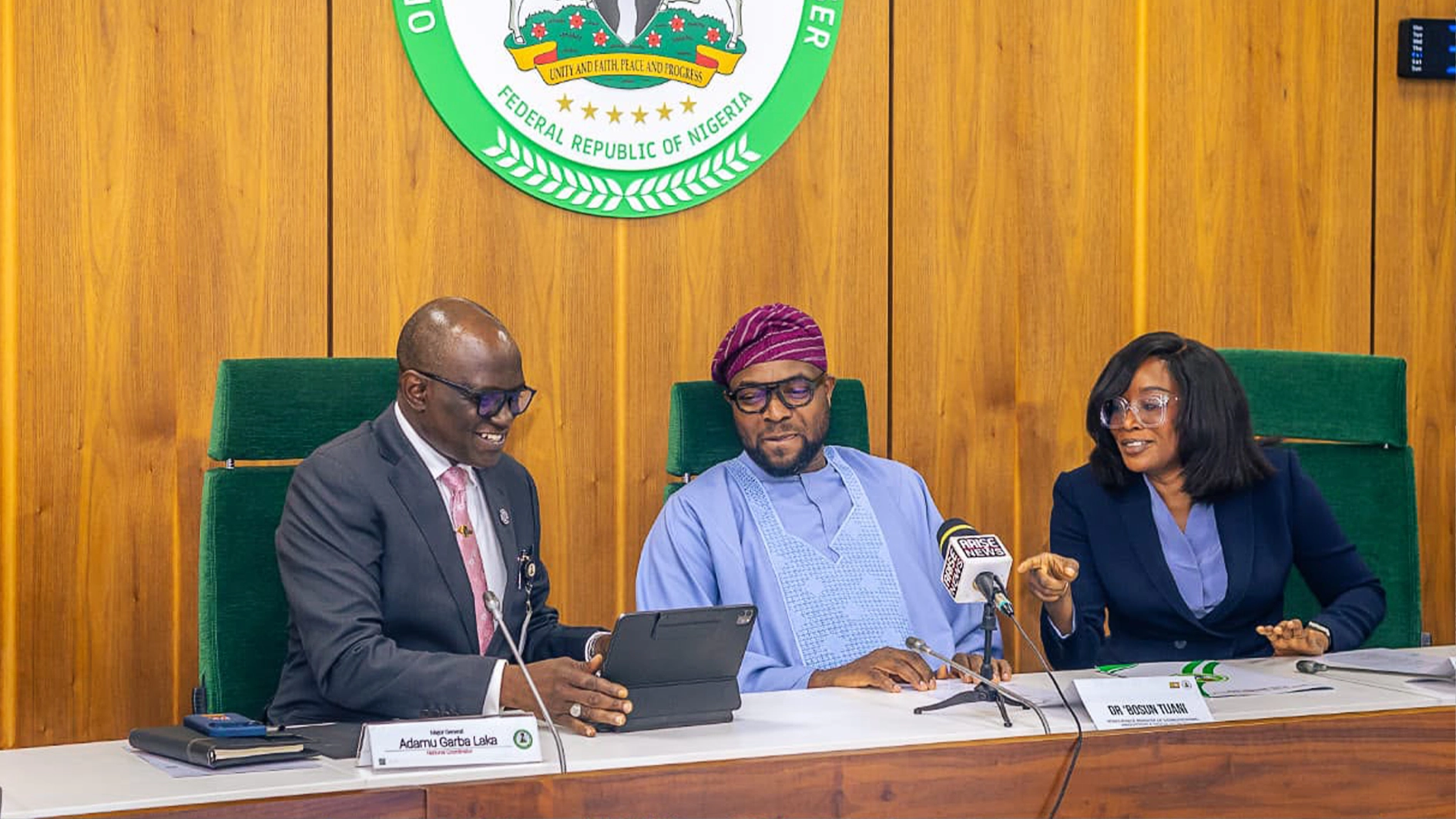
The Federal Government through the Ministry of Communications, Innovation and Digital Economy, on Monday, announced plans to roll out the first phase of Nigeria’s National Digital Alphanumeric Postcode System in October 2026,
The government described the initiative as a critical national infrastructure project that will transform commerce, security, emergency response, and public service delivery across the country.
Minister of Communications, Innovation and Digital Economy, Dr. Bosun Tijani, disclosed this in Abuja, during the National Digital Alphanumeric Postcode System Workshop themed, “Operationalising the Nigerian Digital Postcode for National Security and Public Safety.”
According to the minister, the new system will assign a unique digital postcode to every building in Nigeria, including those located in rural communities, enabling precise identification of locations nationwide.
Tijani said the initiative would address longstanding challenges associated with locating homes, businesses and public facilities, thereby improving emergency response services, logistics operations and national security coordination.
He noted that the current system of relying on verbal descriptions and landmarks for directions has imposed significant economic and social costs on Nigerians.

He said: “The first set of locations and states will be released in October this year, and I am pushing hard to ensure that a significant number of states are covered before the end of the year. This is a major legacy project for the administration. The President has supported it, resources have been provided, and we are determined to deliver it for Nigerians.”
The minister explained that the digital postcode system is not merely a policy initiative but a major national infrastructure project backed by President Bola Tinubu’s administration.
Tijani also assured Nigerians that the project would be fully implemented, saying the government remains committed to delivering a world-class addressing system capable of identifying specific buildings rather than broad clusters of properties.
He added, “I think this is going to transform commerce, our society and security significantly. We have a popular joke in Nigeria where people give directions by saying, ‘When you get to the end of the street, turn left, then right, then left again.’ But the reality is that such a system costs us significantly.
“Imagine someone requiring emergency support and an ambulance cannot easily locate them. Imagine a small business owner trying to deliver food to a customer while riders spend valuable time searching for the address. With this system, locations can be identified precisely, and that will change everything.”
He added that the infrastructure would play a crucial role in advancing the digital economy by supporting e-commerce, logistics, digital payments and online business operations.
According to him, improved addressing will enable businesses, including small-scale enterprises in remote communities, to sell products online and deliver them efficiently to customers across the country.
The minister stressed that the system would function independently of internet connectivity, noting that every building would be physically assigned a unique code.
He noted that the initiative would significantly strengthen intelligence gathering, law enforcement, emergency services and public administration.
Speaking on data privacy and security concerns, the Postmaster General and Chief Executive Officer of the Nigerian Postal Service (NIPOST), Tola Odeyemi, said access to data generated through the system would be strictly controlled.
She explained that NIPOST is working closely with the Nigeria Data Protection Commission to ensure that citizens’ information remains secure and confidential.
According to Odeyemi, access to location data will be tiered, ensuring that only authorised institutions can obtain information relevant to their responsibilities.
She disclosed that government agencies, security services, technology companies and state governments would be engaged through a series of awareness programmes ahead of the nationwide rollout.
Odeyemi said the digital postcode system would help government better identify and serve citizens while also reducing the enormous costs associated with failed deliveries and inefficient logistics.
She estimated that missed deliveries currently cost Nigeria between N50 billion and N80 billion annually due to difficulties in locating addresses.
The NIPOST boss further explained that businesses and consumers would be able to access the system through multiple channels, including mobile applications and USSD platforms.
She added that the initiative incorporates an artificial intelligence-powered routing system that will improve delivery planning, estimate transportation costs more accurately and reduce delivery times.
Also speaking at the event, the National Security Adviser (NSA), Mallam Nuhu Ribadu, represented by the National Coordinator of the National Counter Terrorism Centre, Major-General Adamu Garba Laka, described the digital postcode initiative as a significant milestone in Nigeria’s digital transformation journey.
He said the system would strengthen policing, intelligence gathering, emergency response, disaster management, border security, financial crime investigations and other law enforcement operations.
According to him, the ability to accurately identify and locate persons, places and incidents would improve decision-making and operational effectiveness across security agencies.
Ribadu noted that successful implementation of the initiative would depend on strong collaboration among government institutions and stakeholders.
He commended the Federal Ministry of Communications, Innovation and Digital Economy, NIPOST and participating agencies for driving the project.
He expressed confidence that the digital postcode system would enhance national security, improve service delivery and support economic development.

