 Follow Us on Google News
 Follow Us on Google Discover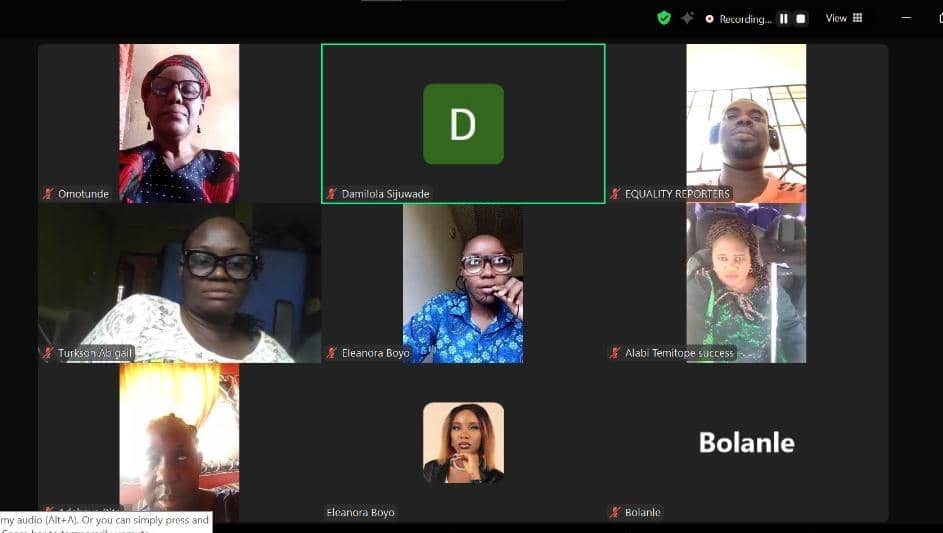
 In a virtual gathering on Saturday, December 7th, 2024, the House of Eleanora Foundation convened a critical stakeholders’ consultative meeting to address a rarely discussed and deeply troubling issue: violence against women and girls with disabilities (WGWDs) perpetrated by other persons with disabilities.
While conversations about violence against people with disabilities often focus on external perpetrators, this meeting shed light on the often-overlooked reality of violence within the disability community itself
Eleanora Boyo, Executive Director of the House of Eleanora Foundation, led the pivotal meeting, drawing from her personal experience of surviving violence perpetrated by a person with a physical disability, bringing this critical issue into sharp focus. Her journey—from victim to victor—serves as a powerful testament to the possibility of seeking justice.
The Hidden Epidemic
Contrary to common misconceptions, violence within the disability community is not a rare occurrence. The meeting revealed a disturbing pattern of abuse that remains largely invisible due to a pervasive culture of silence and shame. Participants shared personal accounts and testimonies highlighting how disabilities do not preclude individuals from being perpetrators of violence.
Research suggests that individuals with disabilities experience higher rates of violence from various sources, including within their own community. A study by the World Health Organization indicates that people with disabilities are 1.5 to 4 times more likely to be victims of violence compared to those without disabilities, with intra-community violence being a significant but under-reported aspect.
Breaking the Culture of Silence
The meeting brought together key women leaders from the disability community, including Hajjah Zainab Mustapha, National Women Leader of the Joint Association of Persons with Disabilities (JonAPWD), and Ms. Rita Adebayo, National Vice-President 2, among others.
Participants shared heart-wrenching narratives of violence perpetrated by caregivers, partners, and family members. A culture of silence often prevents survivors from speaking out, with many feeling ashamed or fearful of potential repercussions. The meeting aimed to dismantle these barriers and empower women with disabilities to seek support and justice.

“Survivors can and should speak out,” emphasized Boyo, who successfully prosecuted her own case of violence. Her legal victory not only secured financial compensation but also provided a critical message: perpetrators can and will be held accountable.
A Collaborative Approach
The stakeholders’ meeting had three primary goals:
1. Discuss the pervasive issue of violence against women with disabilities
2. Develop strategic, actionable solutions
3. Build synergistic partnerships to drive meaningful change
The stakeholders’ meeting represented a critical first step in addressing this complex issue. Participants acknowledged that violence knows no boundaries – disability, gender, or social status cannot be a shield for perpetrators or a barrier to justice for survivors.
The meeting concluded with a commitment to:
– Raise awareness about intra-disability community violence
– Develop support mechanisms for survivors
– Create educational programs to prevent violence
– Challenge societal norms that silence victims
A Call to Action
This groundbreaking discussion brings to light a critical and often ignored aspect of violence against persons with disabilities. It challenges us to look beyond simplistic narratives and recognize the complexity of abuse within marginalized communities.
The House of Eleanora Foundation continues to be at the forefront of breaking these silences, ensuring that no survivor feels alone and that every voice is heard.

