 Follow Us on Google News
 Follow Us on Google Discover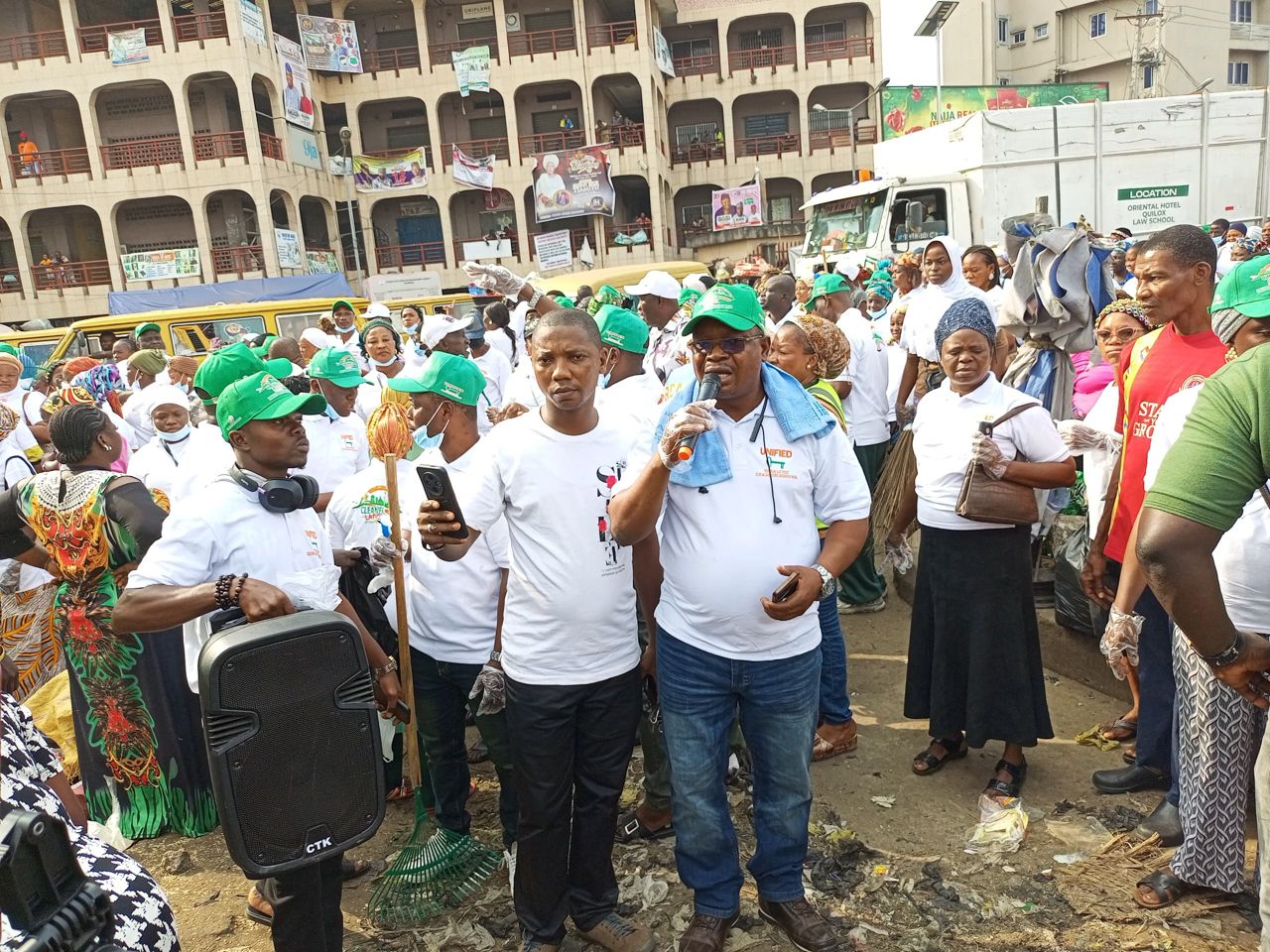
In a proactive move aimed at fostering collaboration with the Lagos State government, the United Nylon Association, Lagos State, has launched a cleanup exercise in all markets in the state, starting from Oyingbo Market.
The association called for a more inclusive approach to tackling plastic pollution. The initiative comes in the wake of the state government’s push for a cleaner Lagos and its recent ban on single-use nylon bags.
Speaking during the cleaning exercise at Oyingbo Market, the Assistant Secretary of of the Unified Nylon Association, Mr. Akin Apata, expressed gratitude to the Ministry of Environment for its efforts.
He stated that although many materials contribute to environmental dirt, the association aims to lead by example and show its commitment to a cleaner Lagos. “We are telling them that whatever they want to do, consult us, let us brainstorm together and put a lasting solution to the problem,” Apata said. He emphasised the association’s desire to be recognised as a key stakeholder.
Apata announced that the cleanup operation would continue throughout all 20 local governments and 37 Local Council Development Areas (LCDAs) in the state. He highlighted the complexity of the issue by noting the widespread use of single-use nylon in daily life.
Apata pointed out that items such as bread, detergents, and chocolates are packaged in single-use materials that cannot be replaced by thicker, reusable bags.
He reiterated the association’s call for the government to sit down and analyse the situation with them to find a better way forward.

President of Unified Nylon Association, Mrs. Funke Ogunyonbo, argued that the government’s proposal to use 40-micron bags is both impractical and unaffordable for the public.
“It is too thick and very expensive to manufacture, and people will not be able or to afford it,” she said, highlighting that the high cost would inevitably be passed on to consumers, contributing to inflation.
The Vice President of the Unified Nylon Association, Salamotu Aminu Godabi, described the ban as a great mistake that would cause significant hardship for those whose livelihoods depend on the industry.
She asserted that proper waste management and public sensitisation are more effective solutions than a ban.
“The waste is money itself, it’s wealth. It can even create more jobs if the government does it properly,” Aminu Godabi explained, suggesting that waste nylon could be collected and converted into new products, creating a circular economy.

