 Follow Us on Google News


 Follow Us on Google Discover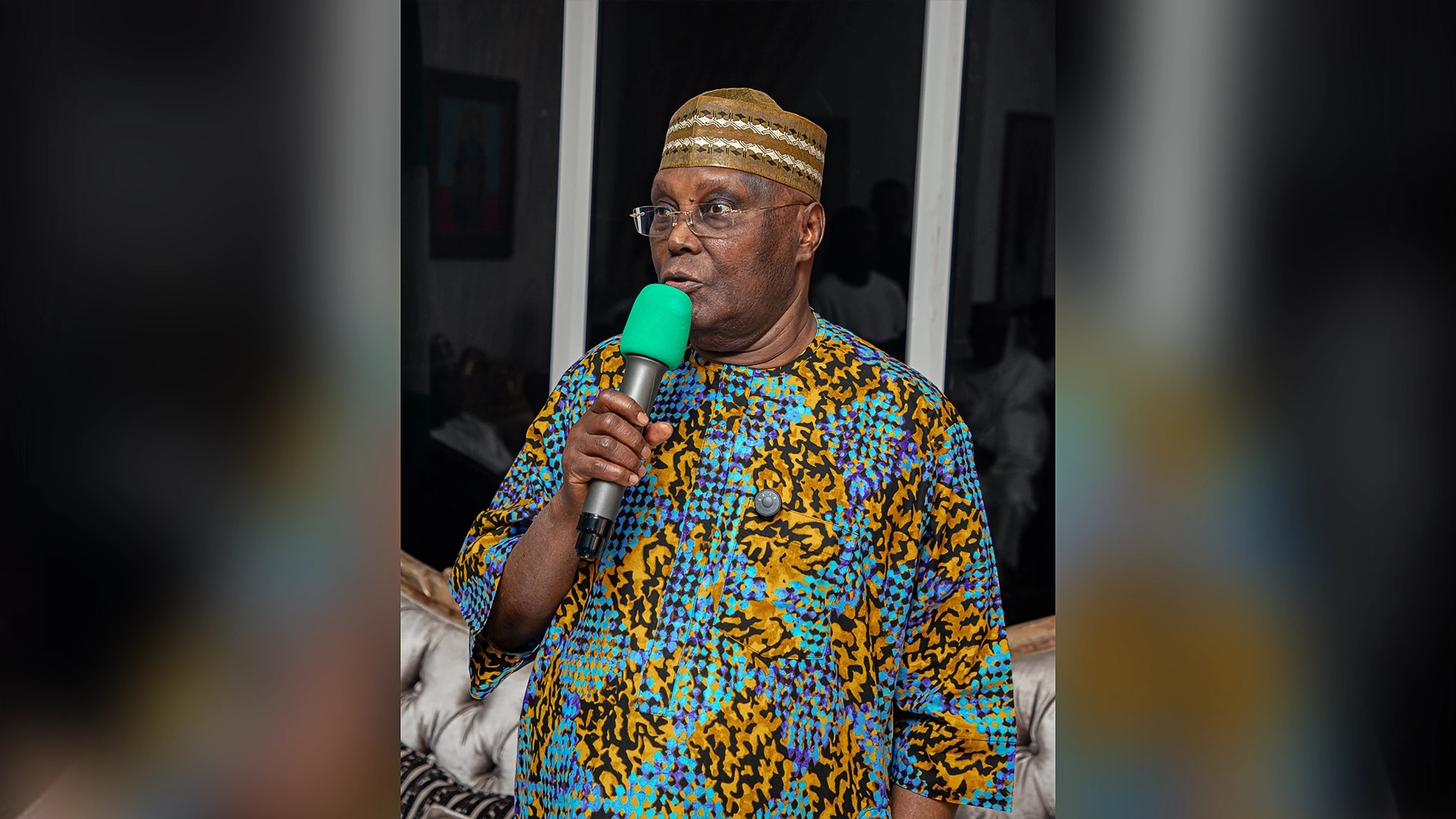
*** Demands answers over ₦33.75bn meant for vulnerable Nigerians
Former vice president Atiku Abubakar has criticised the government’s ₦25,000 cash transfer to vulnerable households, describing the intervention as inadequate and demanding greater accountability over billions of naira earmarked for social support.
Atiku, the presidential candidate of the African Democratic Congress (ADC), said the government must provide verifiable evidence that money allocated to support poor households amid Nigeria’s worsening cost-of-living crisis actually reached its intended beneficiaries.
His comments followed audit queries concerning ₦33.75 billion reportedly paid to 3.29 million vulnerable households and beneficiaries under the government’s cash transfer programme.
The intervention has become increasingly politically sensitive as millions of Nigerians continue to grapple with high food prices, transport costs and energy bills following major economic reforms introduced by President Bola Tinubu’s administration.
In a statement issued on Friday by his spokesman, Phrank Shaibu, Atiku questioned the effectiveness of cash interventions that he said provided struggling families with relatively small amounts while concerns persisted about the management and documentation of the funds.

“The intervention is insultingly small, yet even that small amount cannot be cleanly accounted for,” Atiku said.
“If money meant for hungry Nigerians cannot be satisfactorily traced while access to records required for accountability is frustrated, then what we are witnessing is unapologetic wickedness against the poor.”
The government has previously announced cash transfer programmes aimed at cushioning the impact of economic reforms, including the removal of petrol subsidies, which contributed to higher transport and living costs.
Atiku said households were being offered ₦25,000 as support despite the significant increase in the cost of essential goods and services.
He argued that temporary cash payments could not adequately address the economic difficulties confronting many Nigerian families.
The former vice president also pointed to questions raised by the Auditor-General of the Federation over cash transfer payments and other expenditures connected to the programme.
According to Atiku, the Auditor-General queried ₦33.75 billion reportedly paid to 3.29 million beneficiaries, as well as ₦36.74 billion in payments allegedly made without pre-payment audits.
He said a further ₦4.62 billion was reportedly associated with payment vouchers that were not produced for auditors.
The Auditor-General’s findings have raised concerns about documentation and the ability to independently verify some of the payments made under the social intervention programme.
Atiku commended Auditor-General Shaakaa Chira for carrying out his constitutional responsibilities, saying the audit queries demonstrated the importance of independent public institutions.
“The Auditor-General deserves commendation,” he said.
“He was appointed by this administration, yet his office has raised questions that are profoundly uncomfortable for the government that appointed him. That is what institutions are supposed to do — protect the public purse, not the political comfort of those in power.”
The ADC presidential candidate also questioned figures released by different government officials concerning the number of households that had benefited from the cash transfer programme.
He said the government had at various times indicated that more than ₦600 billion had been disbursed to more than 10 million households, while Nigerians had earlier been told that the intervention would reach about 15 million households.
Atiku said the differing figures required clarification.
“A ministerial announcement is not proof of payment. A name on a social register is not a bank alert,” he said.
“If more than 10 million households received over ₦600 billion, government should be able to show who received the money, how much each household received and when the payments were made.”
He said his team would assemble independent experts in finance, auditing, technology and public accounting to examine available records relating to the cash transfers.
The proposed exercise, he said, would focus on beneficiary figures, payment channels, reconciliation records and audit queries.
“We will follow the money as far as the available public and institutional records permit,” Atiku said.
“We will examine the beneficiary figures, payment channels, reconciliation records, audit queries and every material inconsistency that has emerged.”
Atiku said the findings of the proposed review would be made available to Nigerians and called for anyone found to have diverted or misappropriated money intended for vulnerable citizens to face prosecution.
The former vice president also renewed his criticism of the Tinubu administration’s economic policies, arguing that the government should focus on measures that increase the purchasing power of ordinary Nigerians rather than relying heavily on cash transfers.
“What Nigerians need is not another palliative announcement. They need purchasing power,” he said.
Atiku has proposed what he describes as a production-linked subsidy model, which he said would support domestic refining and help reduce energy costs.
He argued that lower fuel prices could reduce transportation costs and ease pressure on food prices and household budgets.
The proposal differs from Nigeria’s previous subsidy regime, under which the government spent billions of dollars supporting the price of imported petrol.
Tinubu announced the end of the petrol subsidy shortly after assuming office in May 2023, saying the policy had become financially unsustainable and that the funds saved could be redirected towards infrastructure and other development priorities.
However, the decision, alongside the liberalisation of the foreign exchange market, initially contributed to a sharp increase in inflation and intensified pressure on household incomes.
Although the government has introduced several intervention programmes, including cash transfers, food distribution and other forms of support, critics have repeatedly questioned their reach and effectiveness.
For Atiku, the latest audit queries have further strengthened calls for greater transparency in the management of social intervention funds.
He said Nigerians deserved to know whether the money allocated in the name of vulnerable households had been delivered to them.
“There must be no black box around the poor man’s money,” he said.
“If beneficiaries received the money, there should be evidence. If access to records was obstructed, Nigerians deserve to know by whom and why.”
Atiku called on the government to publish a verifiable payment trail for the beneficiaries of the programme.
“If the beneficiaries are genuine, publish the verifiable payment trail. If the money did not reach them, recover it,” he said.
He added that any official found, following an investigation, to have diverted or misappropriated funds intended for vulnerable Nigerians should face prosecution.
“The poor have already paid enough through higher fuel prices, food costs, electricity bills, transportation fares and taxes,” Atiku said.
“They must not also be made to lose the money appropriated in their name.”
The controversy over the cash transfers is likely to add to growing political debate over the government’s economic policies and the effectiveness of measures designed to protect Nigeria’s poorest households from the consequences of the country’s economic reforms.

