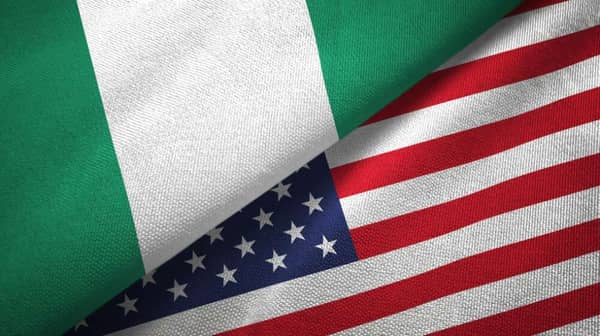
Nigeria’s Air Force (NAF) will rely on intelligence gathered from United States reconnaissance flights to support its own military operations against armed groups, a government source told AFP on Tuesday.
The source, who requested anonymity due to the sensitivity of the arrangement, said the move follows US airstrikes in northwest Nigeria on Christmas Day, targeting sites in Sokoto State linked to the Islamic State group. “Though Nigeria remains open to further American strikes, the Americans’ primary role will now be providing intel,” the official said.
The strikes came after months of diplomatic engagement between Abuja and Washington. President Donald Trump had in October described violence from armed groups in Nigeria as “persecution” and “genocide” of Christians, claims denied by Nigeria and independent analysts. By December, Nigerian authorities reported that the dispute had been resolved, “culminating in a strengthened partnership between America and Nigeria,” according to government statements.
The Christmas Day strikes were reportedly part of a joint effort, but US officials initially did not inform Nigerian authorities of the precise operation. Presidential spokesman Daniel Bwala said the targets included Islamic State militants, the Lakurawa jihadist group, and armed “bandit” gangs. Both countries confirmed that an unspecified number of militants were killed.
The source noted that US reconnaissance flights over Nigeria have continued since the strikes. Analysts had monitored increased US aerial surveillance in the weeks leading up to the operation. A report by The New York Times, citing unnamed Pentagon officials, described the strikes as a “one-time event,” though Nigeria’s government maintains that intelligence-sharing with the United States will remain active.
The security situation in Nigeria remains complex. The country has faced a jihadist insurgency since 2009, largely in the northeast, while “bandit” gangs have expanded across parts of the northwest and north-central regions. Some researchers have linked the Lakurawa group in Sokoto to the Islamic State Sahel Province (ISSP) in neighbouring Niger, although other analysts dispute these connections.
In Kwara State, munitions debris from the strikes reportedly injured three hotel staff in Offa, illustrating the risks posed to civilians in affected areas.
The source emphasised that under the new arrangement, Nigeria will lead its own military operations, with US intelligence serving as a supporting role to improve targeting and operational effectiveness.