 Follow Us on Google News


 Follow Us on Google Discover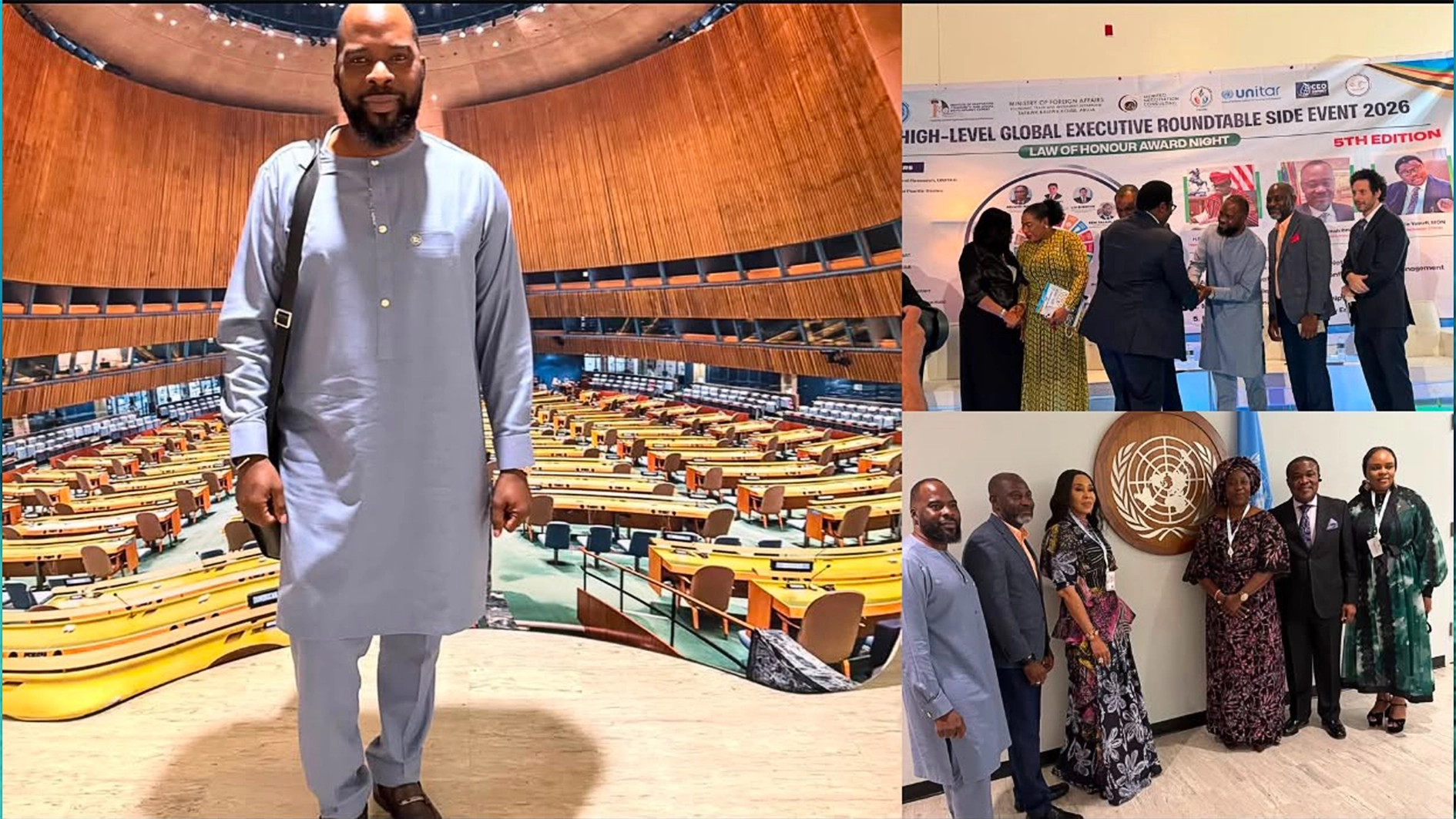
Nigerian entrepreneur, real estate developer and tourism investor Keji Giwa joined leaders of thoughts to call for a fundamental shift in the relationship between Nigeria and its global diaspora, urging Nigerians abroad to move beyond remittances and become organised investors and owners of productive assets in their home country.
He made a strong case for bridging the gap between organised diaspora capital, credible Nigerian assets and government policy while speaking as a panelist on a United Nations General Assembly (UNGA) Global Executive Roundtable Side Event which was held at the Permanent Mission of Nigeria to the UN.
According to the business leader, Nigeria’s next phase of economic development must be driven not simply by the money Nigerians abroad send home, but by the businesses, infrastructure, institutions and productive assets they help build and own. Giwa challenged the conventional narrative surrounding Nigerian emigration, arguing that the country’s global diaspora represents one of its most significant untapped sources of investment capital, international expertise and economic influence.
Also speaking virtually from Texas, Governor Babajide Sanwo-Olu expressed readiness of the government to partner and collaborate with Diasporans to build sustainable partnerships. He said, “Our message from Lagos is simple: states, regions and subnational governments are ready to deliver. We have ambition. We have the responsibility. And increasingly, we have the solutions. Now we need to build the partnerships and mobilise the investment that will allow us to deliver them at scale.”
Furthermore, Giwa argued that Nigeria must move beyond emotional appeals to patriotism and create an investment environment where diaspora capital can participate in commercially viable opportunities supported by transparent governance, credible execution and appropriate investor protections.
He said, “Japa was not a betrayal. For many Nigerians, leaving was a rational response to an environment that could no longer guarantee the opportunities, security and stability they needed to build their futures. But leaving Nigeria does not mean abandoning Nigeria. The question is no longer whether Nigerians abroad love their country. The question is whether we can build credible structures that allow them to invest in it with confidence.”

For Giwa, the challenge is not a shortage of Nigerian capital or ambition. It is the absence of sufficient trust between those who possess the capital, those seeking to deploy it and the institutions responsible for creating the conditions in which investments can succeed.
“Nigeria cannot develop without diaspora capital, and diaspora capital cannot return without credible people, structures and physical proof,” he said.
From remittances to ownership: Nigeria’s untapped Diaspora opportunity
Giwa pointed to the contrast between Nigeria’s substantial remittance inflows and its relatively modest foreign direct investment as evidence of an opportunity to deepen the country’s economic relationship with Nigerians living abroad.
Nigeria received approximately $20.93 billion in remittances in 2024, compared with foreign direct investment inflows of approximately $1.08 billion, according to figures cited in his address.
While remittances and foreign direct investment represent different financial flows, Giwa argued that the disparity illustrates the potential for more diaspora wealth to be channelled into long-term productive investments.
“Nigerians abroad are already financing Nigeria. They pay school fees, support families, build houses, fund businesses and contribute to their communities. But we must create opportunities for them to move from supporting consumption to participating in the ownership of productive assets,” he said.
He stressed that remittances remain essential to millions of Nigerian households and should not be discouraged. Rather, Nigerians with investable capital should have access to credible opportunities that allow them to build wealth while contributing to national economic development.
According to Giwa, this requires a change in how investment opportunities are presented to the diaspora.
“In America, he has peace of mind. In Nigeria, he becomes a prayer warrior,” he remarked, describing the uncertainty some diaspora investors experience when attempting to manage investments remotely.
He argued that investors should not have to depend on personal relationships, emotional appeals or constant intervention to protect their capital.
“Intelligence without integrity becomes sophisticated dishonesty,” he said, emphasising the importance of ethical leadership, transparent financial reporting and accountability in rebuilding investor confidence.
“In a low-trust economy, the credible executor becomes part of the asset.”
Building the assets: The case for Giwa Gardens, The Carnelian and Digital Landlords
For Giwa, the conversation about diaspora investment is rooted in his experience developing physical assets in Nigeria.
Through Digital Landlords, he has invested in real estate, tourism and recreational infrastructure, with Giwa Gardens Water Park and The Carnelian representing two major components of his development portfolio.
At Giwa Gardens Water Park in Lekki, Lagos, his focus is on expanding the destination, improving the visitor experience, increasing operational capacity and developing complementary resort facilities.
The project demonstrates both the opportunities and the operational challenges associated with developing large-scale tourism infrastructure in Nigeria.
Giwa explained that attractions alone are insufficient to create a sustainable tourism economy. Reliable electricity, water infrastructure, road accessibility, security, technology and a skilled workforce are equally important to the commercial success of major destinations.
He noted that the development of tourism assets can generate economic activity beyond the attractions themselves, supporting employment and businesses in hospitality, transportation, food services, retail, technology and other related sectors.
At The Carnelian, Digital Landlords is developing premium oceanfront residential and recreational infrastructure in Victoria Island, within one of Lagos’s emerging coastal development corridors.
The 21-storey development is designed to combine luxury residential accommodation with recreational and hospitality amenities, reflecting Giwa’s wider ambition to develop assets that serve both domestic and international markets.
Through Digital Landlords, he aims to continue identifying and developing commercially viable investment opportunities capable of attracting organised private and diaspora capital.
“Our vision is to build a portfolio of productive assets that contribute to Nigeria’s tourism, hospitality and real estate economy,” Giwa said.
“We are not waiting for the tourism economy to happen. We are investing in the assets that can help make it happen.”
He stressed that credible investment must be supported by physical progress, transparent financial structures, appropriate governance and measurable commercial performance.
For diaspora investors, he argued, confidence should be built on independently verifiable information rather than promises of exceptional returns.
Government must build the environment in which private capital can succeed
ÅGiwa noted that Nigeria cannot unlock its tourism and real estate potential through private investment alone without collaboration between government and private developers. He explained that the viability of major developments is closely linked to the quality of surrounding public infrastructure.
According to him, infrastructures such as roads, electricity, water, drainage, security and connectivity directly influence operating costs, customer access, investor returns and the long-term sustainability of tourism destinations.
“Private developers can build world-class destinations, but we cannot independently solve every infrastructure challenge surrounding those destinations,” he said.
He argued that such partnerships would help improve investor confidence, reduce operational risks and make Nigeria’s tourism and hospitality sectors more competitive internationally. He noted, “Government must create an enabling environment. Private developers must deliver quality assets. Investors must have confidence in the opportunities available to them.”
A new proposal: Nigerian Diaspora Capital & Policy Action Council
One of the central proposals emerging from Giwa’s address was the establishment of a Nigerian Diaspora Capital & Policy Action Council (ND-CPAC).
The proposed council would provide a structured platform through which Nigerian professionals, entrepreneurs, business owners and high-net-worth individuals living abroad could coordinate investment interests, identify credible opportunities and engage government on the conditions required to attract long-term private capital.
Giwa argued that Nigeria’s diaspora should move beyond fragmented individual investments towards professionally managed investment vehicles, institutional partnerships and collective participation in productive sectors of the economy.
He envisaged a council capable of facilitating dialogue between investors, developers, financial institutions, regulators and policymakers, with particular attention to investor protection, infrastructure development, transparency and commercially sustainable investment structures.
“Politicians do not fear angry diaspora tweets. They fear organised capital,” Giwa said, emphasising his view that coordinated economic participation can give diaspora investors a more substantive voice in discussions about the country’s development priorities.
Under the proposal, ND-CPAC would seek to advance three interconnected objectives: mobilising diaspora capital into credible Nigerian assets, establishing investment standards that promote transparency and accountability, and supporting constructive policy engagement to improve the environment for private investment.
Giwa said the council should operate as a commercially focused and professionally governed platform, with clear mechanisms for investor representation, project evaluation, financial oversight and risk management.
The proposed initiative would not replace existing investment institutions or government agencies. Instead, it would seek to connect investors with credible opportunities and facilitate cooperation between the private sector and public institutions.
“We are building the bridge between organised diaspora capital, credible Nigerian assets and government policy,” he said.

